



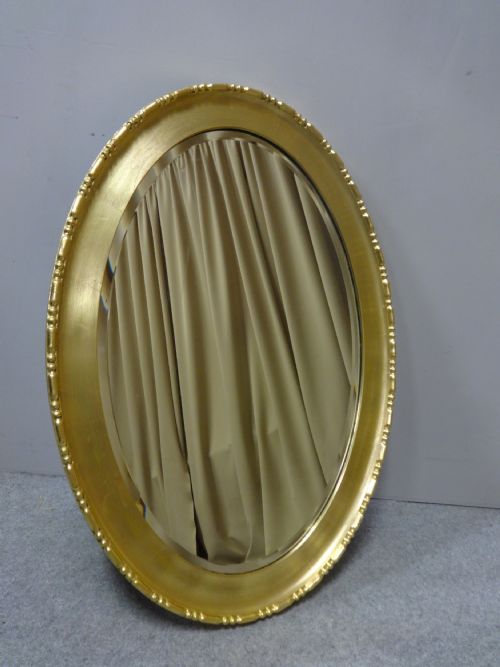


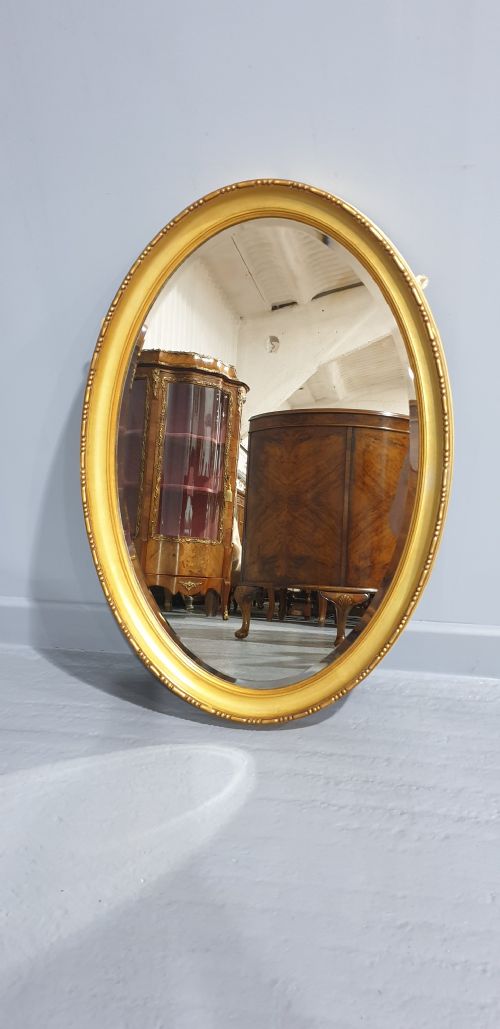
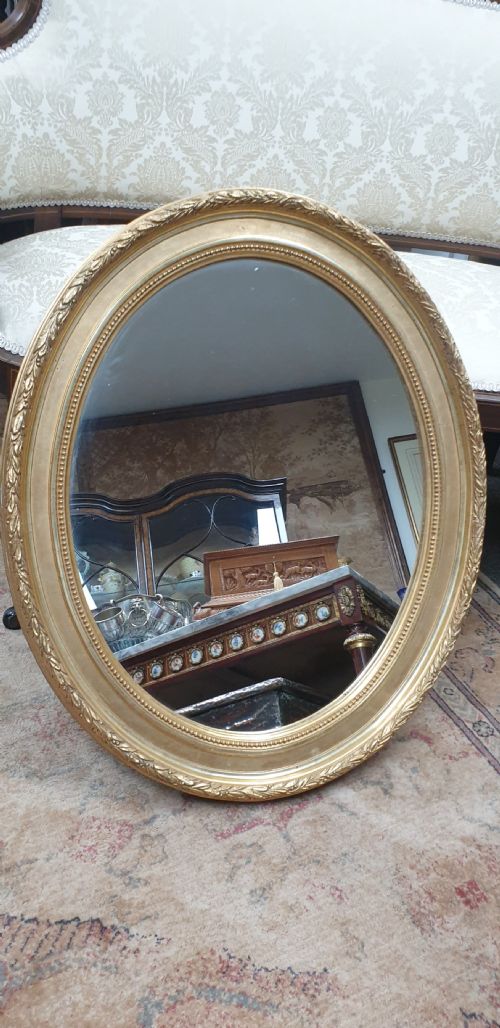

Beaded Giltwood Oval Mirrors
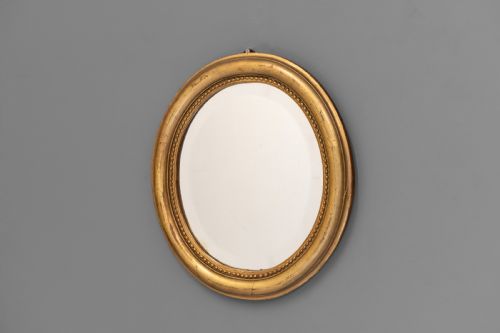
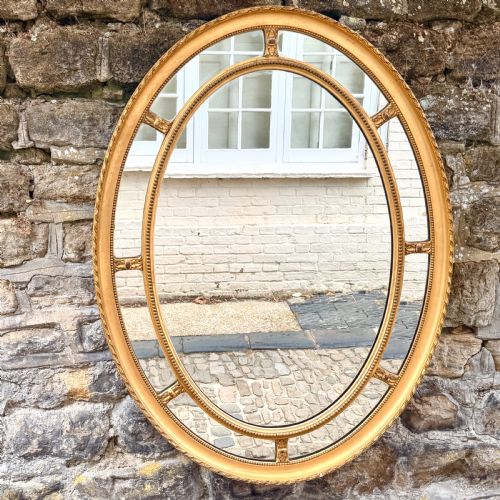
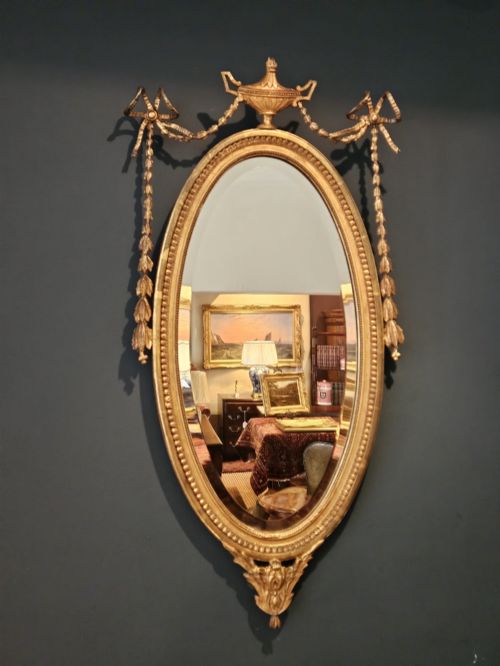
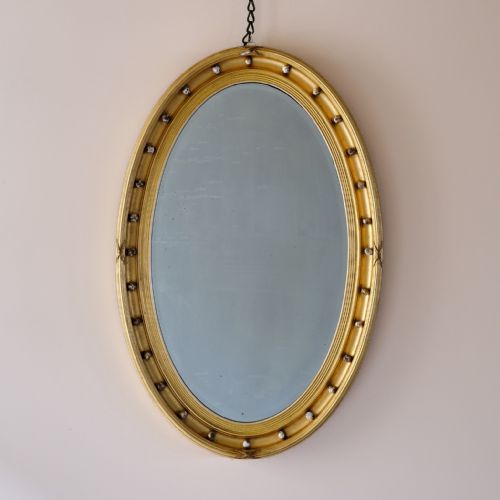
These beaded giltwood oval mirrors bring warmth and classical proportion to a room, framed in gold leaf and shaped with the soft curves of the nineteenth and early twentieth centuries.
Beaded Giltwood Oval Mirrors
When you search for beaded giltwood oval mirrors, you are looking at wall pieces defined by their curved frames and the distinctive beaded moulding that catches the light. These domestic furnishings span periods from the Regency era through the Victorian and Edwardian decades, capturing Neoclassical, Louis XVI and Rococo Revival influences.
The most common examples you will meet on this page date from the nineteenth century and the early twentieth century. They appear as single wall mirrors and occasionally in pairs, ranging from miniature sizes up to large statement pieces designed to hang above a mantelpiece.
Materials and construction
These frames rely on a timber base layered with gesso, a prepared chalk and glue mixture that allows crisp details like beads and scrolls to be carved or moulded. Artisans then applied thin sheets of gold leaf or gilt finish over the prepared surface to create a brilliant metallic sheen.
The reflective plates are set within timber and composition structures, utilising traditional mirror glass that often shows the slight imperfections and soft silvering characteristic of older manufacture.
Beaded Giltwood Oval Mirrors Retail Price Guide 2026
Typical asking prices for beaded giltwood oval mirrors among the pieces listed under this phrase on Sellingantiques today, from the lower quarter to the upper quarter. They describe what is for sale here now, not the wider market.
Several mirrors include miniature scales, proving that even the grandest decorative gestures sometimes arrive in pocket-sized packages.
Judging quality in giltwood frames
Quality rests in the crispness of the gesso work and the depth of the gilding. Finer pieces display sharply defined beads and ornaments that retain their original definition beneath the gold leaf, whereas lesser examples show softened details where layers of later paint or poor moulding have obscured the work.
The integrity of the timber frame and the depth of the gold leaf application separate standard decorative mirrors from superior examples. Original mirror glass with genuine foxing also contributes to the authenticity and character of an older piece.
The Beaded Giltwood Oval Mirrors Glossary
- Giltwood
- Timber that has been coated with gold leaf or a gilt finish. This material forms the primary structure of the frames found in these listings.
- Gesso
- A mixture of plaster of Paris or chalk with glue, used to coat timber frames before gilding. It provides a smooth surface for intricate moulding and carving.
- Composition
- A mouldable mixture of whiting, resin, glue and oil pressed into decorative shapes. It is commonly used alongside carved wood for intricate frame details.
- Regency
- A period of British design spanning the early nineteenth century. Pieces from this era often draw strongly on classical Greco-Roman motifs.
- Rococo Revival
- A nineteenth-century style reviving the ornate, asymmetrical scrollwork of the eighteenth-century French Rococo movement. It appears frequently in decorative wall mirrors.
Beaded Giltwood Oval Mirrors: Frequently Asked Questions
How do I hang a heavy giltwood mirror safely?
These wall mirrors require secure fixings into solid masonry or proper wall studs using heavy-duty brackets suited to the weight of the timber and gesso frame.
Avoid relying on simple picture wire for larger examples, and consult a professional if you are unsure about the load-bearing capacity of your wall.
What rooms suit an oval wall mirror best?
The curved silhouette softens the linear architecture of hallways, living rooms and bedrooms, reflecting light into darker corners.
They sit particularly well above mantelpieces, dressing tables or console units where the vertical or horizontal oval shape balances surrounding furniture.
How do I distinguish Victorian from Edwardian mirrors?
Victorian pieces tend to feature heavier, more ornate carving and deep profiles influenced by historic revival styles like Rococo and Neoclassical.
Edwardian examples often lean towards lighter, more refined proportions with simpler beaded borders reflecting a transition towards cleaner domestic interiors.