

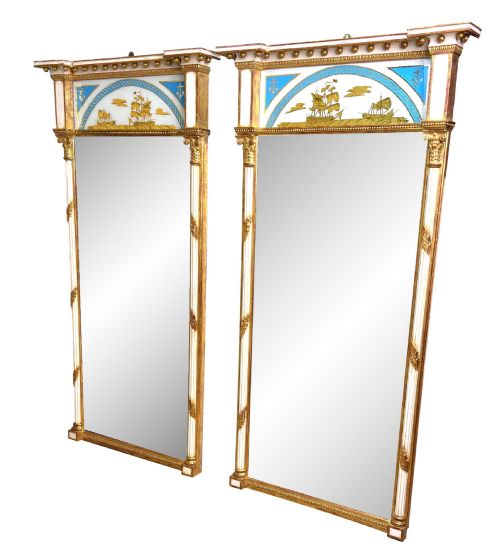
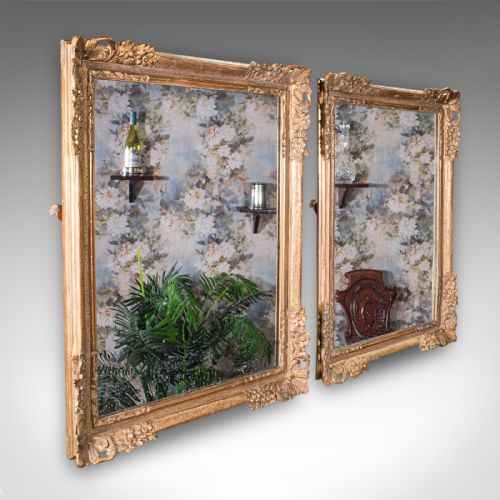

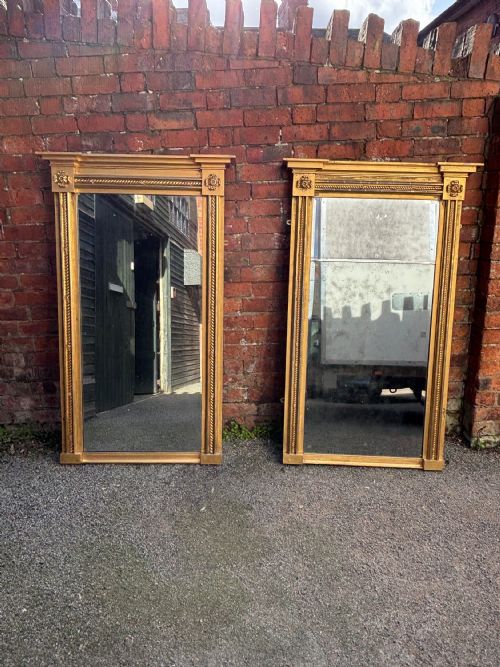


Regency Gilded Mirrors Pair
These regency gilded mirrors pair options bring unmistakable depth and light to a room through traditional forms and luminous finishes.
Regency Gilded Mirrors Pair
A regency gilded mirrors pair consists of matched wall-hanging pieces designed to balance a room, often deployed above side tables, mantelpieces, or between windows to amplify daylight. When exploring a regency gilded mirrors pair, buyers encounter formats ranging from large pier mirrors and convex wall pieces to smaller oval or round designs.
The objects span original Regency production from the early nineteenth century alongside later revivals from the Victorian era and the nineteen-twenties. Forms recorded include wall sconces and girandole mirrors, showing how makers adapted the core aesthetic for different domestic functions over successive decades.
Most examples originate from English workshops adhering to Neoclassical principles, though French Chateau and later revival styles also appear. Collectors find both uniform pairs and close pairs where minor variations in carving or proportion reveal hand-worked origins rather than strict factory duplication.
Materials and construction methods
Makers of a regency gilded mirrors pair built structural foundations using timber such as ebonised wood or pine before applying carved gesso and composition ornaments. Artisans then finished the surfaces with gold leaf or water gilding to achieve a brilliant metallic sheen that catches interior light.
Additional hardware utilised brass and other metals for sconce arms, candle brackets, or structural reinforcement. Glass components provided the reflective plates, housed securely within hand-carved giltwood frames that frequently incorporated decorative elements like pineapple finials.
Regency Gilded Mirrors Pair Retail Price Guide 2026
Typical asking prices for regency gilded mirrors pair among the pieces listed under this phrase on Sellingantiques today, from the lower quarter to the upper quarter. They describe what is for sale here now, not the wider market.
Object forms include wall sconces, pier mirrors, and convex mirrors finished with gold leaf and hand-carved gesso ornamentation.
Distinguishing quality across examples
Quality in a regency gilded mirrors pair rests upon the crispness of the hand-carved decoration and the depth of the gilding technique. Superior pieces exhibit sharp relief in the gesso and composition details, whereas lesser examples show softened contours from repeated moulding or over-painting.
The integrity of the frame construction and the preservation of the original reflective glass surface further divide the standard. Finer specimens maintain harmonious proportions between the paired frames and retain their authentic surface patination without heavy modern restoration.
The Regency Gilded Mirrors Pair Glossary
- Giltwood
- Timber that has been coated with gold leaf over a prepared gesso ground. This traditional finish creates a warm, luminous surface that ages with a distinct golden patina.
- Pier mirror
- A tall, narrow mirror specifically designed to hang on the wall space between two windows. These pieces often feature lower consoles or decorative brackets to complement interior architecture.
- Girandole
- A decorative wall mirror fitted with attached candle sconces or arms. The reflective glass multiplies the candlelight to illuminate dark rooms.
- Gesso
- A plaster-like mixture applied to wooden frame bases as a smooth foundation for gilding. It allows craftsmen to carve intricate relief ornaments before applying gold leaf.
- Convex mirror
- A round mirror featuring a curved, outward-bulging glass plate. It provides a wide-angle reflection of the entire room and gained popularity during the Regency period.
Regency Gilded Mirrors Pair: Frequently Asked Questions
Where should I hang these mirrors?
A regency gilded mirrors pair works best placed symmetrically on opposite walls or flanking a central fireplace or window. This placement balances architectural focal points and distributes natural light effectively across the space.
Ensure the hanging height aligns with eye level or existing furniture proportions, such as sideboards or console tables, to maintain visual harmony in the room.
How do I care for giltwood frames?
Dust the gilded surfaces gently using a soft, dry brush or a feather duster to prevent accumulation without disturbing the delicate gold leaf. Avoid liquid cleaners, polishes, or abrasive cloths that can strip the historic finish.
Keep the mirrors away from direct sunlight and excessive moisture to protect the underlying gesso and wood from cracking or warping over time.
What defines the Regency style?
The Regency style draws heavily on Neoclassical motifs inspired by ancient Greece and Rome, featuring clean architectural lines, symmetry, and restrained ornamentation. Common decorative elements include reeded mouldings, classical urns, and foliate scrolls.
This aesthetic prioritises elegance and proportion, resulting in lighter, more refined furniture and decorative objects compared to earlier Georgian designs.
Are these pieces original or revival?
The inventory includes both authentic pieces from the early nineteenth-century Regency period and later revival works from the Victorian era and the nineteen-twenties. Dating relies on material analysis, construction techniques, and stylistic cues unique to each era.
Revival pieces often reflect the Victorians' enthusiasm for Neoclassical design while employing manufacturing methods characteristic of their own time of production.