


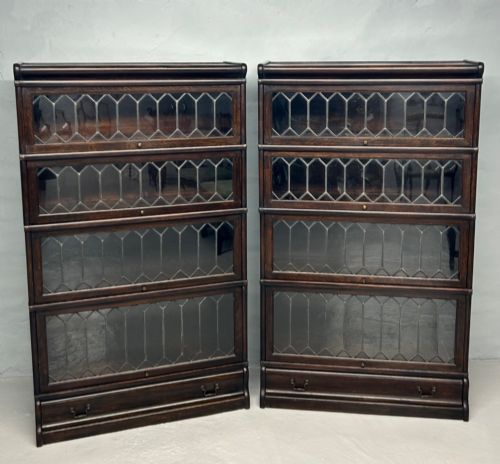


Pair of Glazed Bookcases
A pair of glazed bookcases brings symmetry to a room, offering matched display and storage across periods from Regency to Art Deco.
Pair of Glazed Bookcases
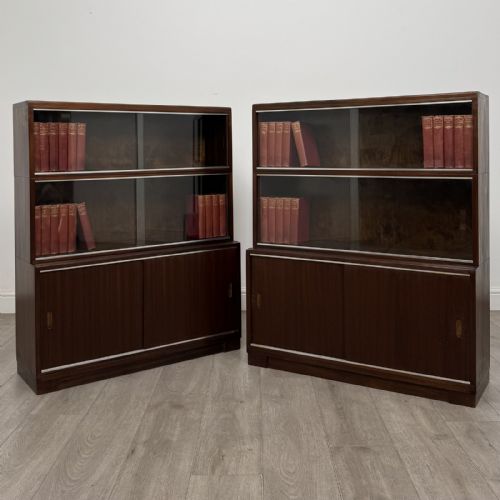
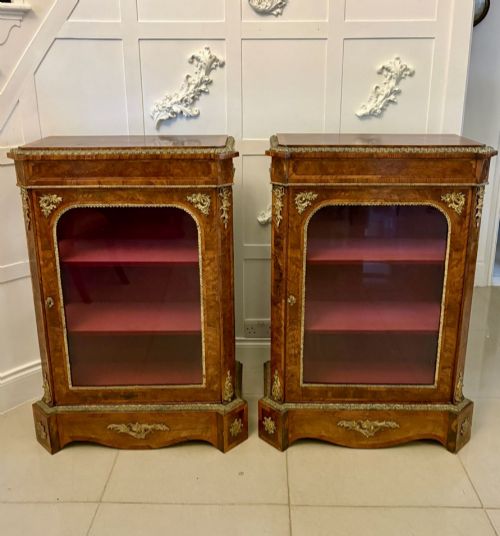
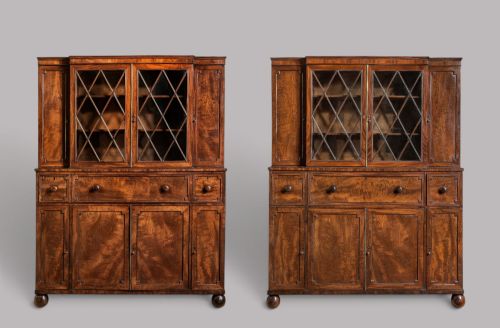
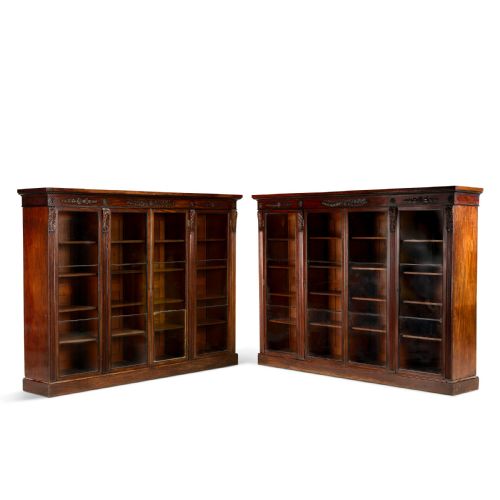
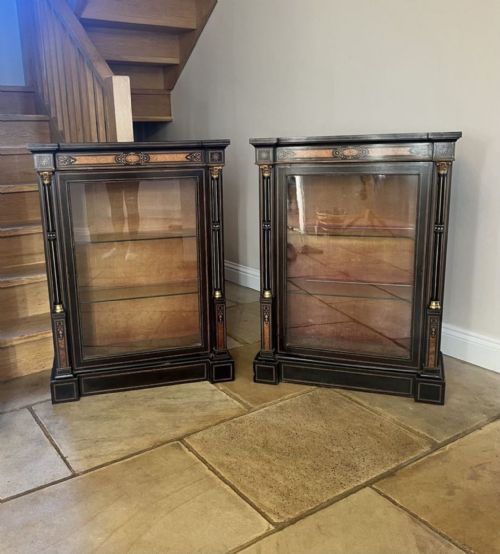
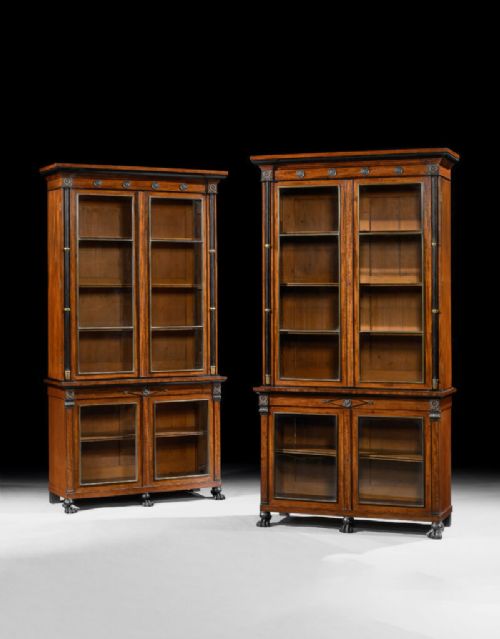
A pair of glazed bookcases comprises matching dual cabinets designed to house libraries and showcase collections, frequently found in Victorian and Regency forms. These dual units range from towering library bookcases to compact pier cabinets and modular barrister sections.
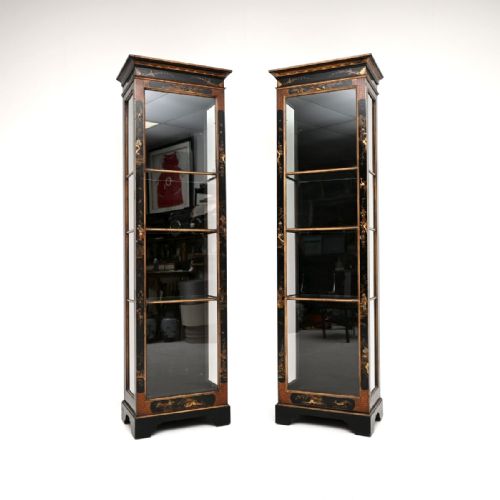
The selections span traditional mahogany and burr walnut alongside oak, ebonised wood, and satinwood, reflecting stylistic shifts toward Edwardian marquetry and Art Deco lines. Buyers encounter configurations with glass doors, leaded panes, and mirrored backs intended for formal reception rooms.
Originating largely from British and continental workshops, these matched pieces serve to balance architectural interiors while protecting volumes behind glass.
Materials and construction methods
Cabinet makers built these frames using dense timber carcases of mahogany, walnut, and oak, frequently veneered with burr walnut, satinwood, or amboyna to create figured surfaces. Secondary timbers provided structural stability within the internal shelving and backs.
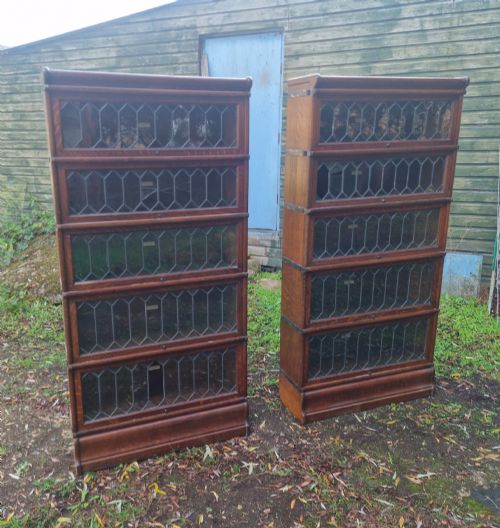
Glazing involved securing glass panes into timber framing or leaded cames, accompanied by brass hardware, ormolu mounts, and intricate marquetry or Boulle inlay in brass and tortoiseshell. Sectional barrister variants utilised mechanical stacking frames with upward-lifting glass doors.
The documented periods range from the Regency era through Victorian, Edwardian, and Art Deco design movements.
Distinctions in quality
Quality rests upon the selection of timber veneers, where intensely figured burr walnut or matched mahogany graining elevates the visual impact across both cabinets. The precision of the marquetry, inlay, and cast ormolu mounts determines the refinement of the piece.
Structural integrity shows in the weight of the timber, the uniformity of the glass, and the execution of secondary details like hand-cut dovetails in drawers and matching grain patterns across the pair.
Gillows·Marsh & Tatham·C Hindley & Sons·Arthur Reynolds Of Ludlow·Paul Somani
The Pair of Glazed Bookcases Glossary
- Pier cabinet
- A low cabinet designed to fit the wall space between windows. These pieces often feature glass doors and elaborate mounts.
- Boulle
- An artistic technique of inlaying brass and tortoiseshell into wooden surfaces. It appears frequently on French nineteenth-century furniture.
- Globe Wernicke
- A modular barrister bookcase system featuring stacked, interchangeable sections with glazed lifting doors. This design gained popularity in the early twentieth century.
- Ormolu
- Gilt-bronze decorative mounts applied to furniture. It is cast and chased to produce ornate surface details.
- Marquetry
- The art of applying decorative veneer pieces to a structure to form intricate patterns. Craftsmen utilised various coloured woods to achieve pictorial designs.
Pair of Glazed Bookcases: Frequently Asked Questions
How do I date a pair of glazed bookcases?
Dating relies on combining timber choices, hardware styles, and structural clues found in the carcase. Regency pieces typically show lean mahogany lines, whilst Victorian examples favour heavier burr walnut and elaborate mounts.
Later Edwardian and Art Deco iterations introduce satinwood marquetry, lighter oak tones, or geometric framing. Comparing the internal construction methods provides further confirmation of the manufacturing era.
Are matching pairs difficult to find?
True matched pairs are scarce because furniture was frequently made individually or separated over generations. Surviving dual cabinets represent either original commission suites or very closely matched antique companions.
Checking grain continuity and interior construction helps verify whether the two cabinets originated together from the same workshop.
Where should I place these in a home?
These pieces suit reception rooms, studies, or hallways where symmetry enhances the room's proportions. Tall library bookcases require sturdy wall space, whilst lower pier or corner cabinets fit narrower wall sections.
The glass doors protect books and collections from dust while keeping them visible within the living space.
What maintenance do glazed cabinets need?
Maintenance involves conditioning the timber with appropriate wax and keeping the glass clean with gentle solutions. Avoiding direct sunlight prevents the wood veneers and inlay from fading over time.
Checking the brass hinges and locks periodically ensures the doors operate smoothly without straining the surrounding frame.