


Wooden Glazed Cabinet
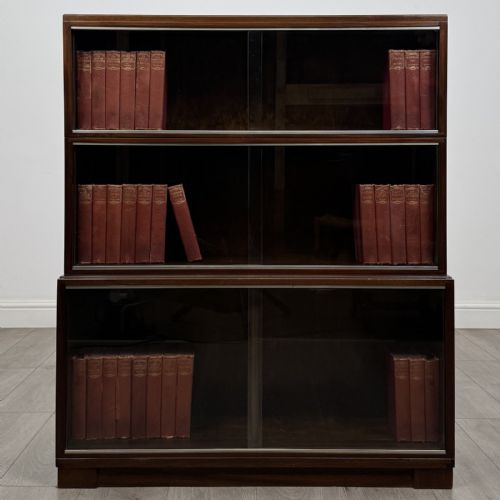
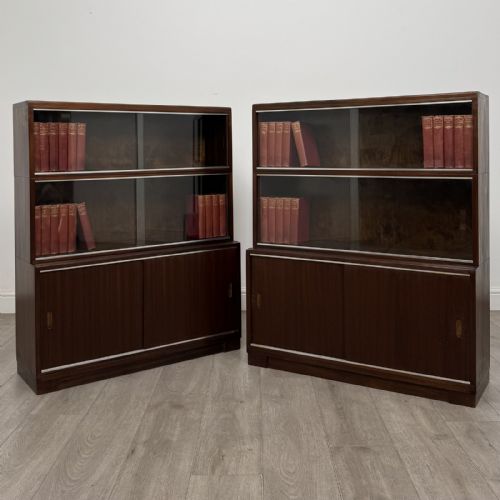
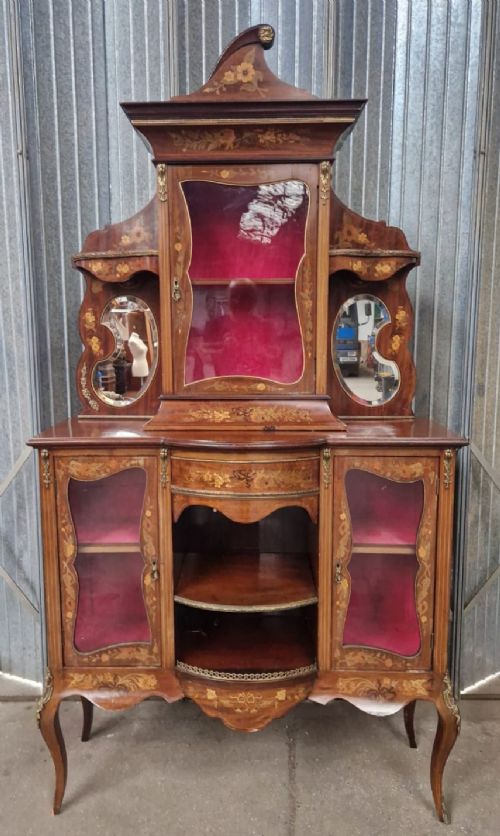
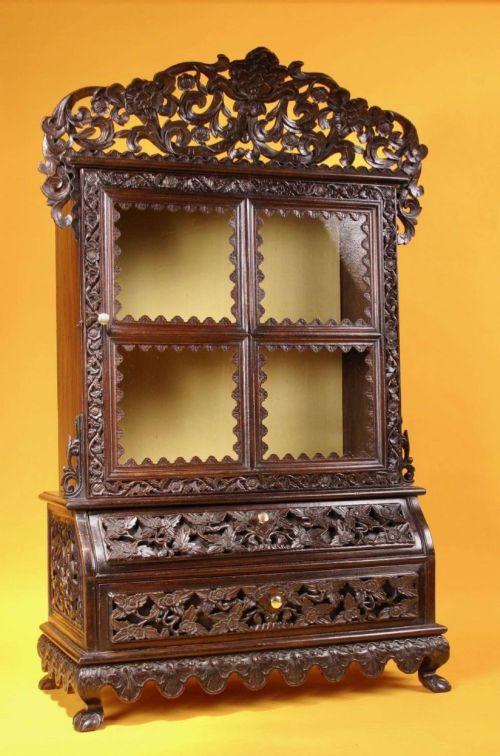
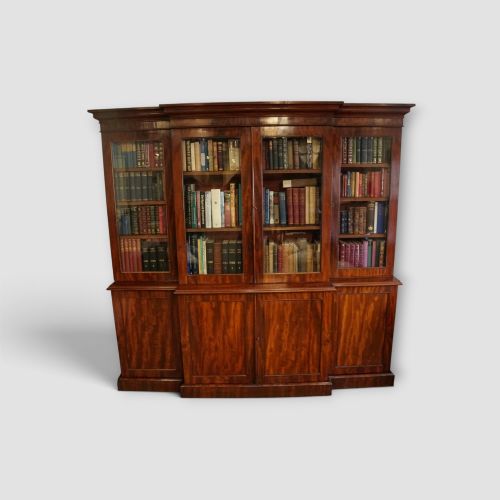
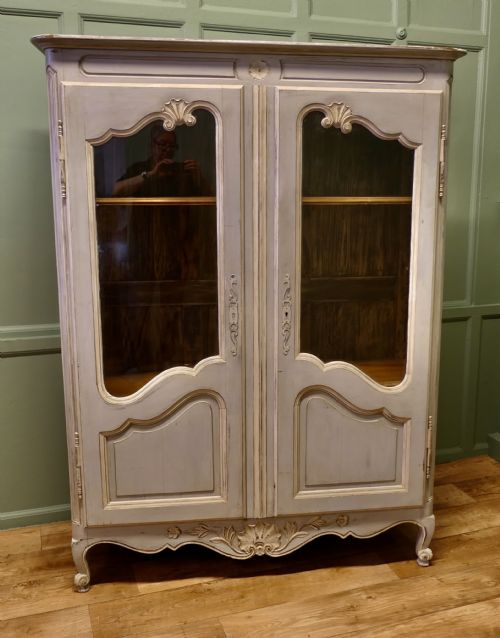
A wooden glazed cabinet brings books and collected objects into focus while protecting them behind glass.
Wooden Glazed Cabinet
A wooden glazed cabinet combines timber framing with glass panels to display books, porcelain, and curiosities while keeping them dust-free. These pieces serve practical storage roles in libraries, drawing rooms, and dining spaces across period interiors.
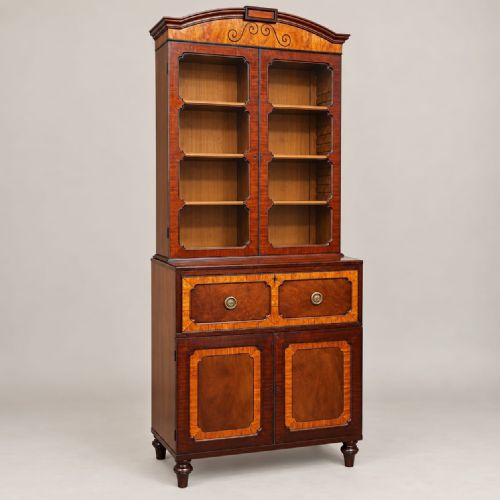
The selections here span centuries of British and continental design, ranging from Georgian mahogany secretaires to Edwardian satinwood display pieces. Bookcases, corner cabinets, and vitrines form the core of the variations encountered on this page.
Victorian and Edwardian iterations dominate the available selection, often utilising rich timbers like mahogany, walnut, and oak. Floor-standing formats sit alongside smaller table-top cases and tall breakfront library units.
How they were made
Cabinet makers utilised dense hardwoods such as mahogany, oak, and walnut for the primary structural carcases and shelving. Softer timbers like pine appeared in vernacular pieces, while decorative veneers including satinwood, amboyna, and burr walnut added surface pattern.
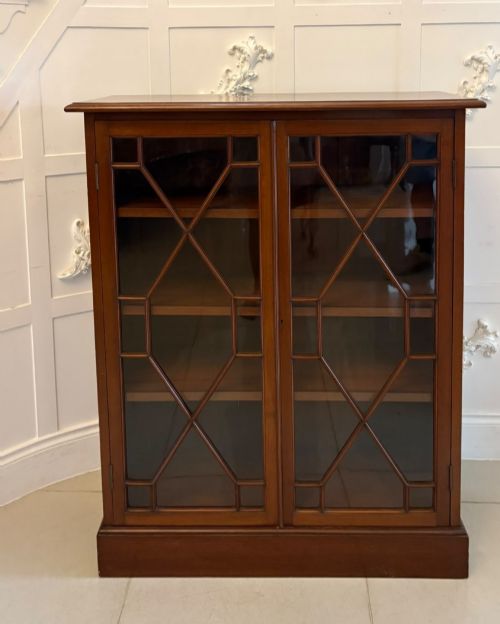
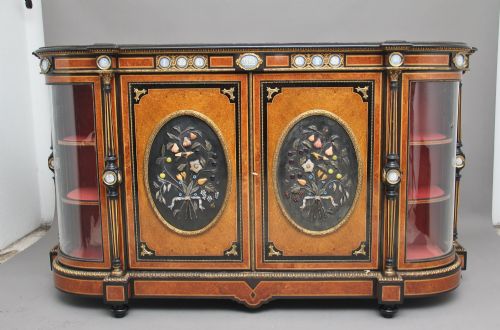
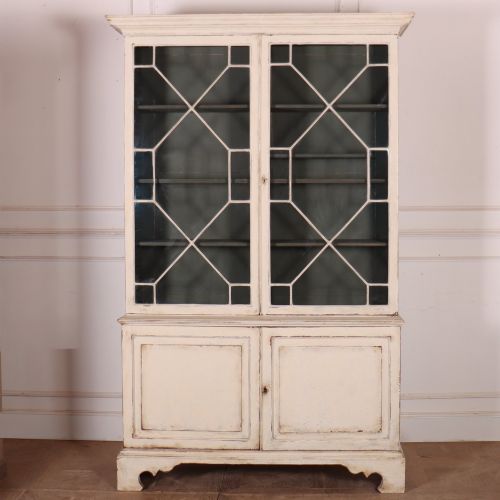
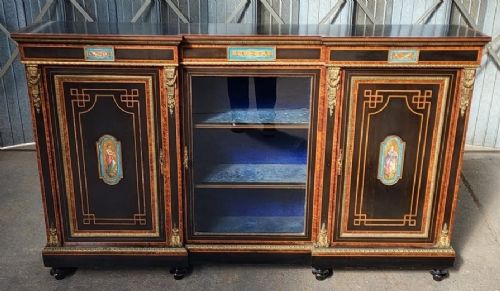
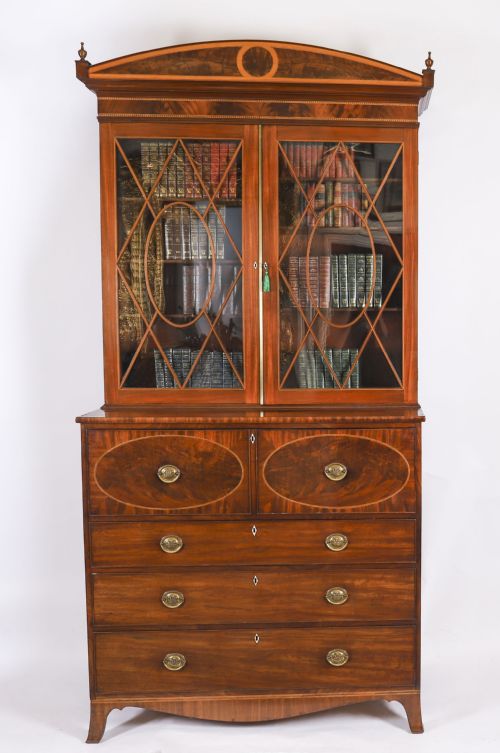
Glazing techniques secured individual panes of glass within wooden or brass framing bars, known as glazing bars or astragals. Ormolu mounts, brass hardware, and intricate marquetry inlay completed the ornamentation on formal pieces from the Georgian and Victorian eras.
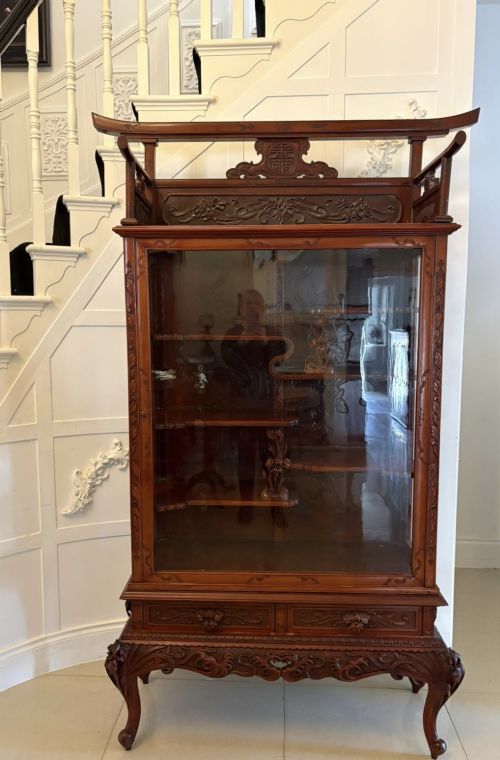
Red lacquer hardwood brings a flash of Japanese influence into traditional European display spaces.
What varies in quality
Construction methods dictate durability, separating solidly jointed carcases with panelled backs from lighter nailed alternatives. The crispness of carved details and the accuracy of dovetail joints reveal the hand of a skilled maker.
The choice of timber and veneer grading defines visual hierarchy, where well-figured flame mahogany or matched burr walnut elevates a piece. Original glass panes, functioning brass locks, and intact internal shelving further distinguish superior examples.
Maple & Co.
The Wooden Glazed Cabinet Glossary
- Astragal
- The narrow wooden or brass moulding that divides individual panes of glass within a glazed door. These bars often form geometric or Gothic arch patterns.
- Secretaire
- A cabinet incorporating a pull-down writing flap that conceals small drawers and pigeonholes. It merges a desk with a bookcase or storage unit.
- Vitrine
- A glass-sided display cabinet designed primarily for the exhibition of porcelain and ornaments. French examples frequently feature curved glass and gilt mounts.
- Breakfront
- A large cabinet design where the central section projects forward from the flanking wings. This architectural arrangement creates depth and shadow.
- Marquetry
- Decorative veneer work created by fitting together thin pieces of wood, shell, or ivory to form pictorial or abstract patterns. It adorns the surfaces of high-status furniture.
Wooden Glazed Cabinet: Frequently Asked Questions
Where should I place a corner cabinet?
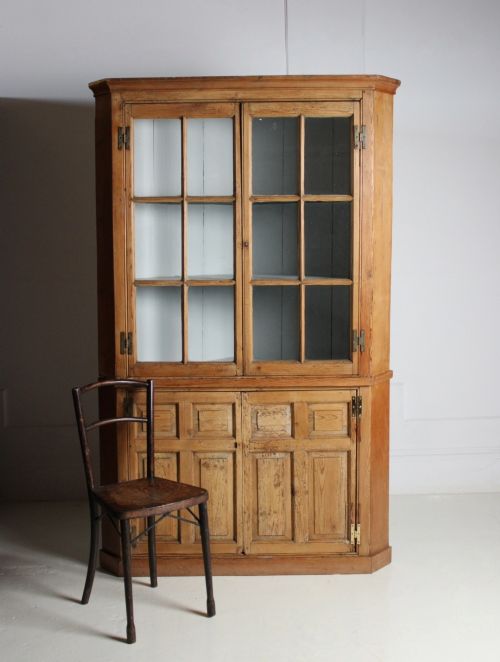
A corner cabinet fits neatly into unused room angles, turning dead space into functional display storage.
These pieces suit dining rooms or hallways where floor space is limited.
How do I clean antique wood surfaces?
Use a soft, dry cloth to remove dust without disturbing the polished patina of the timber. Avoid modern silicone sprays that can build up and damage old finishes.
Apply high-quality beeswax occasionally to nourish dry hardwood.
Can adjustable shelves hold heavy books?
Solid mahogany and oak library bookcases easily support heavy volumes on their internal timber shelves. Check the shelf support pins to ensure they sit securely in the side grooves.
Many Edwardian and Victorian iterations feature adjustable rack systems for custom spacing.