

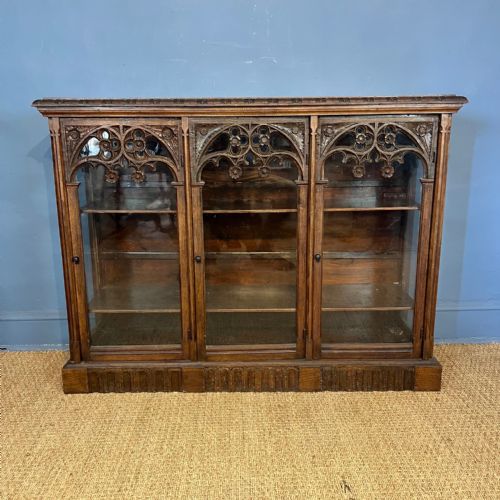
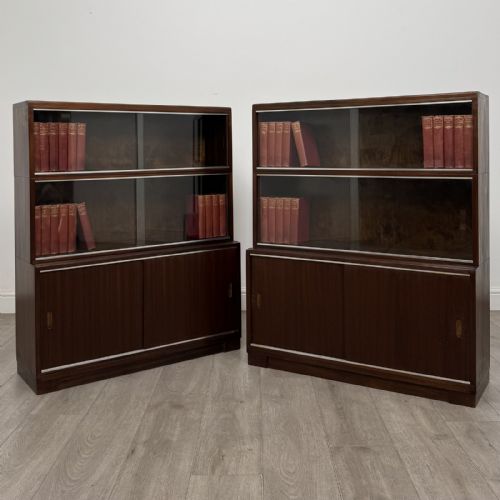
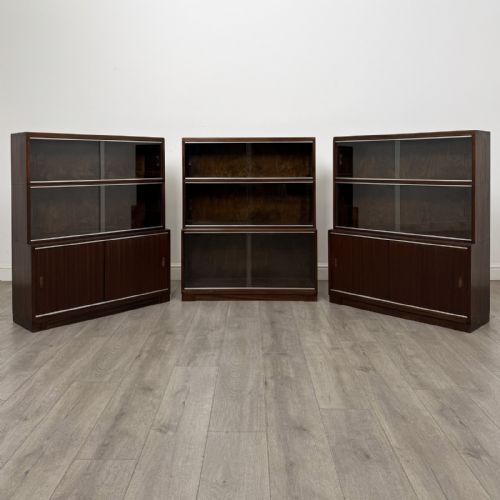
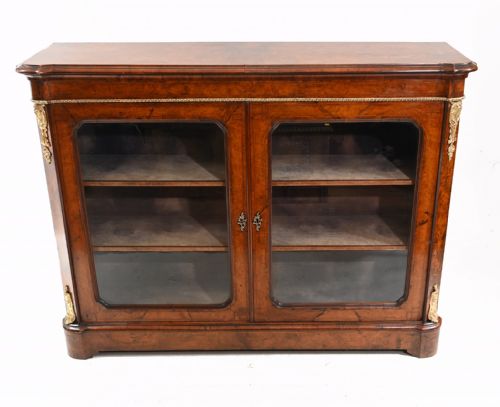


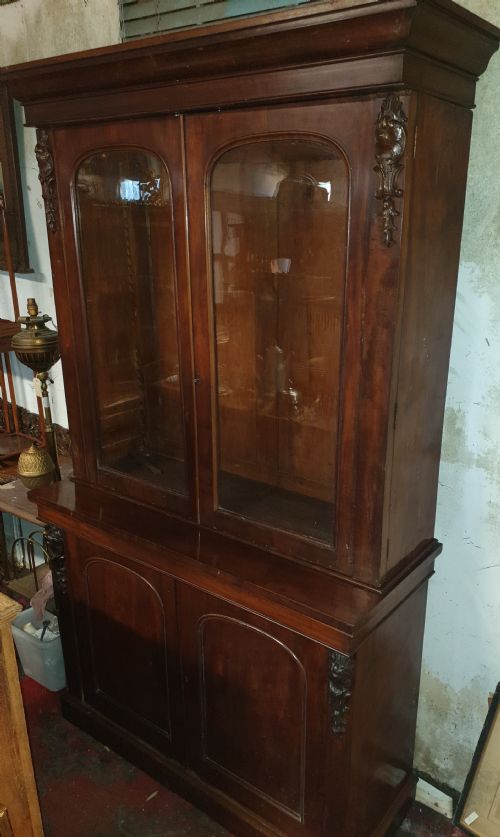
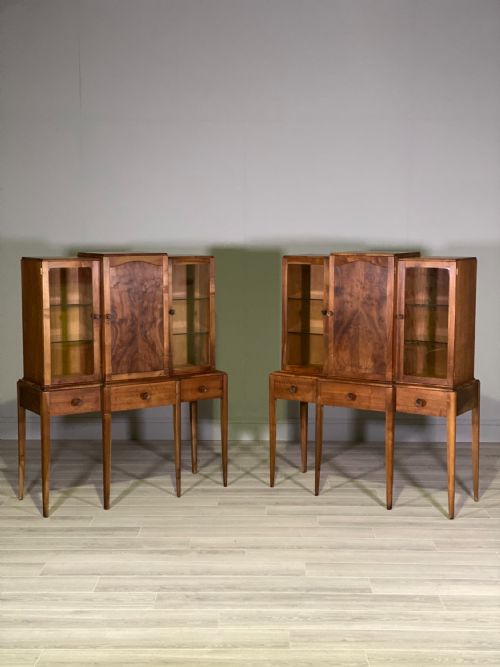
Mid Century Glazed Sideboard
These mid century glazed sideboard pieces bring together timber frames and glass panels to hold your volumes and display your favourite objects.
Mid Century Glazed Sideboard
When you search for a mid century glazed sideboard, you are looking at nineteenth-century and early twentieth-century cabinetry designed to house books and display decorative objects behind glass. The examples on this page span the Victorian era, the mid-nineteenth century, and the early decades of the twentieth century, encompassing items from eighteen-fifty to nineteen-thirty.
The forms you are most likely to meet on this page include walnut credenzas, pier cabinets, mahogany display cabinets, and sideboards with sliding glass doors. These storage pieces combine enclosed wooden cupboards with glazed upper or middle sections, shifting in function from formal nineteenth-century drawing room cabinets to more utilitarian twentieth-century book storage.
Makers such as Arthur Reynolds of Ludlow appear in the evidence alongside standard Victorian and early twentieth-century cabinet types. The materials range from mahogany, burr walnut, and figured walnut to rosewood, palisander, and ormolu mounts, reflecting the varied tastes of the nineteenth century and the simplified utility of nineteen-twenty.
How they were made
The construction of these pieces relies on heavy hardwood timbers such as mahogany, rosewood, and walnut, often enhanced with burr walnut veneers and intricate inlay work. Craftsmen selected figured timbers for the primary visual surfaces, pairing them with secondary woods for internal components.
Metal mounts and hardware play a distinct structural and decorative role, featuring cast ormolu and brass fittings alongside sliding or hinged glass doors. Mid-nineteenth-century examples frequently incorporate detailed marquetry and fitted internal drawers, whilst nineteen-twenty pieces utilise simpler sliding glass mechanisms.
Mid Century Glazed Sideboard Retail Price Guide 2026
Typical asking prices for mid century glazed sideboard among the pieces listed under this phrase on Sellingantiques today, from the lower quarter to the upper quarter. They describe what is for sale here now, not the wider market.
The listings span the nineteenth century, Victorian period, and early twentieth-century decades up to nineteen-thirty.
What varies in quality
The degree of refinement in the timber selection and veneer matching separates the standard examples from the finest pieces. High-grade items display carefully figured burr walnut and rich mahogany grains across the entire facade, whereas simpler pieces rely on plain timber surfaces.
The presence of specialised internal fittings, such as secretaire drawers, ormolu mounts, and complex inlay work, elevates a piece above basic utility furniture. Structural execution, from the tight fit of the glazed doors to the crispness of the brass and ormolu mounts, determines the standard of the cabinet-making.
Arthur Reynolds Of Ludlow
The Mid Century Glazed Sideboard Glossary
- Credenza
- A low cabinet or sideboard, often featuring glazed doors and ormolu mounts, originating in the nineteenth century as a formal drawing room piece.
- Pier Cabinet
- A narrow display cabinet designed to fit the wall space between windows during the Victorian period.
- Ormolu
- Gilded bronze or brass applied as decorative mounts and framing on nineteenth-century cabinet furniture.
- Burr Walnut
- A heavily figured timber cut from walnut tree growths, valued for its swirling grain patterns on cabinet doors and panels.
- Palisander
- A dense, dark tropical hardwood used for nineteenth-century cabinet veneers and furniture frames.
Mid Century Glazed Sideboard: Frequently Asked Questions
What is a mid century glazed sideboard used for?
These cabinets serve as practical storage furniture for books, ceramics, and glassware while keeping dust away from delicate items.
The glass panels allow collections to remain visible in living spaces and dining rooms.
How do I date a glazed cabinet?
Dating relies on observing timber choices, hardware styles, and construction methods characteristic of periods like the Victorian era or nineteen-twenty.
Earlier nineteenth-century pieces often feature intricate inlay, ormolu mounts, and rosewood or walnut veneers.
Are these pieces made of solid wood?
Most examples combine solid hardwood frames, such as mahogany or walnut, with decorative veneers applied to the primary surfaces.
Internal components and backboards frequently utilise secondary timbers typical of their respective periods.
How should I care for a walnut credenza?
Keep the timber away from direct heat sources and strong sunlight to prevent the veneers from drying out or splitting.
Clean the glass with standard window products and dust the polished wood surfaces regularly with a dry cloth.