


Pair of Empire Candlesticks
Pair of empire candlesticks bring neoclassical drama and heavy gilt or patinated bronze into a room.
Pair of Empire Candlesticks
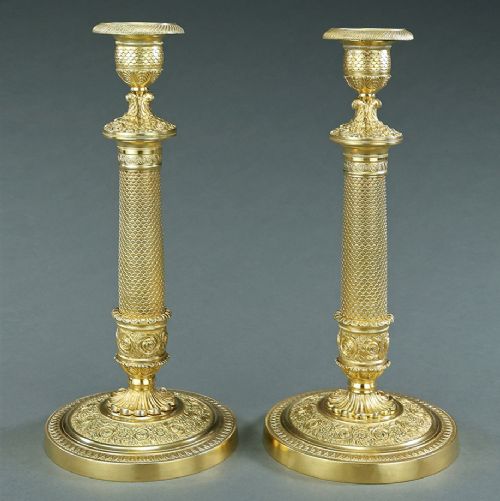
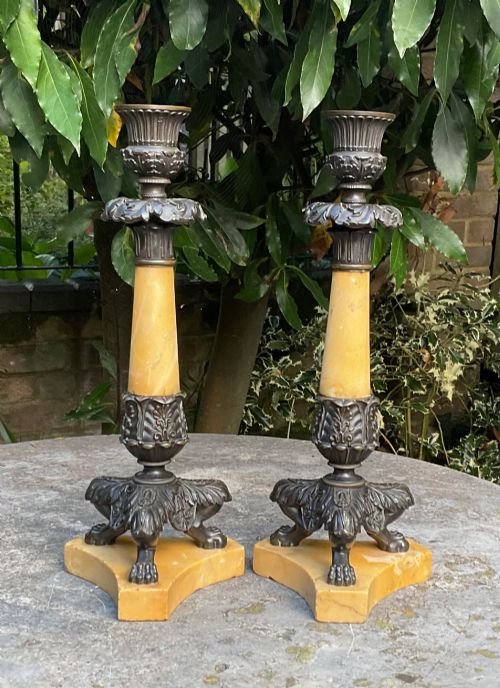
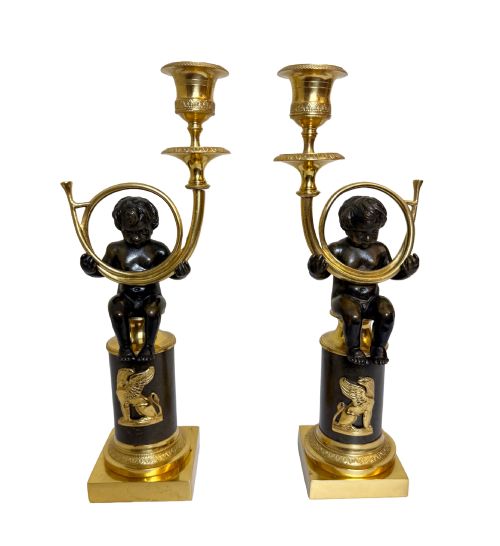
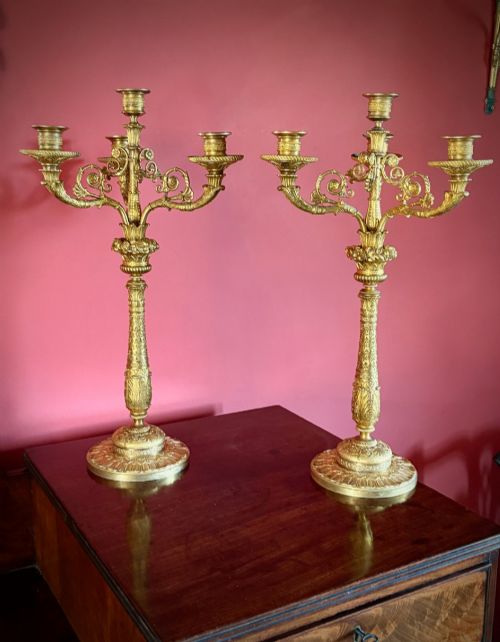
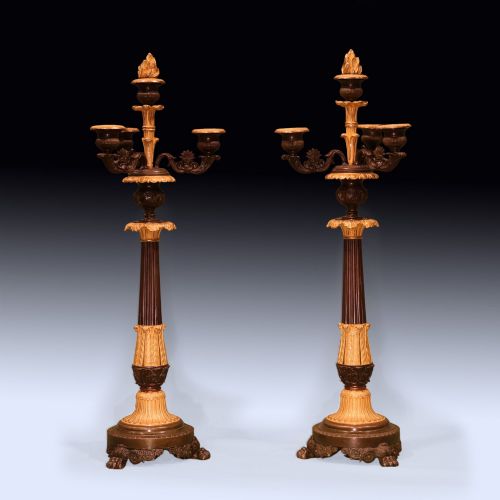
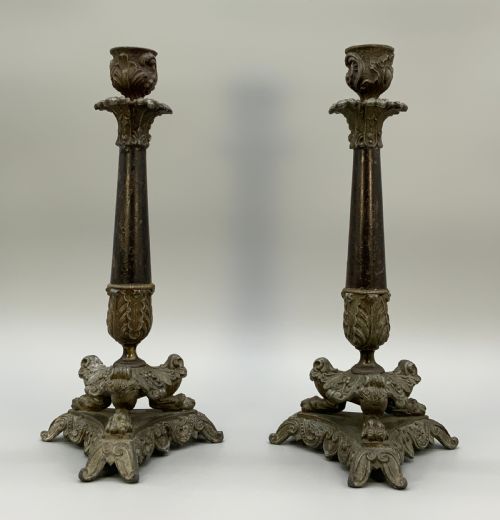
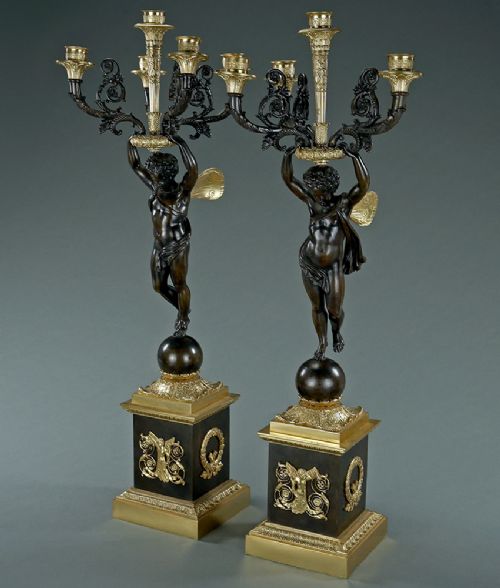
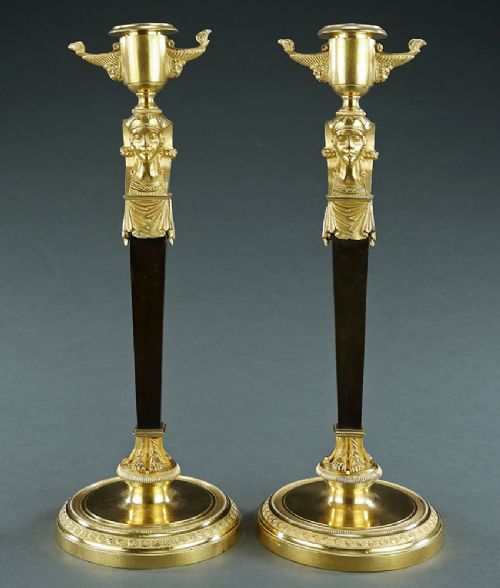
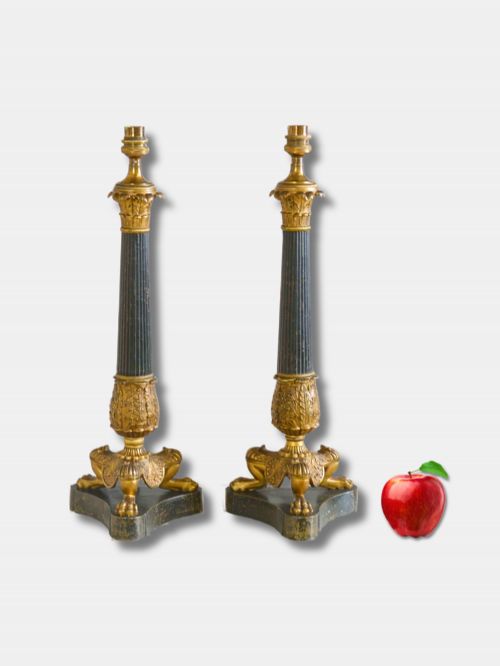
A pair of empire candlesticks comprises matched lighting supports rooted in the early nineteenth century, featuring the military motifs, classical columns and rich gilding characteristic of the French Empire and Regency periods. These heavy metal pieces often incorporate figural elements such as cherubs, winged putti or lions paw feet, reflecting classical antiquity and the Napoleonic aesthetic.
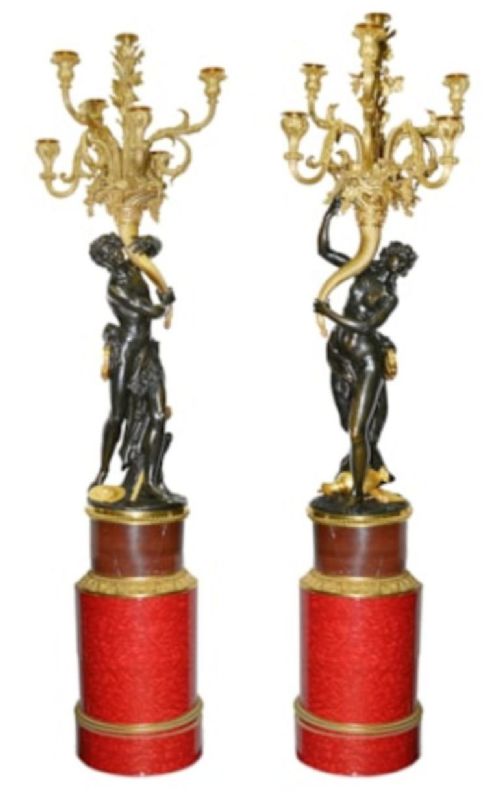
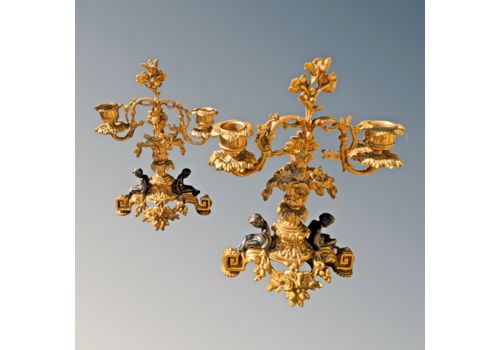
Buyers browsing this selection frequently encounter French provincial and English Regency interpretations, spanning from simple brass or cast metal holders to elaborate multi-branch candelabra. Alongside standard single-light candlesticks, the listings include candelabras and table lamps adapted from the period, bridging classical design with later lighting needs.
Materials and construction
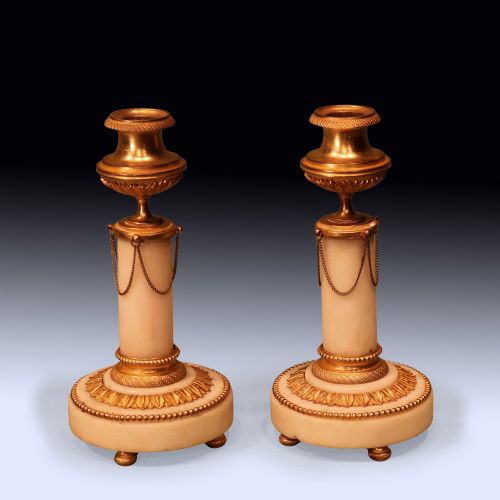
Craftsmen built these items primarily through the combination of cast bronze, ormolu and natural stone bases, merging patinated dark bronze with bright gilt elements to create strong textural contrast. Ormolu, or gilded bronze, provided the brilliant golden highlights that caught candlelight, while white, green or sienna marble plinths anchored the heavier metal components.
Foundries utilised detailed metal casting techniques to achieve crisp figural work, sharp acanthus leaves and precise architectural mouldings on columns and bases. Individual components were often mechanically joined by internal threaded rods, allowing precise alignment of the drip pans, sconces and central stems.
Several examples feature winged putti or mermen holding the candle sockets, proving that nineteenth century lighting designers possessed a delightfully dramatic imagination.
Assessing craftsmanship
Material selection also dictates the hierarchy, with heavy solid ormolu and richly veined marble plinths commanding greater presence than lighter brass or cast metal substitutes. The structural integrity of the joints and the original matching of the pair determine whether the objects retain their intended symmetry.
The Pair of Empire Candlesticks Glossary
- Ormolu
- Gilt bronze produced by applying a mercury and gold amalgam to a bronze base and heating it to drive off the mercury. This historical fire-gilding technique creates a durable, warm metallic finish.
- Patinated bronze
- Bronze treated with chemical solutions to produce a controlled dark surface colour, contrasting with bright gilt highlights. This finish accentuates the sculptural modelling of figures and columns.
- Retour d Egypte
- A design style inspired by Napoleon Bonaparte s military campaign in Egypt, incorporating sphinxes, pharaohs and lotus motifs. It represents an early phase of the wider Empire aesthetic.
- Candelabra
- A branched lighting fixture designed to hold multiple candles simultaneously from a single central stem. These branch attachments were frequently removable to convert the piece into a standard candlestick.
- Sconce
- The socket or cup at the top of a candlestick designed to catch melting wax and hold the base of the candle secure. It forms an integral architectural tier of the overall design.
Pair of Empire Candlesticks: Frequently Asked Questions
How do I clean ormolu candlesticks?
Dust the surfaces gently with a soft dry brush to remove particles without disturbing the underlying metal. Avoid abrasive cleaners or metal polishes that can strip away the historical gilding.
For stubborn grime, apply a damp cloth with mild soap, then dry thoroughly immediately afterwards.
Were these originally wired for electricity?
Authentic period examples were manufactured exclusively for wax candles before modern electrical wiring existed. Many surviving pieces have been thoughtfully adapted into table lamps during the twentieth century.
Check the base and central column for professional conduit placement that preserves the original metal structure.
How do I tell Empire from Regency?
French Empire pieces typically display strict adherence to Napoleonic symbols, rich fire gilding and French marble varieties. English Regency equivalents often incorporate local interpretations such as patinated bronze paired with brass mounts and British cabinetmaker influences.
Both styles share deep roots in classical antiquity and Roman architectural forms.
Can I use real candles in them?
Original sconces accommodate standard taper candles, though the metal components will conduct heat during burning. Ensure the candle fits snugly in the cup to prevent any lean that could cause wax spillage onto the gilt surfaces.
Many collectors prefer LED alternatives to protect fragile historical finishes from heat and wax damage.