


19th Century Ormolu Sconces
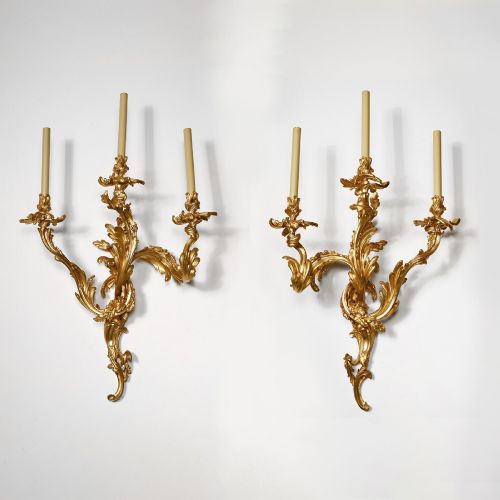
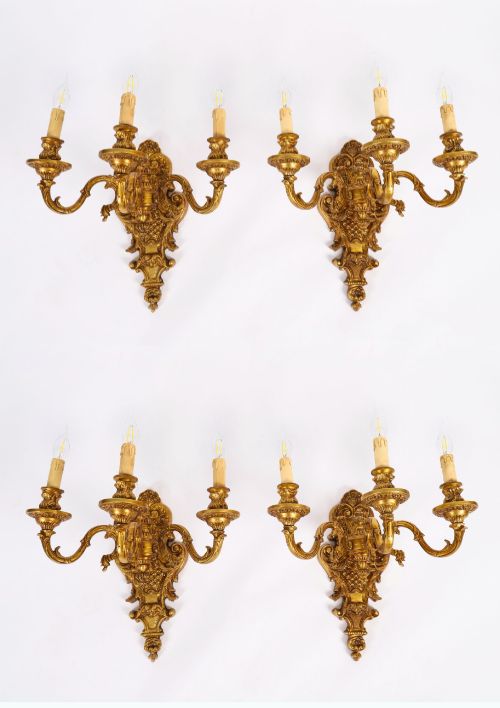
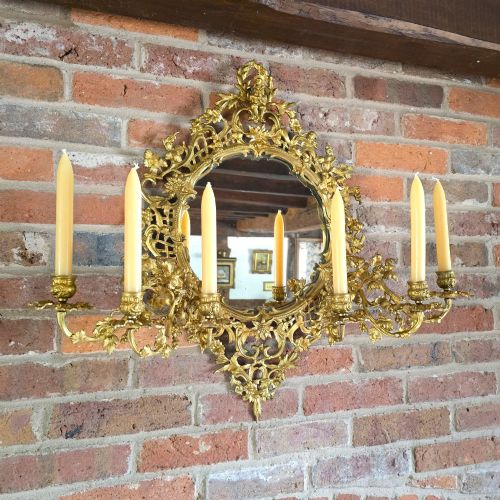
These 19th century ormolu sconces bring warm, reflective metallic light and classical French design to interior walls.
19th Century Ormolu Sconces
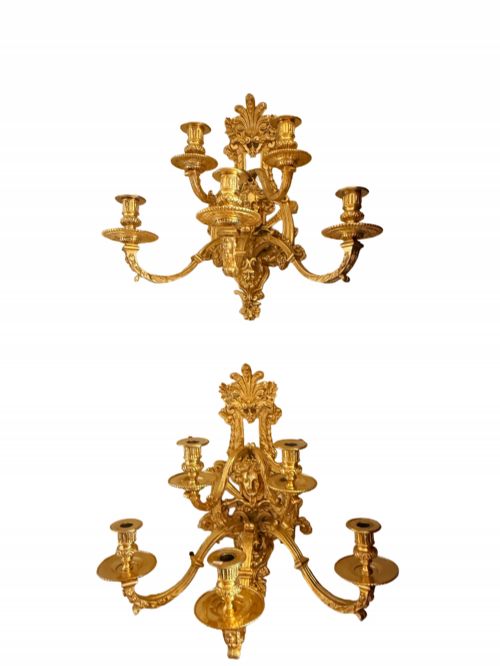
When you search for 19th century ormolu sconces, you encounter wall-mounted lighting fixtures designed to hold candles or illuminate rooms with decorative branching arms. These pieces serve as functional wall art, bringing historical illumination and ornate metalwork into domestic spaces.
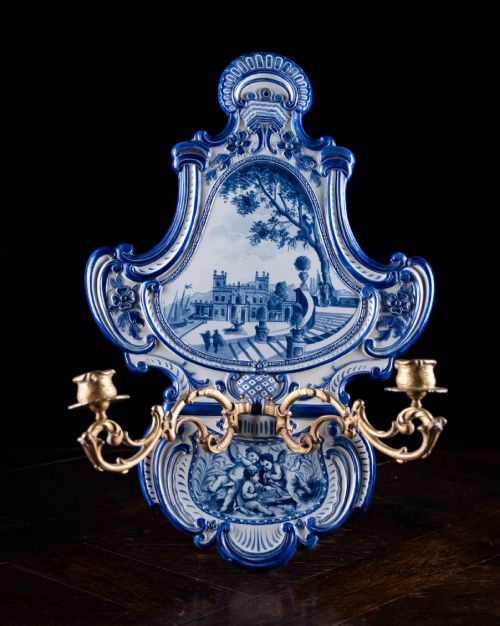
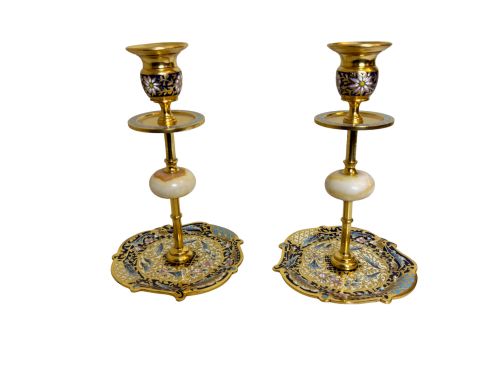
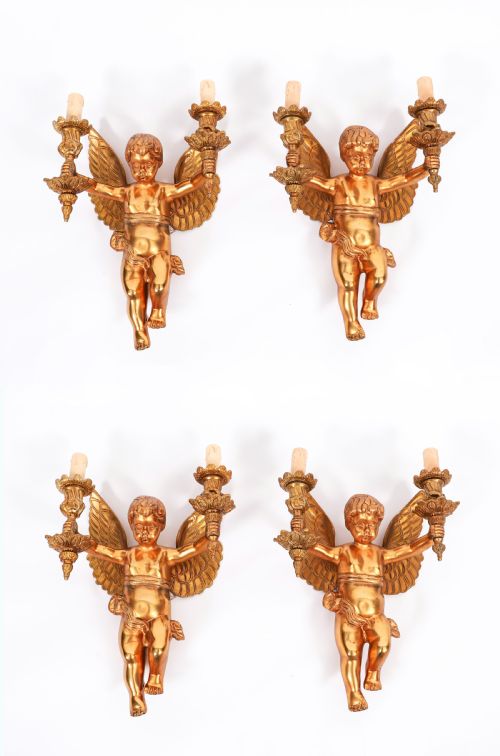
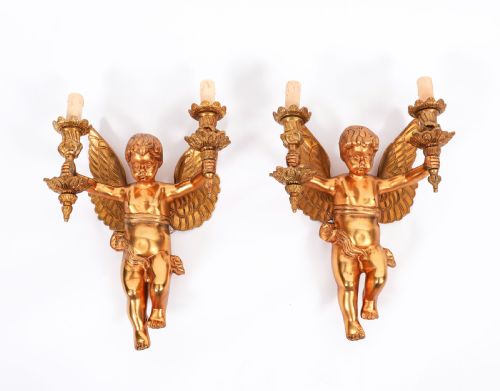
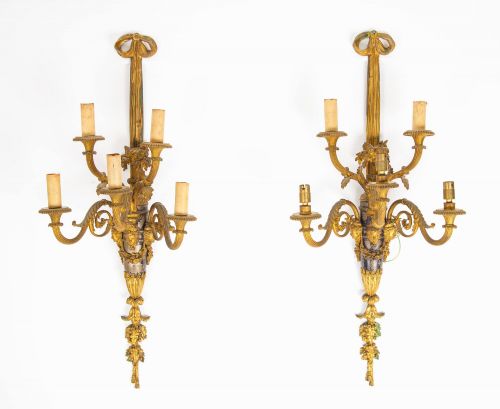
The selection ranges from simple gilt bronze arms to elaborate compositions incorporating cherubs, marble, porcelain portraits, and champlevé enamel. Makers and workshops from Paris dominate the selection, often utilising classical motifs such as ram's head masks and caryatids.
How they were made
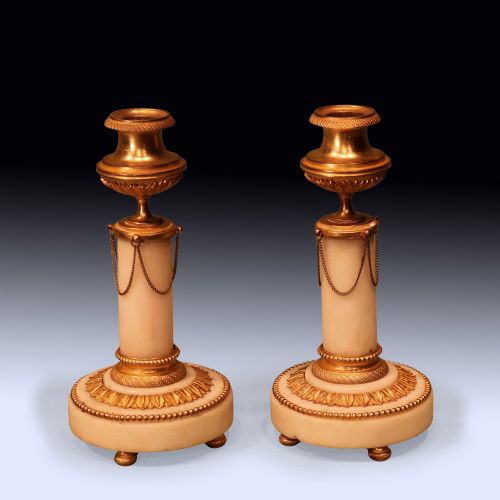
Craftsmen created these lighting fixtures by casting bronze into detailed decorative shapes, applying a mercury gilding process known as ormolu to achieve a rich golden finish. This gilded bronze often combined with patinated dark bronze, brass, white marble, onyx, or ceramic elements like Sevres porcelain.
Foundries employed skilled chiselling after casting to sharpen the acanthus leaves, scrollwork, and figurative details before the gold leaf or amalgam was applied. Secondary materials such as hand-painted porcelain plaques and champlevé enamel panels were integrated into the metal frames to add colour and texture.
Materials documented across the inventory include gilt bronze, ormolu, brass, bronze, patinated bronze, marble, porcelain, and gold leaf.
What varies in quality
The crispness of the bronze chasing and the depth of the gilding determine the visual hierarchy among these wall lights. Superior examples exhibit sharp, hand-finished botanical and figurative detailing where softer casts appear rounded and indistinct.
The integration of secondary materials like marble bases, porcelain inserts, and rock crystal creates distinction between standard production and exceptional commissions. Heavier gauge bronze castings and robust multi-branch construction also signal higher workshop standards.
Henri Vian·Villeroy and Boch·Samson
The 19th Century Ormolu Sconces Glossary
- Ormolu
- A gold-coloured alloy of copper, zinc, and sometimes tin, or the technique of applying finely ground gold mercury amalgam to bronze. This finish provides the characteristic rich metallic lustre seen on nineteenth-century French lighting.
- Appliqué
- A decorative wall-mounted lighting fixture or sconce designed to fit flat against a vertical surface. These fixtures often feature branching arms extending forward to hold candles.
- Candelabra
- A branched candlestick holder designed to support multiple candles simultaneously. In this period, they appear both as table objects and adapted for wall mounting.
- Champlevé
- An enamelling technique where troughs or cells are carved into the surface of the metal and filled with vitreous enamel before firing. It frequently accents nineteenth-century ormolu and onyx candlesticks.
- Caryatid
- A sculpted female figure serving as an architectural support column instead of a pillar. They appear supporting the shafts of nineteenth-century gilt bronze candlesticks and girandoles.
19th Century Ormolu Sconces: Frequently Asked Questions
How do I mount ormolu sconces securely?
These heavy bronze fixtures require anchoring directly into solid wall studs or using heavy-duty wall plugs suited to plaster and masonry. Because many pieces feature substantial multi-branch bronze arms, professional installation ensures the weight is safely supported.
Electrical conversion is common for modern use, though structural brackets must still bear the physical load of the cast metal body without relying on wiring or decorative backplates for support.
Were these sconces originally wired for electricity?
Nineteenth-century lighting fixtures were built exclusively to hold wax candles or oil lamps before modern domestic electrification. Most surviving examples have been carefully adapted with internal wiring to accommodate small candelabra bulbs.
When evaluating pieces, look for discreet wiring channels that preserve the integrity of the original gilt bronze casting and backplate without altering the visible aesthetic.
How do I clean nineteenth-century ormolu safely?
Dust gilt bronze surfaces gently with a soft, dry brush or microfibre cloth to prevent the accumulation of particles in recessed chased details. Avoid harsh chemical cleaners, commercial metal polishes, or abrasive cloths that can strip away the delicate gold leaf or ormolu surface.
If deeper cleaning is necessary, professional conservation is recommended to protect the original patination and mercury gilding from irreversible damage.
How can I tell Louis XVI style from Empire style?
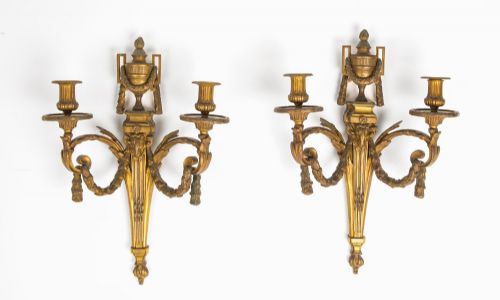
Louis XVI style wall lights feature restrained classical symmetry, ribbon twists, acanthus leaves, and delicate floral garlands reflecting eighteenth-century French royal aesthetics. Empire style pieces display bolder, heavier military and Roman motifs such as laurel wreaths, sphinxes, and classical urns.
Empire lighting relies on strong contrasts between bright ormolu highlights and dark patinated bronze surfaces, whereas Louis XVI revivals emphasise lighter, more fluid rocaille and neoclassical ornamentation.