
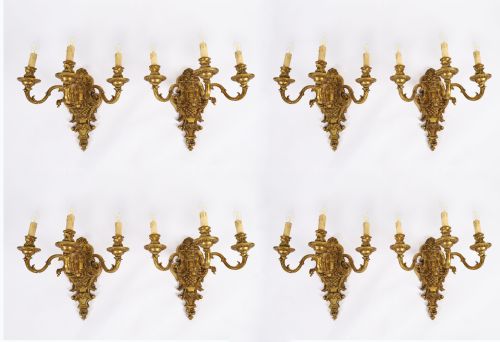


Ormolu Three Branch Sconces
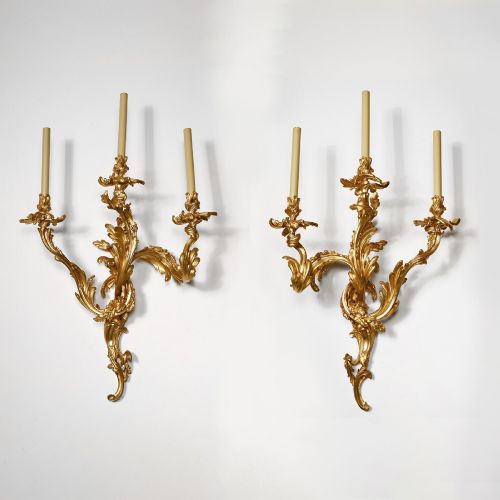
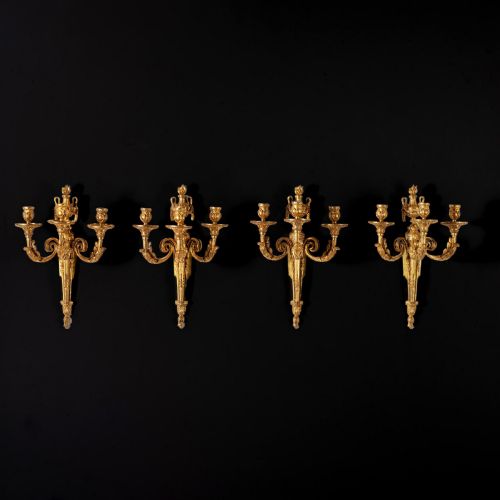
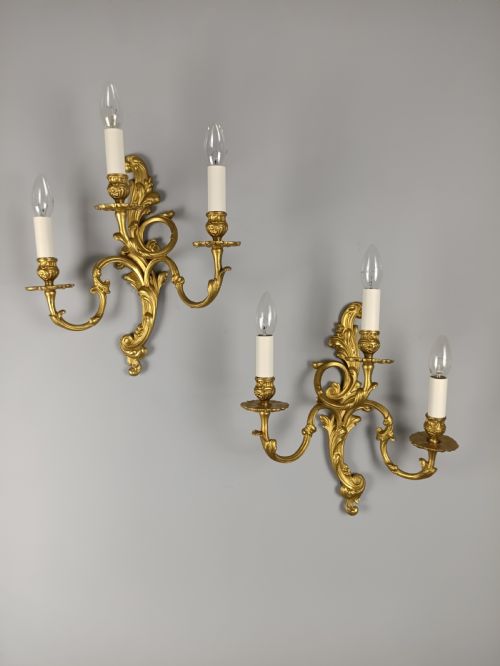
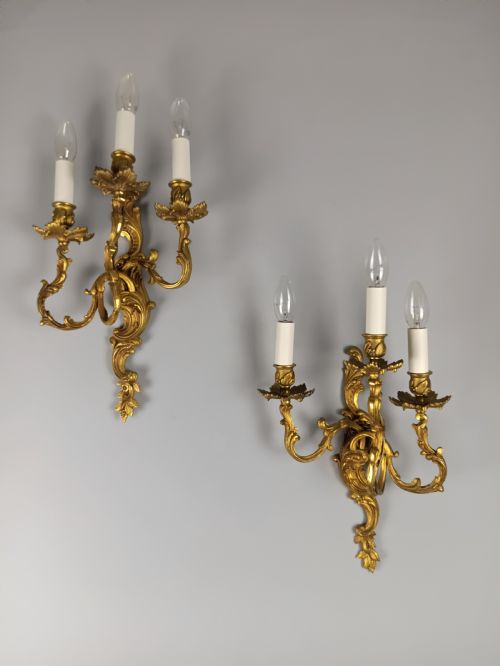
These ormolu three branch sconces bring French period elegance and warm illumination to any wall.
Ormolu Three Branch Sconces
When you search for ormolu three branch sconces, you find wall lights designed to hold three candles or bulbs on pivoting or fixed arms. These pieces project from the wall to cast light across a room while serving as decorative wall art.
The pieces listed on this page span several centuries, running from the eighteenth century through the nineteenth century and into the early twentieth century. You encounter matching pairs and larger sets finished in the French taste.
French Rococo, Louis XV, and Louis XVI styles dominate the forms, featuring scrolling foliage, classical symmetry, and elaborate backplates. Most examples originate from French workshops adhering to traditional design vocabularies.
How They Were Made
Makers produced these wall lights using cast metal, primarily brass and bronze, which received a layer of ormolu or gilding. Artisans shaped the metal through casting and chased the surface details by hand to create crisp relief work on the foliage and mounts.
Gilded bronze and ormolu applications required skilled metalworkers to apply gold leaf or mercury gilding over the base metal. Gilded brass also appears as an alternative material offering a similar bright metallic finish.
Listings for ormolu three branch sconces feature pieces spanning from the eighteenth century through the 1930s, utilising cast metal, brass, and gilt bronze.
What Varies in Quality
The crispness of the chasing on the metal surface separates superior examples from simpler ones. Finer sconces exhibit deep, sharp relief in the acanthus leaves and scrolling arms, whereas lesser pieces show softer, shallower detailing from worn moulds.
The weight and thickness of the cast metal structure also mark the standard of manufacture. Heavier castings provide rigid support for the triple arms and maintain stability over centuries of use.
The Ormolu Three Branch Sconces Glossary
- Ormolu
- Finely chopped gold high-mercury bronze amalgam applied to metallic objects. This historic French gilding technique creates a rich, warm golden surface finish.
- Appliqué
- A French term for a wall light or sconce attached directly to a wall. These fixtures mount securely to hold candles or electric fittings.
- Louis XVI Style
- A neoclassical design period defined by straight lines, symmetry, and classical motifs like urns and swags. This aesthetic informs many nineteenth-century wall lights.
- Rococo
- An ornate design style characterised by asymmetry, C-scrolls, and naturalistic plant forms. This aesthetic dominates eighteenth-century French wall sconces.
- Triple arm
- A lighting branch configuration holding three distinct nozzles or drip pans. This layout allows a single wall plate to project three separate light sources.
Ormolu Three Branch Sconces: Frequently Asked Questions
How were these wall sconces originally lit?
These fixtures were originally designed to hold wax or tallow candles in sockets fitted with drip pans to catch melting wax.
Many surviving examples have since been wired safely for electricity while retaining their original aesthetic appearance on the wall.
Where should I place these sconces in a room?
Wall sconces are typically mounted at eye level on either side of a fireplace, mirror, or large piece of furniture. Placing them in pairs creates visual balance and even illumination across the wall space.
They function effectively in hallway settings, dining rooms, and drawing rooms to add ambient lighting.
How do I tell an eighteenth-century piece from a later revival?
Eighteenth-century originals feature hand-chasing work and construction methods specific to period metalworking traditions. Later nineteenth and twentieth-century revivals often replicate these earlier styles using contemporary casting techniques.
Examining the backplate construction and wear patterns on the metal helps distinguish between original period pieces and later revival items.
What is the difference between ormolu and gilded brass?
Ormolu specifically refers to gilded bronze, where gold is applied to a bronze substrate using historic techniques. Gilded brass utilises a different base alloy underneath the gold layer.
Both materials provide a bright golden metallic surface, but bronze generally offers a heavier and more robust casting structure.