

Pair of Column Stands
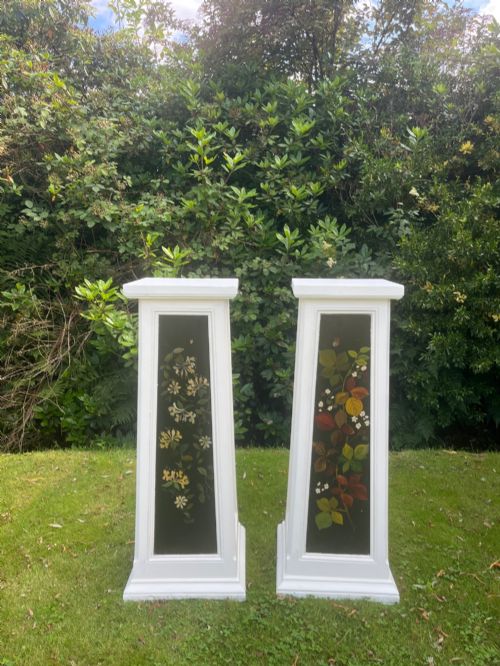
A pair of column stands brings architectural symmetry to a room, supporting urns, busts or lamps with classical dignity.
Pair of Column Stands
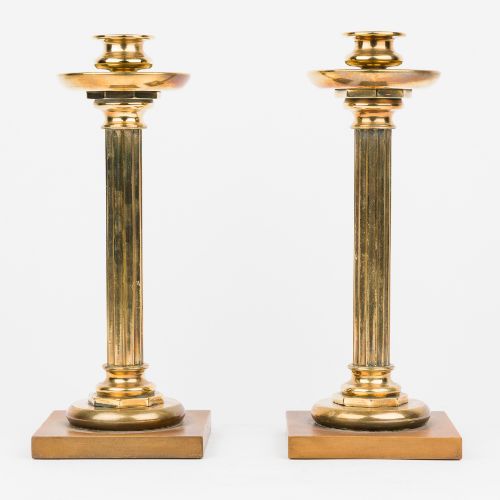
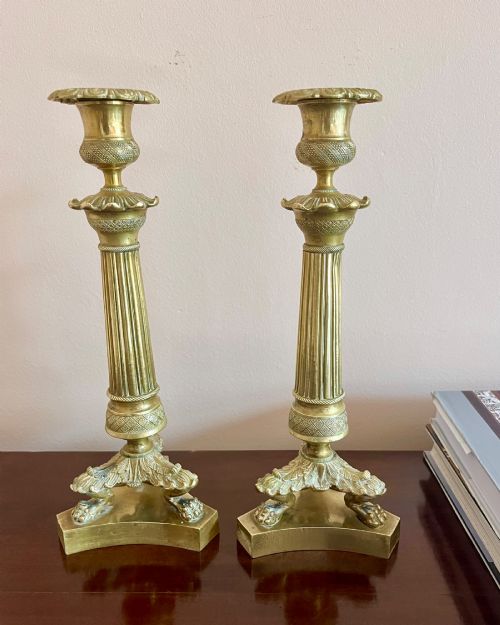
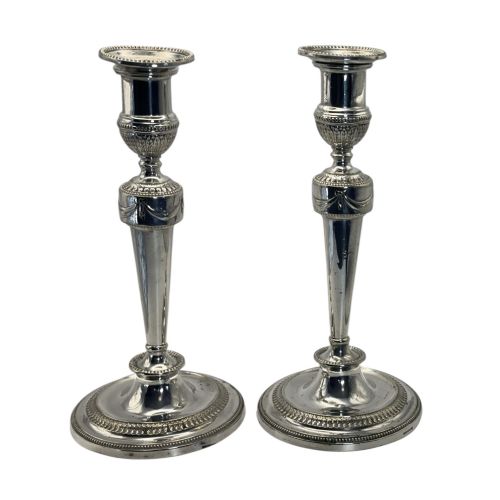
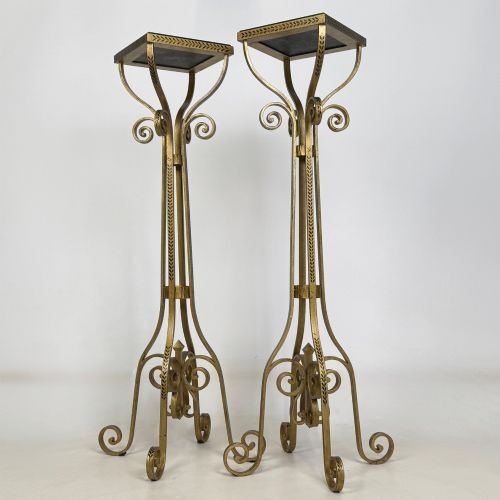
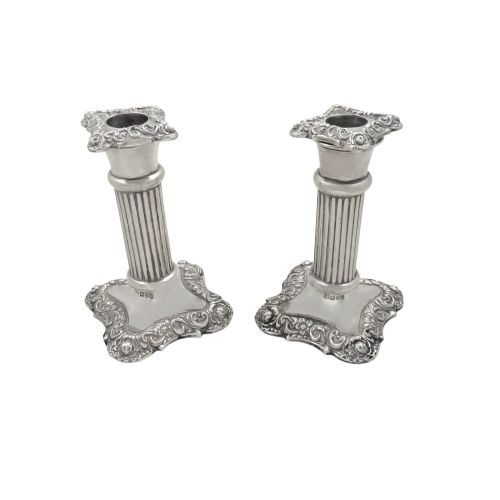
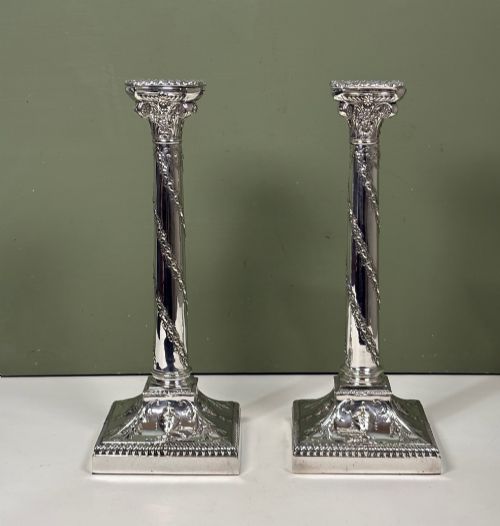
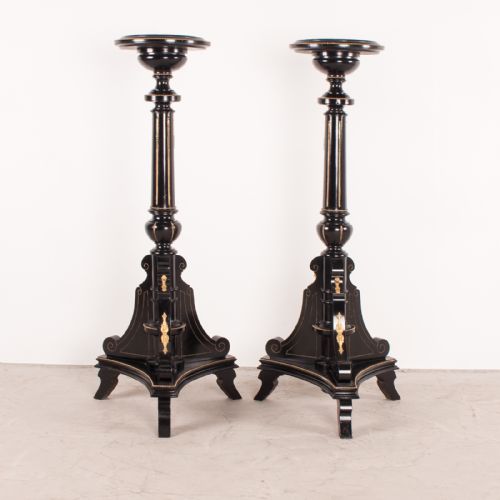
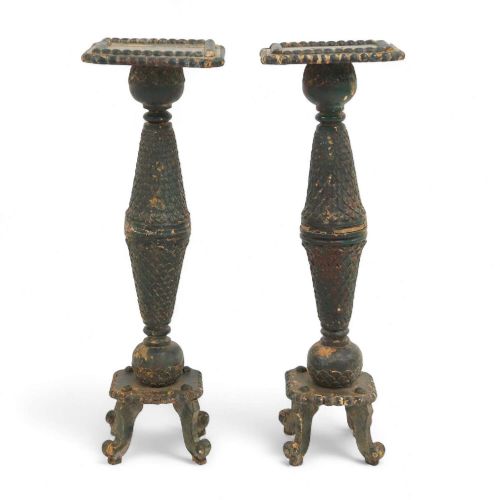
A pair of column stands encompasses tall pedestals, torcheres and pillar supports designed to elevate decorative objects or illumination. When searching for a pair of column stands, buyers encounter architectural forms ranging from slender tabletop candlesticks to heavy floor-standing display columns.
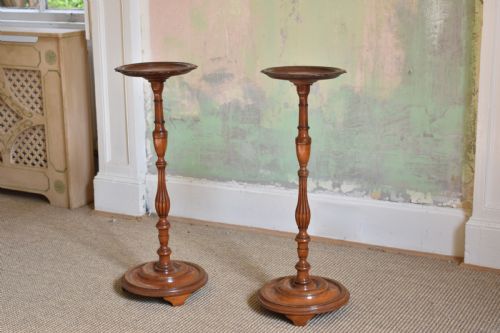
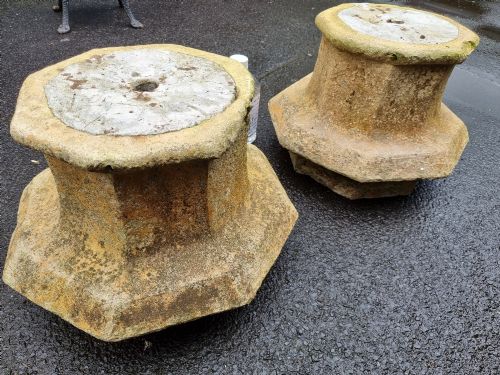
The selections span the nineteenth century through the early twentieth century, incorporating Victorian, Edwardian and Art Deco periods. Common variations on this page include mahogany plant stands, marble pedestals with ormulo collars, and cast iron or stone garden plinths.
Makers and manufacturers represented in the wider records include firms such as Mappin & Webb and Wedgwood. These objects frequently served specific domestic functions, holding candles, lamps or sculpture in formal interiors.
Evaluating Quality
Quality in a pair of column stands rests upon the integrity of the materials, the crispness of the carving or casting, and the matching precision of the two pieces. Finer examples display harmonious grain patterns in timbers, heavy and well-chased metal mounts, and genuine geological variation in marbles and alabaster.
Proportion and structural stability dictate the upper tier of the range. Pieces that maintain straight vertical lines without warping, alongside well-balanced heavy bases, show superior workshop execution.
Some nineteenth-century column stands were designed remarkably low, suggesting an era when tall plants required a shorter leg up.
Mappin & Webb·Wedgwood
The Pair of Column Stands Glossary
- Torchere
- A tall stand designed specifically to carry a light, lamp or candle. These slender supports often feature circular tops and decorative stems.
- Ormulo
- Gilt bronze mounted onto furniture, clocks and stone columns. This decorative technique involves applying a gold-mercury amalgam to bronze.
- Plinth
- The heavy base supporting a statue, vase or column. Plinths provide stability and lift the main shaft off the floor.
- Corinthian Column
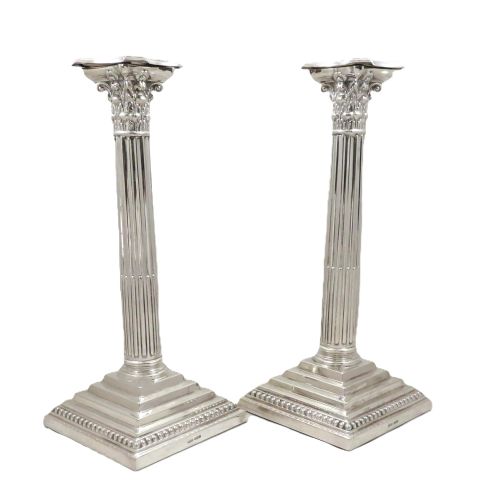
- A classical column style defined by elaborate capitals decorated with acanthus leaves. This motif appears frequently on nineteenth-century candlesticks and architectural stands.
- Inlay
- A decorative technique where contrasting materials are set into the surface of a base wood. Satinwood tables frequently utilise this method for visual depth.
Pair of Column Stands: Frequently Asked Questions
What is the difference between a torchere and a pedestal?
A torchere historically held a light source and possesses a more slender, decorative shaft. Pedestals generally feature broader tops designed to support heavier busts, urns or sculptural art.
While both elevate objects above floor level, torcheres lean toward decorative woodworking or metalwork, whereas pedestals prioritize flat, stable weight-bearing surfaces.
How were marble column stands used historically?
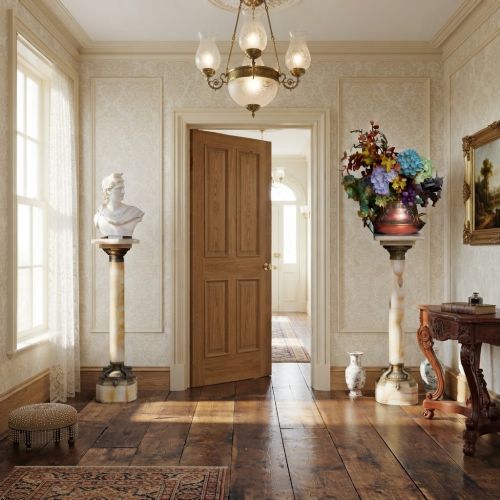
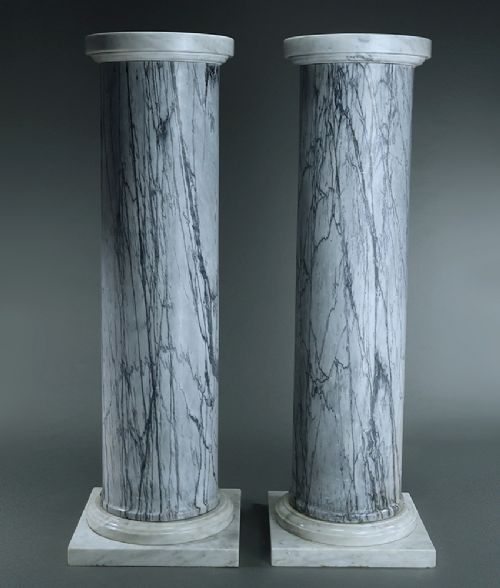
Marble columns and alabaster pedestals stood in drawing rooms, hallways and libraries to showcase prized sculptures, bronzes or large floral arrangements. Their sturdy stone construction allowed them to bear significant weight without tipping.
In grander houses, matching pairs framed doorways or highlighted focal points along panelled walls, creating architectural symmetry.
How do I care for wooden plant stands?
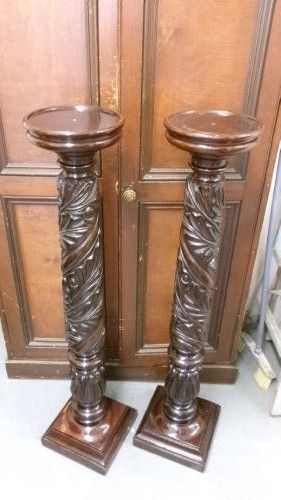
Maintain wooden torchere stands and mahogany plant stands by keeping them away from direct heat sources and sudden humidity changes. Dust them regularly with a dry cloth and occasionally apply appropriate wax polish to nourish the timber.
Avoid placing damp flower pots directly on wooden surfaces to prevent water rings and staining on antique polishes.
How can I tell a Victorian pedestal from an Edwardian one?
Victorian stands tend to feature heavier proportions, dark ebonised finishes, or rich mahogany with ornate carvings and barley twists. Edwardian examples often display lighter satinwood, simpler classical revival lines, or brighter silver-plated and brass components.
Examining the construction methods, interior fixings, and overall weight helps align a piece with the aesthetic preferences of its specific decade.