






Cast Iron Plant Pedestals
Cast iron plant pedestals are sturdy supports for heavy garden urns and jardinieres, built to hold weight securely indoors or out.
Cast Iron Plant Pedestals
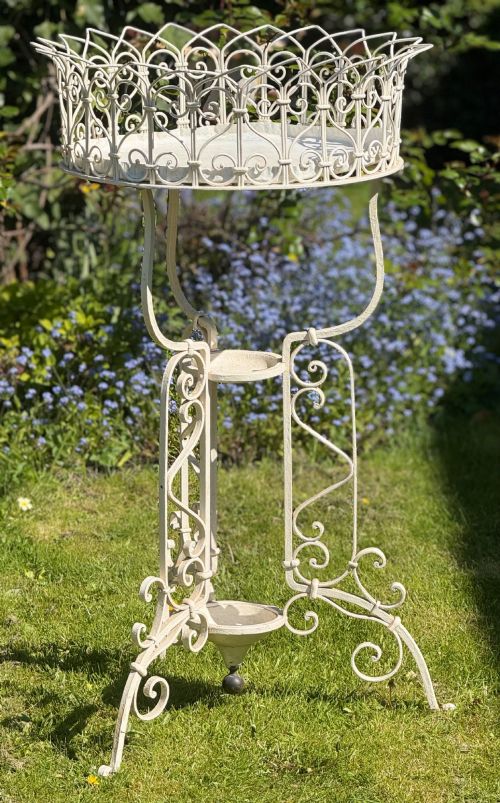
When you search for cast iron plant pedestals, you find robust display structures designed to elevate greenery and heavy garden urns. These pieces include plant stands, garden columns, portico tables, and jardinieres originating from the nineteenth century into the early twentieth century.
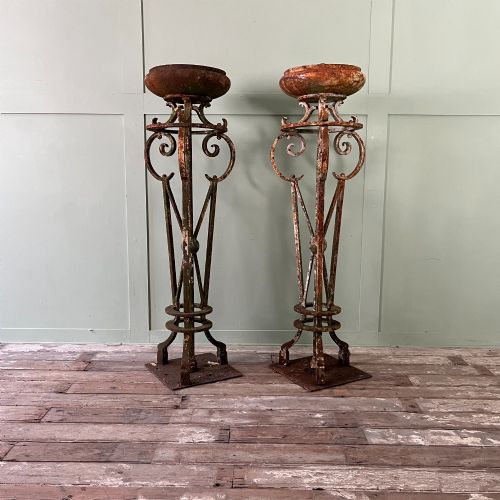
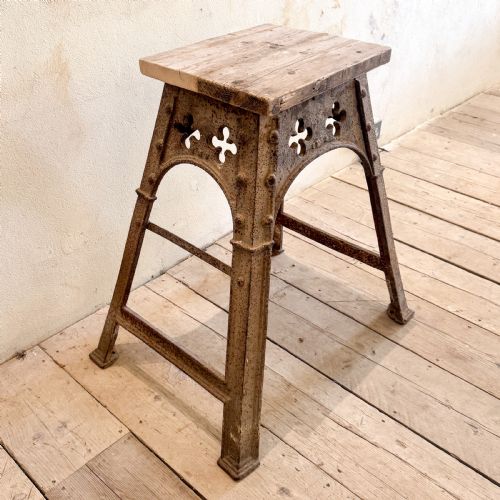
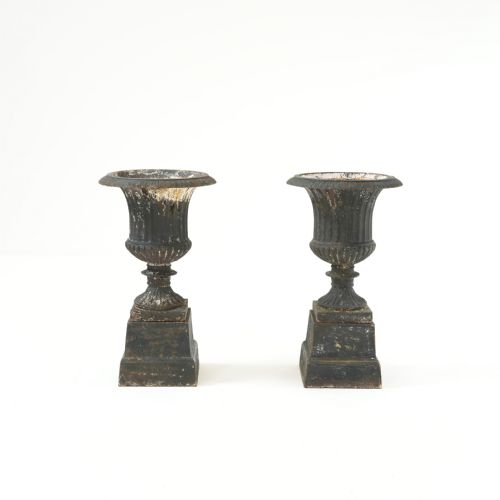
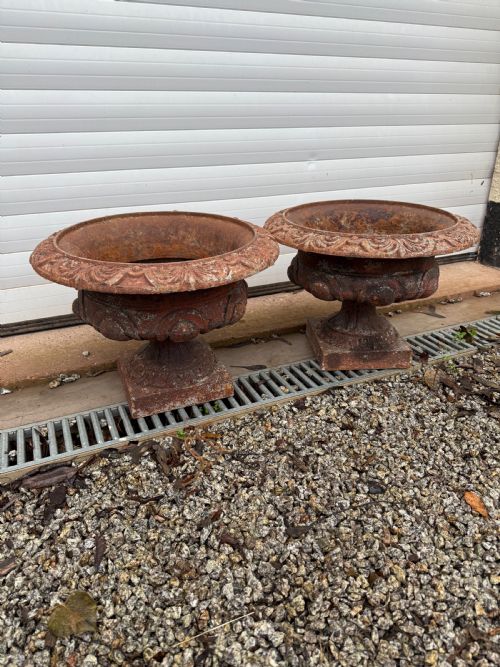
You are most likely to meet Victorian examples fashioned from cast iron, often appearing in pairs alongside related forms like campana urns on plinths and side tables. The selection spans utilitarian industrial metal stands to highly decorative Neoclassical and Rococo Revival designs.
Origins stretch across the Victorian era, through eighteen-sixty, eighteen-eighty, and into Edwardian times and nineteen-thirty. Materials extend beyond pure metal to incorporate brass, timber, mahogany, hardwood, stone, and painted surfaces.
How they were made
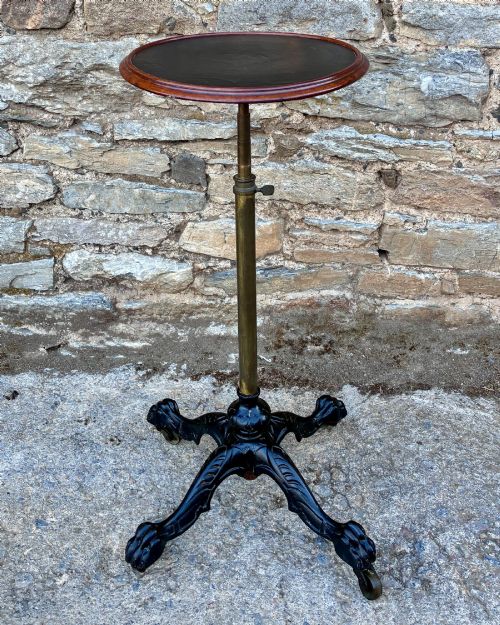
These stands rely primarily on heavy cast iron, poured into moulds to create rigid structural frames and decorative ornamentation. Many examples combine this metalwork with timber tops, brass detailing, or stone bases to balance weight and texture.
Makers often applied layers of paint to protect the iron from outdoor elements while enhancing decorative relief work. Wrought iron elements appear alongside cast components in certain nineteenth-century garden jardinieres for added structural variation.
Several heavy portico tables hide surprising stability beneath their decorative iron frames, ready to anchor your heaviest ferns.
What varies in quality
Quality rests on the crispness of the casting detail and the proportional harmony of the base and top. Finer examples display sharp Neoclassical or Rococo Revival ornamentation without the surface pitting common in hurried foundry work.
Structural integrity also separates standard utility stands from superior display pieces, particularly where paired items match precisely in weight and proportion. The integration of secondary materials like brass or hardwood introduces another layer of refinement.
The Cast Iron Plant Pedestals Glossary
- Campana urn
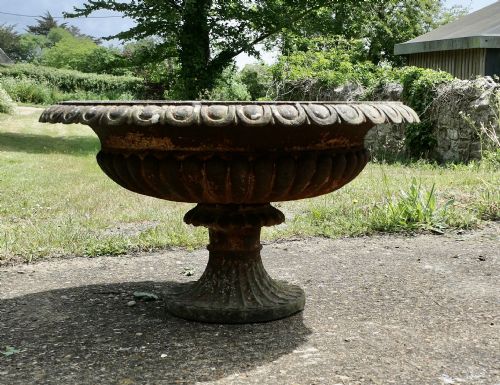
- A bell-shaped garden vessel often mounted on a pedestal base. This classical form frequently appears in nineteenth-century metalwork.
- Jardiniere
- An ornamental pot or stand designed to hold plants or flowers. These items sit on the floor or on dedicated display columns.
- Neoclassical
- A style drawing on classical antiquity, characterised by symmetrical geometry and restrained ornamentation. It appears frequently on Victorian ironwork.
- Portico table
- A heavy architectural table style adapted for display and planter support. These pieces often feature substantial iron framing.
- Rococo Revival
- A decorative style marked by elaborate asymmetry, scrolling foliage, and naturalistic motifs. This aesthetic brings high ornamentation to heavy metal stands.
Cast Iron Plant Pedestals: Frequently Asked Questions
Where should I place a cast iron plant pedestal?
These sturdy supports suit both interior conservatories and outdoor garden settings. Their robust weight handles heavy terracotta and cast iron urns securely.
Ensure the ground beneath is level to maintain stability, especially when supporting heavy planted jardinieres.
How do I identify a Victorian pedestal?
Victorian examples often display period stylistic traits such as heavy Neoclassical moulding or Rococo Revival scrolling. Materials typically combine cast iron with brass or timber components.
Look for nineteenth-century manufacturing marks or characteristic surface patination associated with older foundry work.
Can these stands stay outside year-round?
Cast iron handles outdoor environments well, though prolonged exposure to moisture can encourage surface oxidation. Painted finishes provide initial protection against weathering.
Moving vulnerable paired stands indoors during harsh winter months helps preserve painted surfaces and secondary timber elements.
Why do some pedestals come in pairs?
Paired stands were traditionally produced to frame architectural doorways, garden pathways, or formal conservatory entrances symmetrically. Matching pairs provide balanced display options for large floral arrangements.
Finding surviving pairs from the nineteenth century remains particularly useful for formal interior and exterior design schemes.