




Pair of Cast Iron Urns
A pair of cast iron urns brings enduring architectural weight to grounds and terraces, offering symmetrical classical presence through robust metalwork.
Pair of Cast Iron Urns
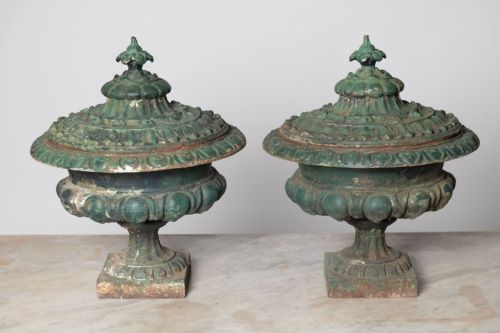
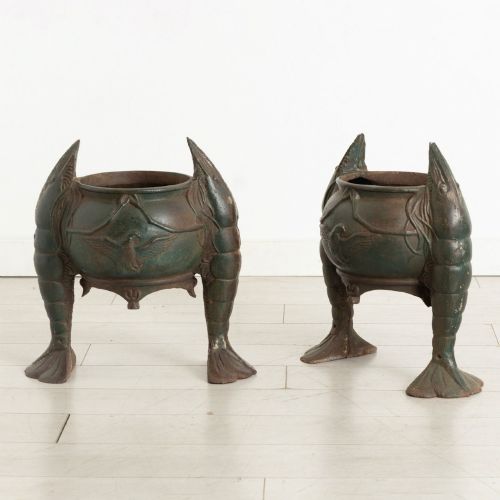
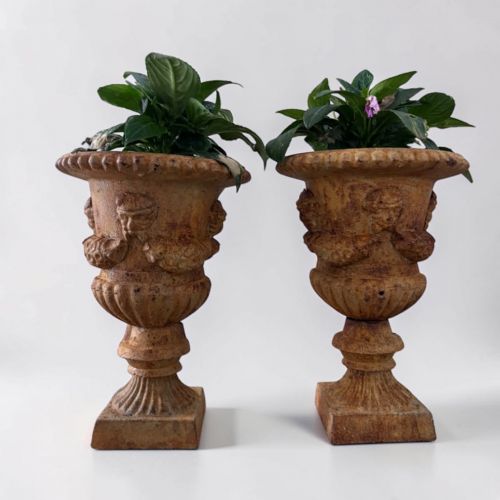
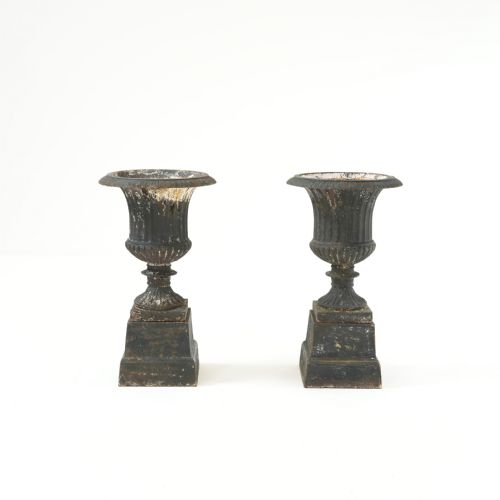
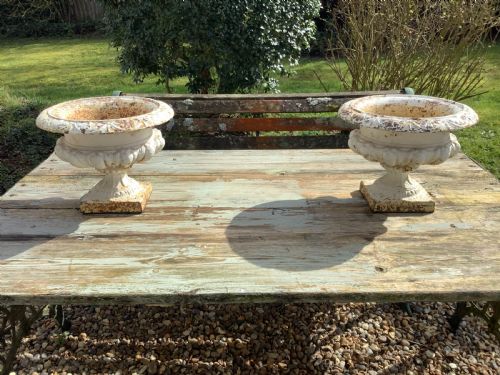
A pair of cast iron urns provides substantial architectural presence for gardens, terraces, and interior spaces. These dual vessels combine heavy metal casting with classical garden ornament traditions.
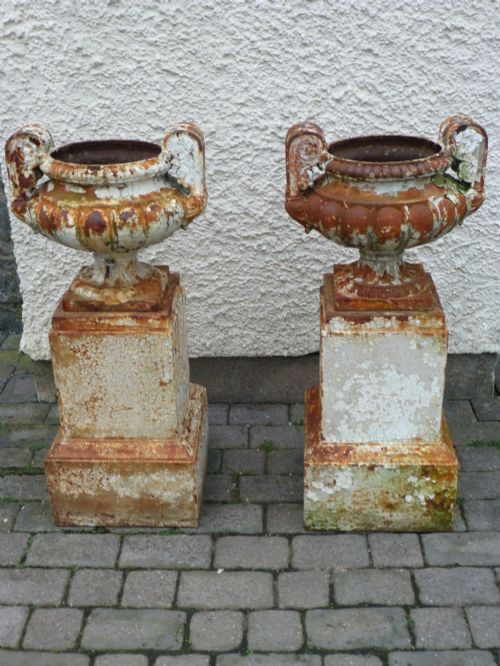
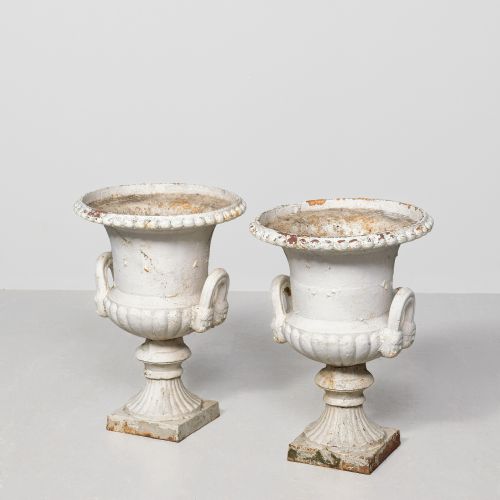
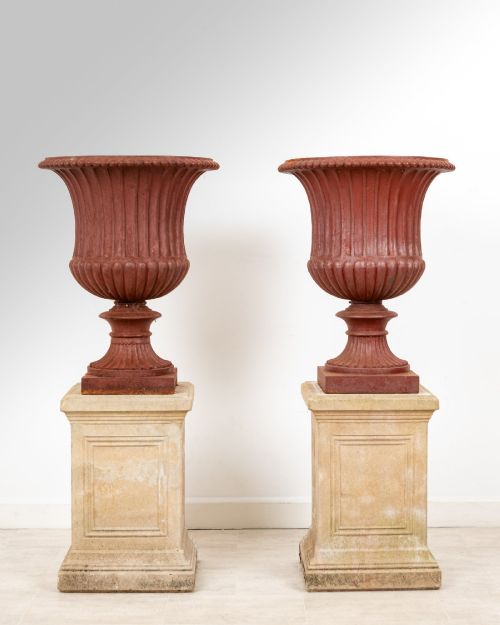
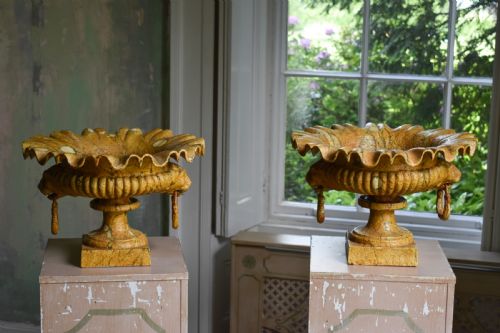
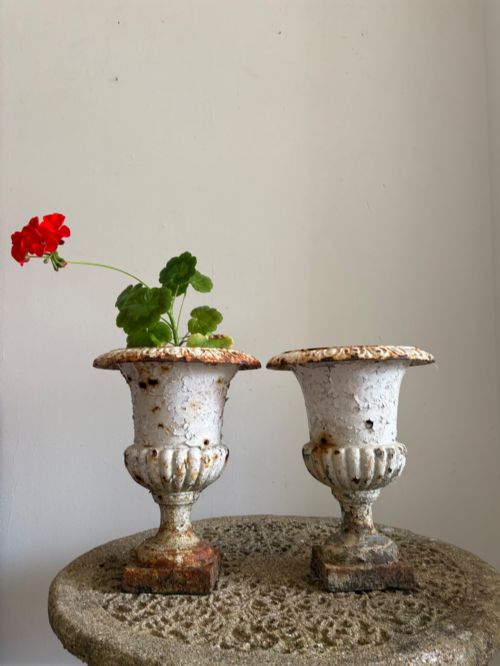
The selections available range from deep campana and Medici profiles to shallow tazza bowls. Many examples rest directly upon matching pedestals or stone plinths.
Originating predominantly from nineteenth century Victorian workshops, these pieces often display classical revival detailing designed to weather outdoors over decades.
Manufacturing and Materials
Foundries poured molten iron into sand moulds to achieve crisp classical relief and heavy walls. Surface protection typically involved layers of oil-based paint or natural weathering.
Stands and supporting plinths occasionally incorporate integrated stone pedestals or matching cast metal bases to elevate the main vessel.
Listings include nineteenth century styles spanning Victorian campana, Medici, and tazza forms in cast iron and stone.
Assessing the Castings
The clarity of the cast relief and the thickness of the metal walls determine the structural calibre of the piece. Crisp detailing around handles and fluting points to superior foundry work.
Survival of original painted surfaces or matching manufacturer plinths distinguishes standard utility garden items from notable foundry productions.
Falkirk Carron foundry·Coalbrookdale
The Pair of Cast Iron Urns Glossary
- Campana
- A bell shaped garden vessel featuring a flared rim and a tapered body. This classic form dominated nineteenth century garden ornament design.
- Medici urn
- A bell shaped vessel featuring pronounced handles and complex classical relief panels. This style stems from ancient marble prototypes popularised during the Grand Tour.
- Plinth base
- A rectangular block or pedestal supporting a heavier garden vessel. This architectural element lifts the planter off damp ground.
- Tazza
- A shallow bowl shaped vessel raised upon a central stem and foot. These open forms often display fluted exterior detailing.
Pair of Cast Iron Urns: Frequently Asked Questions
Where should I place these urns?
These heavy metal vessels suit formal garden pathways, terrace steps, or entranceways where symmetry matters. Their robust material stands up well to exterior elements throughout changing seasons.
Interior placement works well for larger hallways or rooms when paired with suitable floor protection. Their substantial weight requires stable ground or reinforced flooring.
How do I identify a Victorian pair?
Victorian examples frequently display deep campana profiles, heavy cast walls, and classical fluting or handles. Foundry marks or registration numbers occasionally appear near the base.
Surface oxidation and layered historical paint finishes also indicate extended age and nineteenth century origin.
Do they require maintenance outdoors?
Cast iron handles exposure well but benefits from occasional inspection for surface rust. Applying protective paint coatings helps preserve the metal integrity over long periods.
Ensuring proper drainage prevents trapped water from expanding during freezing winter temperatures.
Are original plinths common?
Matching pedestals or stone plinths appear on select foundry pairings from the nineteenth century. These matching bases elevate the overall proportion of the vessels.
Many surviving vessels have lost their original stands over time, making complete sets notably uncommon.