
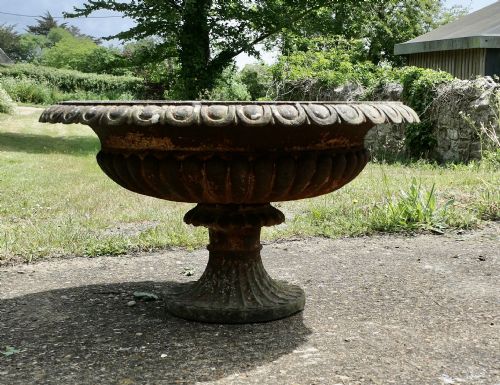


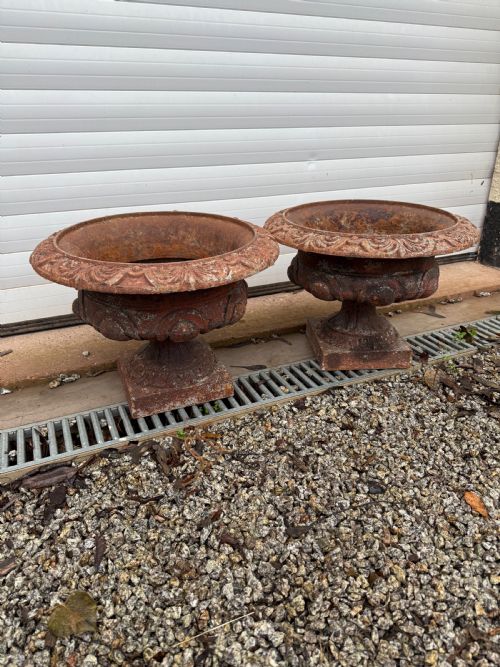


Rust Cast Iron Urn
A rust cast iron urn brings classic Neoclassical form to the garden, and these weathered metal planters anchor a terrace with enduring weight.
Rust Cast Iron Urn
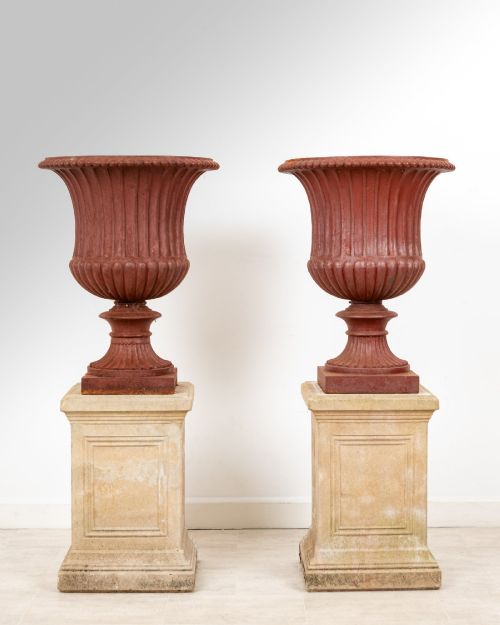
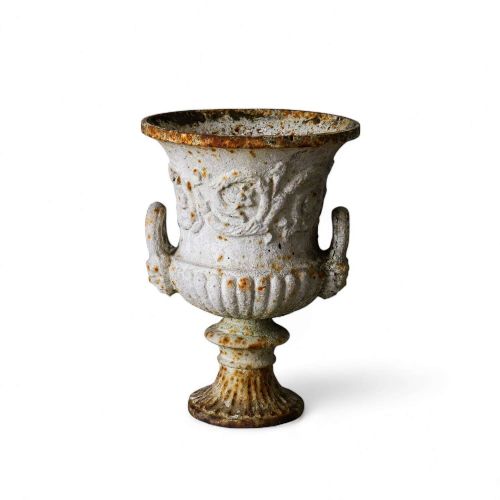
When you search for a rust cast iron urn, you are looking at substantial garden vessels designed to weather outdoors over decades. These pieces most frequently take the campana shape, appearing singly or in matched pairs upon matching plinths.
The selections span the nineteenth century, including specific Regency and Victorian examples alongside later pieces from eighteen-ninety and the Edwardian era. Makers such as the Falkirk Carron foundry and Andrew Handyside shaped these heavy garden ornaments.
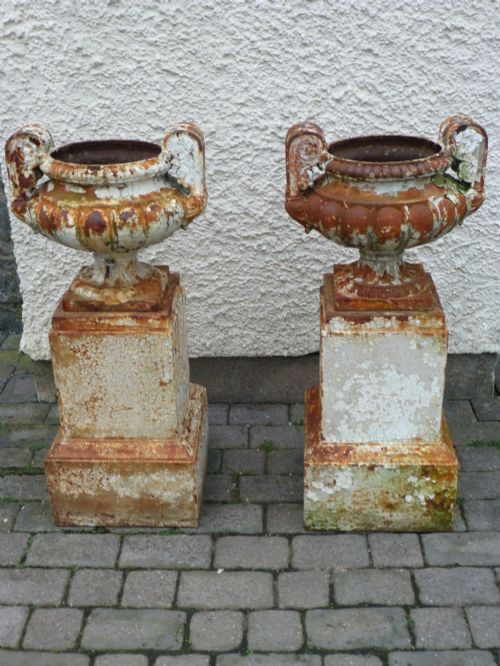
Many of these garden urns and planters display surfaces marked by time and exposure to the elements, developing the distinct orange and brown oxide tones that define the group.
Materials and construction
Foundries produced these garden vessels by pouring molten metal into sand moulds, resulting in thick-walled structures with high structural rigidity. This traditional casting method allowed workshops to achieve crisp Neoclassical details like fluting and egg-and-dart borders.
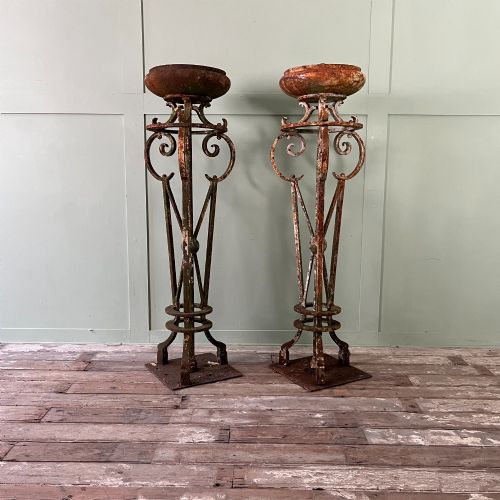
Many examples are paired with stone pedestals or mounted on original cast iron plinths to elevate the planter above the garden floor. Surface finishes often include historic layers of paint that have thinned or worn away to reveal the oxidised metal beneath.
Current listings span the nineteenth century up to the Edwardian era, featuring materials including cast iron, stone, and paint.
Assessing quality in cast iron
The distinction between ordinary and exceptional examples rests upon the crispness of the cast ornament and the presence of named foundry attribution. Pieces bearing the mark of notable producers like Falkirk Carron or Andrew Handyside carry greater design authority.
Proportion and completeness also separate the output, particularly when vessels retain their matching stone pedestals or original iron plinths. The quality of the casting grain and the depth of the classical profiling distinguish standard garden ware from finer foundry work.
Falkirk Carron foundry·Andrew Handyside
The Rust Cast Iron Urn Glossary
- Campana urn
- A bell-shaped garden vessel with an everted rim, tapering body, and socle base. This classical form became the dominant profile for nineteenth-century terrace ornaments.
- Plinth
- A heavy base block supporting an urn or planter. Original plinths elevate the vessel and complete the architectural composition.
- Neoclassical
- A revival style drawing upon ancient Greek and Roman architecture. It governs the decorative vocabulary of these urns through foliate bands and classical handles.
- Terrace urn
- A shallow garden vessel designed for placement along balustrades or formal gravel paths. These pieces offer wider planting bowls than deep pedestalled urns.
Rust Cast Iron Urn: Frequently Asked Questions
How do I date a cast iron urn?
Dating relies upon stylistic markers such as Regency or Victorian classical revival details, alongside foundry stamps where present. The transition from heavy nineteenth-century casting techniques to lighter Edwardian production provides further chronological context.
Examining the bolt construction, the thickness of the metal walls, and any remnants of early paint layers helps confirm the period of manufacture.
Can these urns stay outside all winter?
Cast iron possesses the natural weight and resilience required to withstand outdoor exposure throughout the year. The characteristic rust layer forms a stable oxide skin that protects the underlying metal from deep structural degradation.
Ensuring the drainage hole remains clear prevents accumulated rainwater from freezing and expanding inside the bowl during hard frosts.
How are heavy iron urns supported?
These vessels typically rest upon heavy stone pedestals or matching cast iron plinths designed to bear their substantial weight. The combination of urn and base creates a stable architectural focal point for terraces and lawns.
Positioning requires a level foundation of stone or compacted gravel to prevent settling over time.