



Weathered Iron Garden Urns
Weathered iron garden urns bring classic proportions and enduring garden presence, forged in heavy metals that acquire character over decades outdoors.
Weathered Iron Garden Urns
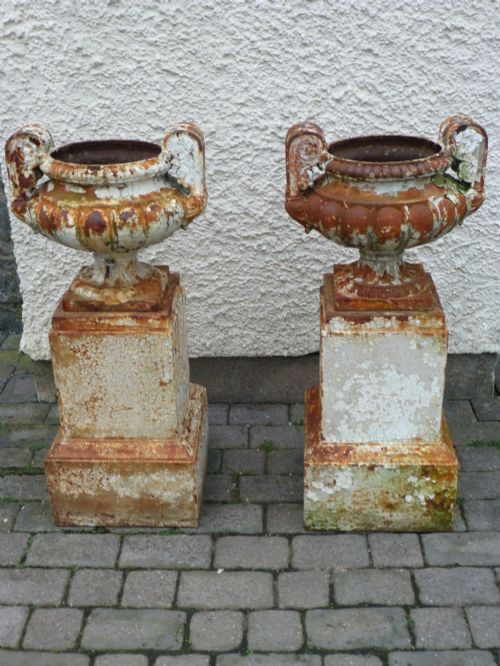
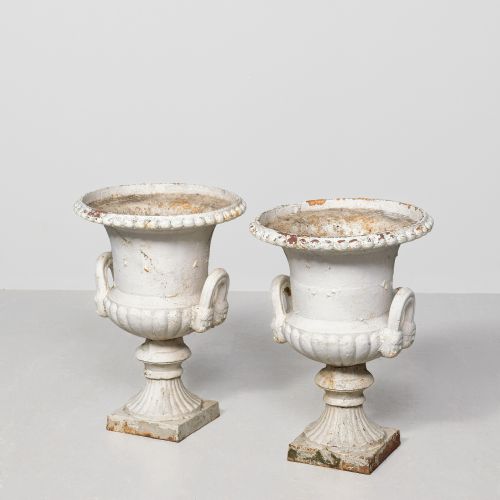
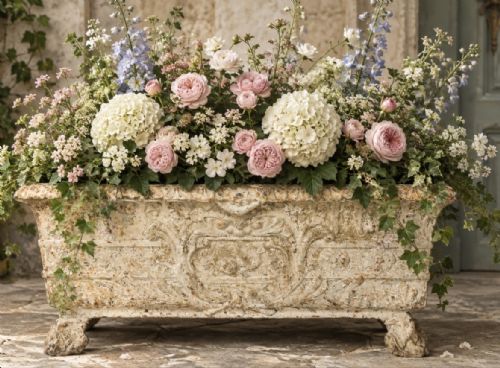
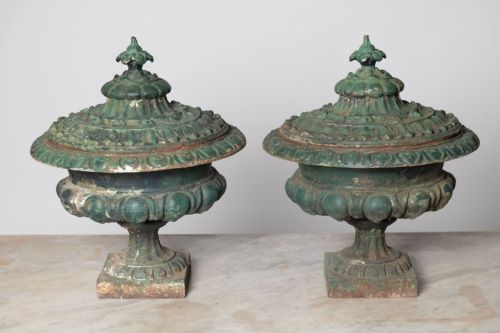
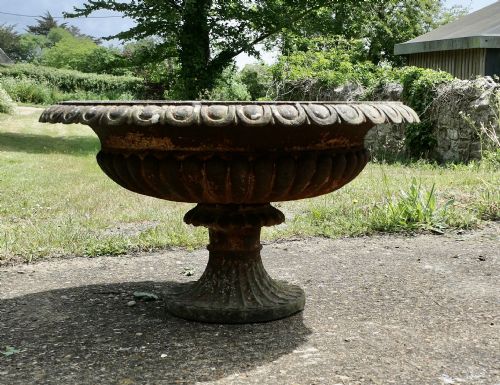
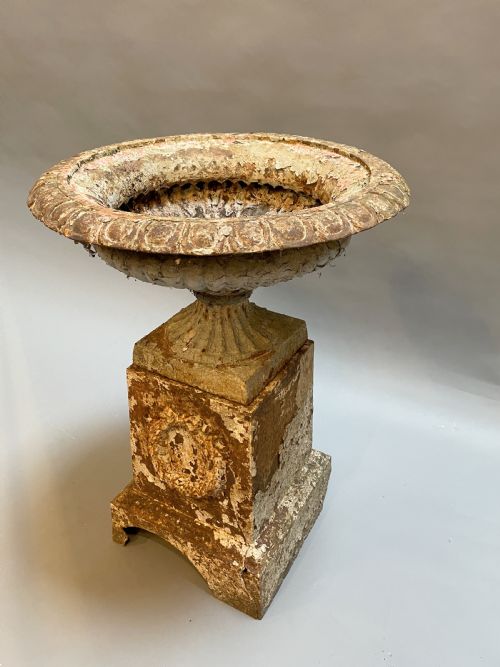
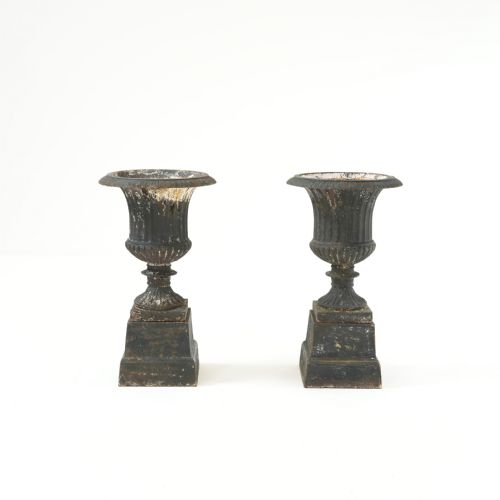
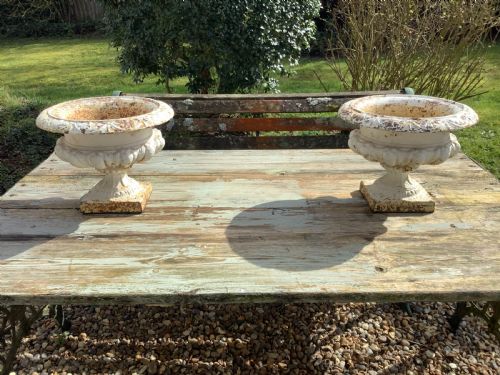
When you search for weathered iron garden urns, you encounter robust cast and wrought vessels designed to hold plants or stand as architectural focal points in grounds and terraces. The pieces available here span the nineteenth century, Victorian era, and early twentieth century, taking forms such as classical Campana shapes, shallow tazza bowls, and garden planters resting upon original plinths.
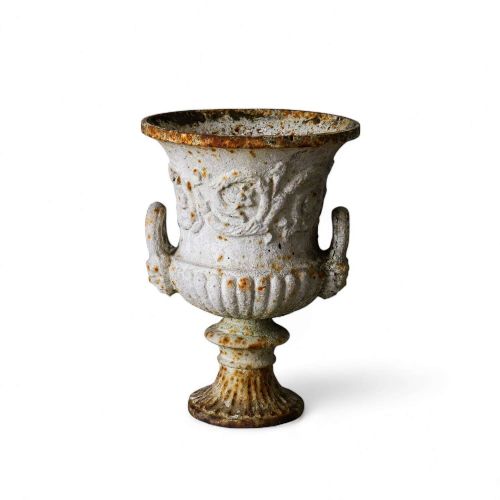
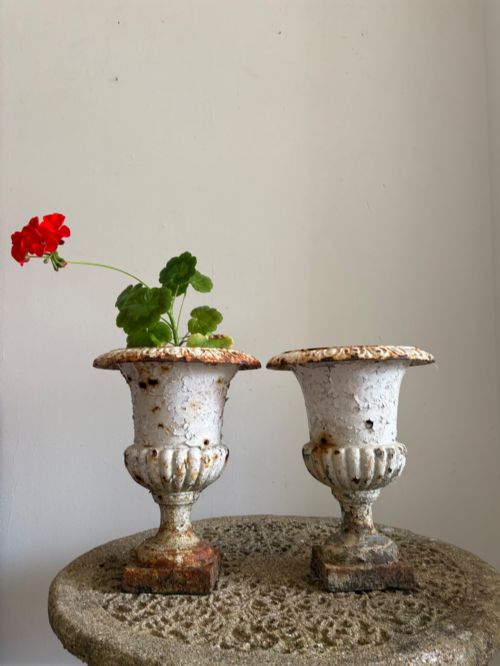
The campana silhouette dominates the selection, characterised by an inverted bell body rising from a pedestal base, frequently decorated with gadrooning or strapwork. Alongside these classical garden urns appear pairs of small painted vessels, large terrace jardinieres, and table urns shaped by foundry production across British and continental workshops.
Materials and foundry techniques
Foundries shaped these garden ornaments primarily through casting molten iron into sand moulds, creating rigid walls capable of supporting complex neoclassical ornamentation like fluting and gadrooned rims. Some examples incorporate sheet iron or wrought iron strapwork, joined to form lighter terrace planters and structural baskets.
Surface finish relies on layers of historic paint or natural oxidisation, yielding the weathered patination that defines older metal garden wares. Many retain traces of original distressed paint over the raw cast iron underneath, telling the story of decades exposed to the elements.
Some nineteenth-century urns retain layers of old green paint that stubbornly survived decades of rain and frost.
Factors determining quality
The distinction between standard foundry output and exceptional pieces lies in the crispness of the cast decoration and the presence of matching original components. Urns retaining their matching plinths or original lids command greater interest from collectors seeking complete historic sets.
Depth of relief modelling in classical motifs such as acanthus leaves or egg-and-dart borders separates superior casting work from simpler utilitarian pots. Heavier walls and distinct foundry attribution elevate certain examples above standard nineteenth-century gardenalia.
Falkirk Carron foundry·Andrew Handyside
The Weathered Iron Garden Urns Glossary
- Campana
- A bell-shaped garden urn with a flared rim and pedestal foot. This classical form became the standard template for nineteenth-century garden ornaments.
- Gadrooned
- Decorated with a series of convex curves or flutes moulded in a parallel pattern around the body or rim of an urn.
- Plinth
- A heavy rectangular or square base block that elevates an urn above ground level. Many period examples were designed specifically to sit atop these matching supports.
- Tazza
- A shallow bowl-shaped vessel mounted on a stem and foot, used in garden settings for planting or architectural display.
- Strapwork
- Ornamental work composed of flat, interlaced bands resembling leather straps, frequently seen on wrought iron planters.
Weathered Iron Garden Urns: Frequently Asked Questions
What periods do these iron urns come from?
The selection spans from the Regency period and the nineteenth century through to Victorian eras and early twentieth-century production.
Foundry dates often stretch from the 1850s to the 1940s, encompassing Victorian classical revivals.
Are these urns sold as pairs?
Many of the listed garden urns and planters appear as matching pairs, which were originally intended to flank pathways, steps, or terrace entrances.
Single vessels also feature alongside multi-piece sets and matched groupings.
How were these urns used originally?
Victorian and nineteenth-century gardeners utilised these heavy vessels as focal points on terraces, lawns, and formal garden displays.
They held trailing plants, shrubs, or stood empty as architectural ornaments to evoke classical antiquity.
What metals are used in these garden urns?
The primary material is cast iron, chosen for its strength and ability to hold fine neoclassical mouldings during the foundry process.
Other examples incorporate wrought iron strapwork, sheet iron, or painted finishes over the metal base.