
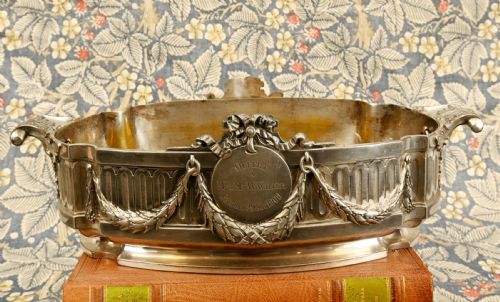
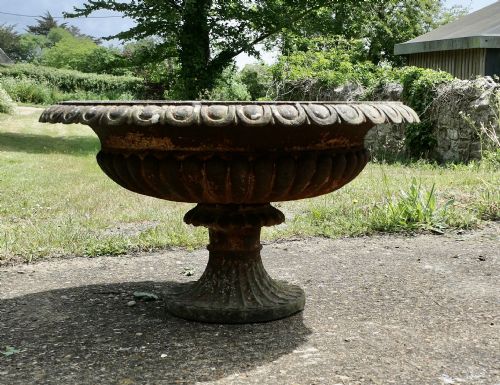

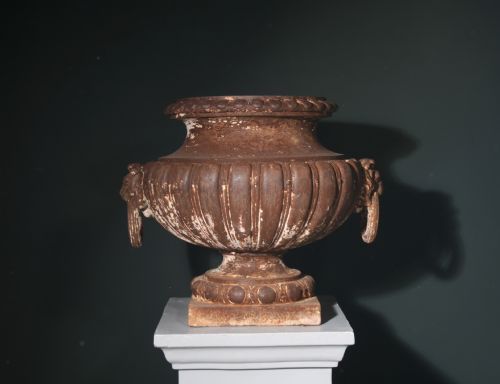
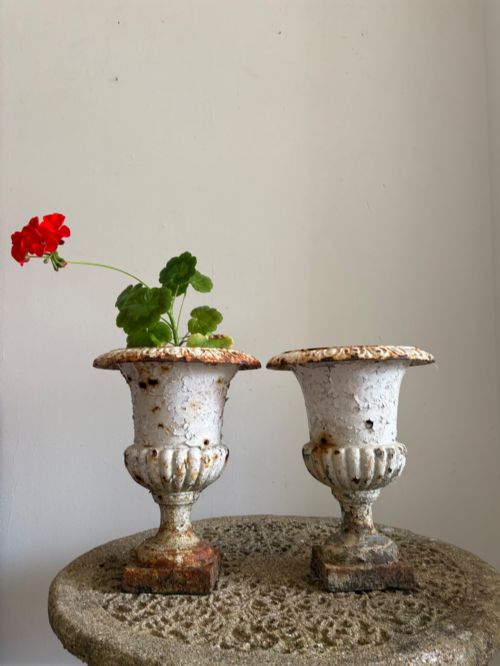


Classical Metal Planters
These classical metal planters bring sculptural presence to gardens and interiors through enduring forms.
Classical Metal Planters
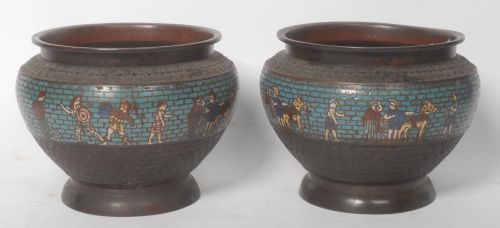
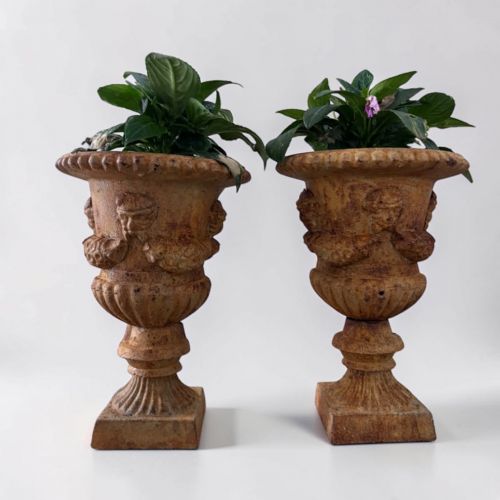
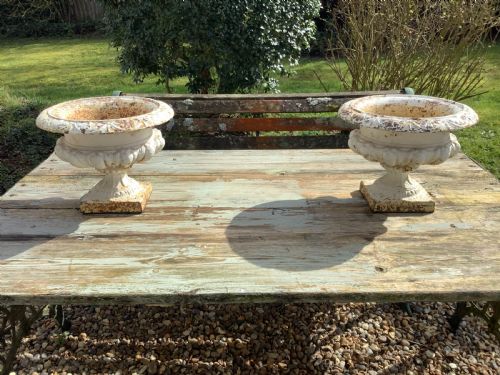
Classical metal planters encompass garden urns, cachepots, and jardinieres shaped by neoclassical and Victorian revival styles.
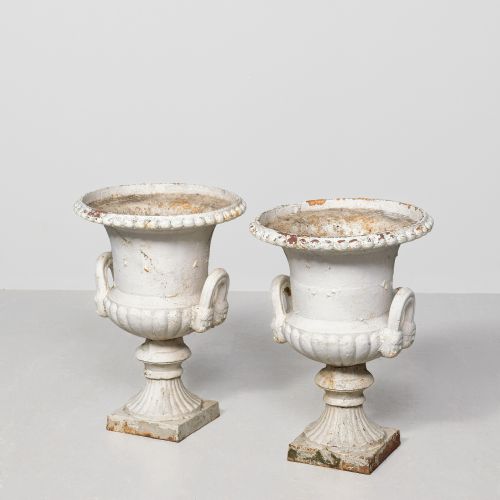
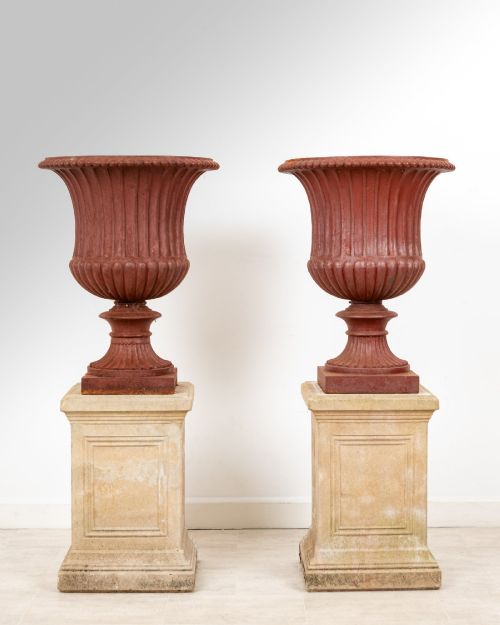
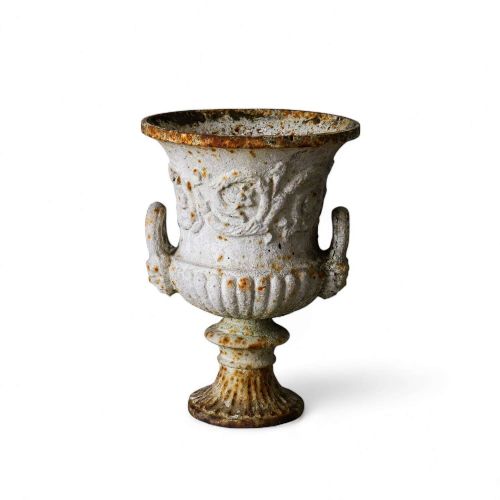
Buyers frequently encounter cast iron campana urns, Grand Tour bronzes, and tazza forms originating across the eighteenth, nineteenth, and early twentieth centuries.
These vessels function as focal points in outdoor grounds, conservatories, and reception spaces alike.
Materials and casting
Foundries utilised heavy cast iron, bronze, and lead poured into moulds to achieve crisp classical detailing and substantial weight.
Finishes involve patinated bronze, applied paint, silver plate, and gilt bronze, which protect the metal while defining the surface texture.
Some nineteenth-century iron urns carry foundry stamps from Val d'Osne, proving that even heavy garden furniture once travelled like fine porcelain.
Casting and proportion
Quality rests upon the crispness of the relief work, particularly in acanthus leaves, classical figures, and crisp reeded borders.
Proportion and balance between the bowl, stem, and base separate ordinary production from pieces produced by notable foundries.
Andrew Handyside·Val D Osne Foundry·Barbedienne Paris·Clodion
The Classical Metal Planters Glossary
- Campana urn
- A bell-shaped vessel with a flared rim and pedestal base, frequently cast in iron or bronze for garden use.
- Cachepot
- An ornamental container designed to hold a flowerpot, often executed in porcelain or metal during the nineteenth century.
- Jardiniere
- A large decorative stand or pot for holding plants or flowers within a room or conservatory.
- Grand Tour
- A nineteenth-century tradition where travellers collected miniature bronzes and antiquities in Italy, inspiring smaller decorative vases.
- Warwick vase
- A monumental Roman marble vase reproduced in bronze and iron during the nineteenth century, featuring handles and classical masks.
Classical Metal Planters: Frequently Asked Questions
Where should I place a heavy cast iron urn?
These pieces require a stable, level surface such as a stone plinth, terrace, or reinforced garden path to support their considerable weight.
Positioning them at the end of a gravel pathway or framing a doorway creates a strong architectural focal point.
Can bronze planters stay outside year-round?
Bronze withstands outdoor conditions well, gradually developing a rich natural patina when exposed to moisture and air over decades.
Maintenance involves simple washing with mild soapy water to remove accumulated dirt without disturbing the protective surface layer.
How do I identify a Grand Tour bronze?
Grand Tour pieces typically scale down famous ancient Roman monuments, such as the Warwick vase, for nineteenth-century travellers to display indoors.
They exhibit fine chased details in patinated bronze, often reflecting classical archaeological discoveries of the period.
What is the difference between a cachepot and a jardiniere?
A cachepot generally serves as an indoor pot cover intended to hide a plain plant container beneath an ornamental exterior.
A jardiniere is typically larger and built to hold plants or floral arrangements directly within its decorated basin.