



Rustic Iron Urn Planters
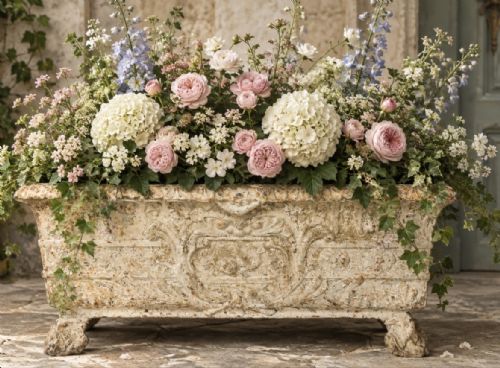
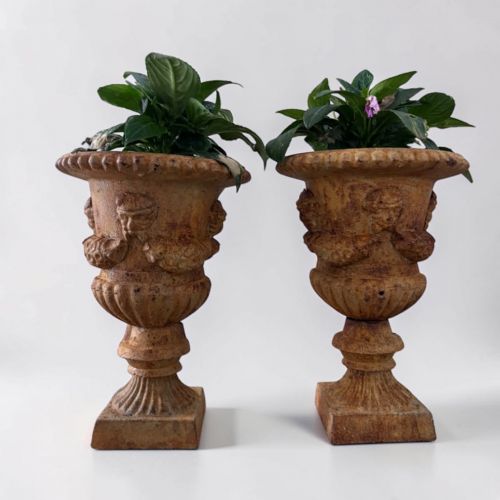
These rustic iron urn planters bring weight and structure to a garden.
Rustic Iron Urn Planters
Rustic iron urn planters are robust garden vessels designed to hold plants and ornament outdoor spaces. When searching for rustic iron urn planters, buyers encounter a selection spanning the nineteenth century up through the mid twentieth century.
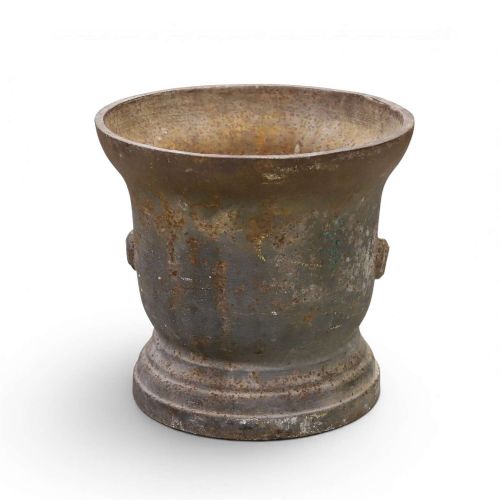
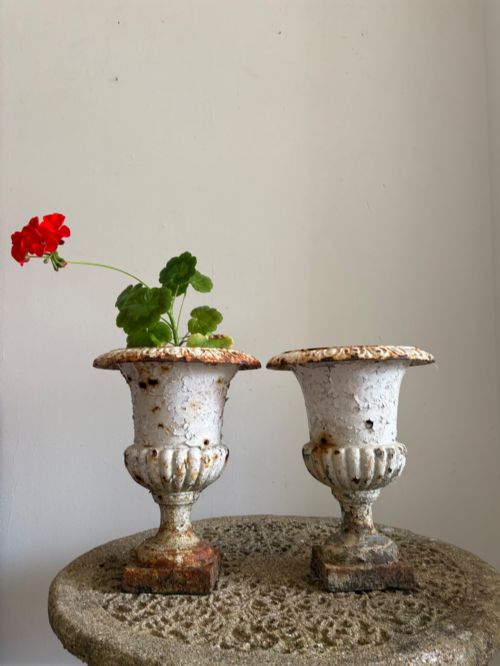
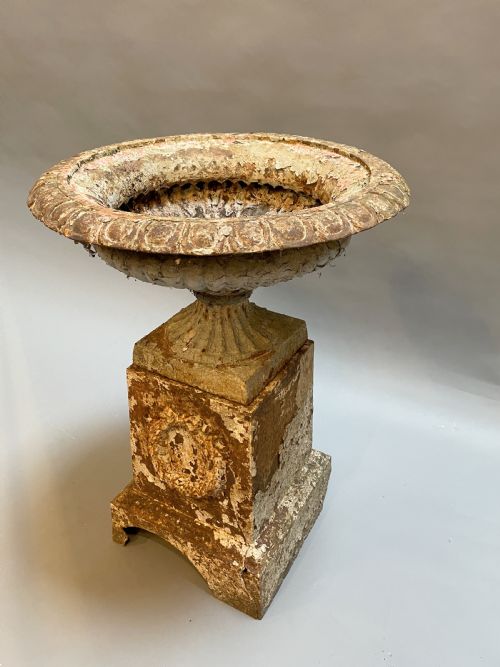
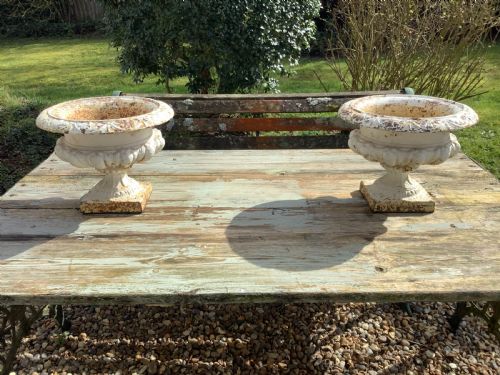
The objects on this page appear in various forms, including classical garden urns, table urns, and mortar vessels. Many arrive in pairs, while others stand individually on plinths or bases.
Origins stretch across French and British traditions, echoing styles from Victorian, Edwardian, and classical periods. Buyers frequently meet cast iron examples alongside painted finishes and associated terracotta pieces.
How they were made
Foundry workers shaped these vessels primarily from cast iron, utilising moulds to produce consistent classical profiles and fluted bodies. Wrought iron elements and associated terracotta jars also appear within the selection.
Many surfaces carry layers of original paint that have weathered over decades. This combination of heavy metal casting and natural distress creates the characteristic textured finish.
Listings feature items spanning the nineteenth century, Victorian era, Edwardian period, and up to nineteen-forty.
What varies in quality
The distinction between standard vessels and finer examples lies in the crispness of the cast detail and the integrity of the metal. Thicker castings retain their structural form better over generations of outdoor exposure.
Surviving original paint finishes and matched pairs elevate a piece above single, heavily repainted items. The balance of the proportions relative to the base or stand dictates visual success.
The Rustic Iron Urn Planters Glossary
- Cast iron
- A hard, brittle alloy of iron and carbon poured into moulds to create decorative vessels. It provides the heavy foundation required for substantial garden ornaments.
- Urn
- A vase-shaped vessel, often standing on a pedestal or base, used historically for ornamental planting. Classical versions draw on ancient Greek and Roman stone models.
- Mortar
- A heavy bowl-shaped vessel traditionally used for grinding materials, repurposed here as a garden planter. These items display thick walls and sturdy proportions.
- Terracotta
- Fired clay used to form garden jars and olive vessels accompanying the iron pieces. The porous material ages with characteristic weathering.
Rustic Iron Urn Planters: Frequently Asked Questions
How do I care for iron urns?
Keep the vessels clear of standing water during freezing weather to prevent cracking. Applying a protective wax or suitable exterior treatment helps stabilise weathered metal surfaces.
Positioning them on stone flags or gravel prevents moisture from drawing up from the ground into the base.
Are these urns frost proof?
Cast iron handles typical winter weather well, though extreme frost can affect accumulated moisture inside planted soil. Ensuring adequate drainage holes remains essential for survival through cold months.
Associated terracotta elements require more care and benefit from storage under cover during severe winter spells.
How do I date an iron urn?
Examine the casting quality, seam lines, and the nature of the surface corrosion. Nineteenth-century examples often display hand-finished details and heavier patination than later twentieth-century productions.
Corresponding stylistic cues like Victorian classical motifs or Edwardian proportions help narrow down the period of manufacture.
Can these urns stay outside all year?
These pieces were built specifically for garden use and endure outdoor conditions reliably. The durable metal construction withstands rain, wind, and sun throughout the seasons.
Over time, exposure deepens the natural oxidized finish and adds character to the painted surfaces.