


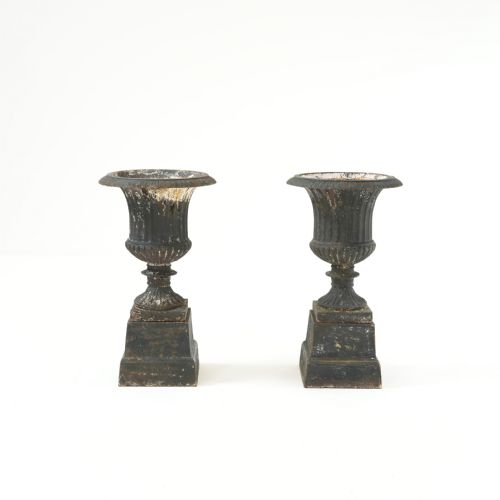
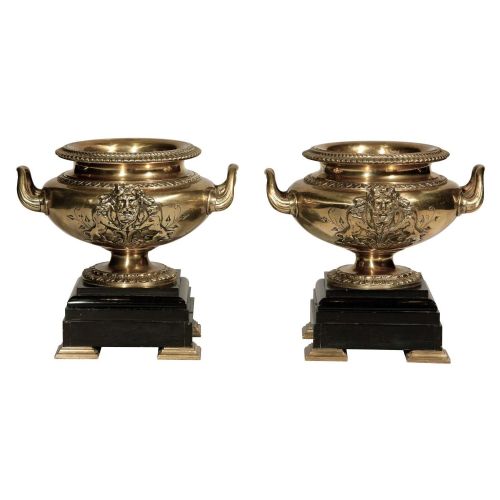


Pair of Black Vases
A pair of black vases brings immediate gravity and striking contrast to a room, drawing the eye through deep tone and form.
Pair of Black Vases
A pair of black vases spans several distinct manufacturing traditions, encompassing European glassworks, Asian cloisonné, and classical revival metalwork. When searching for a pair of black vases, buyers encounter objects ranging from nineteenth-century Victorian glass through to Japanese Satsuma and Chinese export pieces.
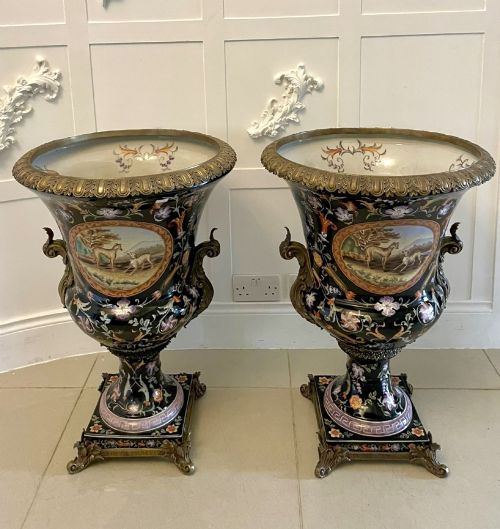
The selection here draws heavily upon nineteenth-century production, featuring forms such as campana urns, floor jars, and mantel vases. These dual pieces often served symmetrical decorative functions on pedestals, sideboards, or drawing room mantelpieces.
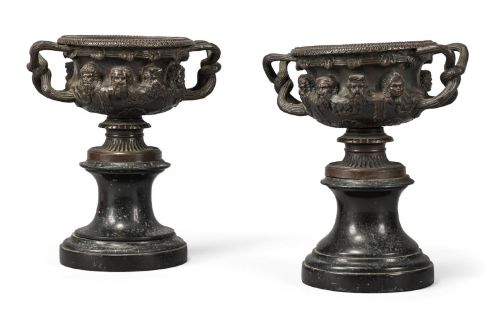
Materials vary widely across the origins represented, including opaque dark glass, glazed earthenware, patinated bronze, and lacquered surfaces. Each pair demonstrates how different makers utilised dark grounds to highlight contrasting gilt, enamel, or hand-painted details.
Measures of quality
Quality rests upon the crispness of the casting in metal objects, the depth and stability of the glaze in ceramics, and the precision of the hand-applied decoration. Superior pairs maintain exact symmetry and balanced proportions between the two vessels.
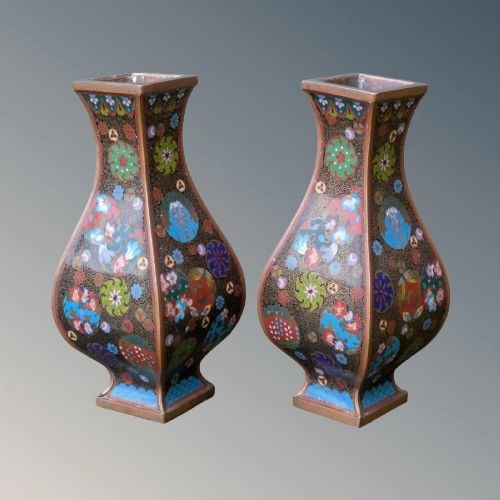
The preservation of delicate surface details, such as gilt highlights, cloisonné wirework, or lacquer panels, distinguishes finer examples. Maker signatures or stamps add documentary weight, reflecting skilled studio or foundry output.
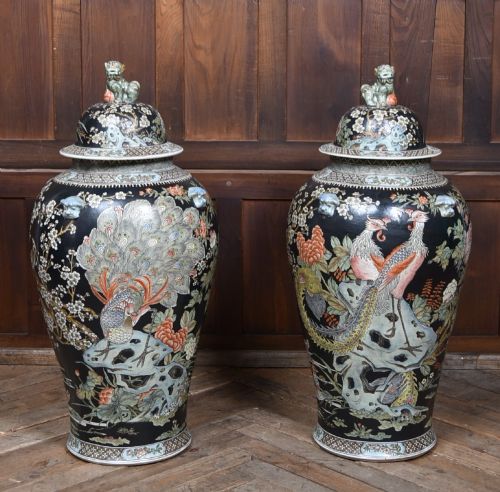
Some nineteenth-century Japanese jars measure up to eighty-six inches high, requiring dedicated architectural space rather than a simple tabletop.
Harrach·Jennens & Bettridge·Bernhard Bloch
The Pair of Black Vases Glossary
- Cloisonné
- Enamelling technique where thin metal wires are soldered to a metal base to create cells filled with paste and fired. The resulting surface displays intricate geometric or pictorial patterns.
- Campana Urn
- Bell-shaped classical vessel form raised on a pedestal foot with flared rims. This silhouette originates in antiquity and saw revivals during the neoclassical and Victorian periods.
- Grand Tour
- Cultural journey undertaken by nineteenth-century elites across Europe, acquiring classical antiquities and bronze or marble copies. Objects made for this market often replicated famous archaeological finds.
- Toleware
- Painted or enamelled sheet metalware, typically tin or iron, finished with dark lacquers and gilt decoration. It gained popularity for decorative household vessels during the Georgian and Regency eras.
- Satsuma
- Japanese earthenware pottery featuring a crackled ivory glaze decorated with polychrome enamels and rich gilding. Production expanded significantly during the Meiji period for export markets.
Pair of Black Vases: Frequently Asked Questions
Where should I display large floor vases?
Large floor pairs sit best in entrance halls, wide corridors, or flanking a fireplace where their scale commands the surrounding space.
Ensure they are placed away from heavy foot traffic to protect fragile rims and exterior decoration from accidental knocks.
Can these urns hold fresh flowers?
Most antique metal and lacquered vessels lack waterproof liners, meaning dampness can damage interior seams or surface materials.
Use a concealed inner glass or plastic container if you intend to display fresh stems inside older decorative urns.
How do I identify Japanese Meiji period pieces?
Meiji pieces often display exceptionally detailed hand-painted arhats, dragons, or dense gilt work across Satsuma earthenware or cloisonné.
Many bear studio signatures or artist monograms on the base, reflecting the rapid standardisation of export crafts after eighteen sixty-eight.