


Pair Low Accent Chairs
Pair low accent chairs bring distinctive nineteenth-century and early twentieth-century seating into modern rooms with low-slung, compact charm.
Pair Low Accent Chairs
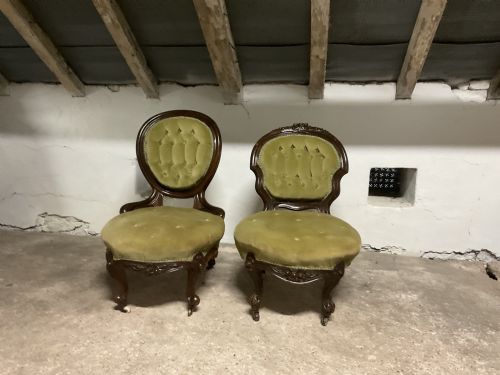
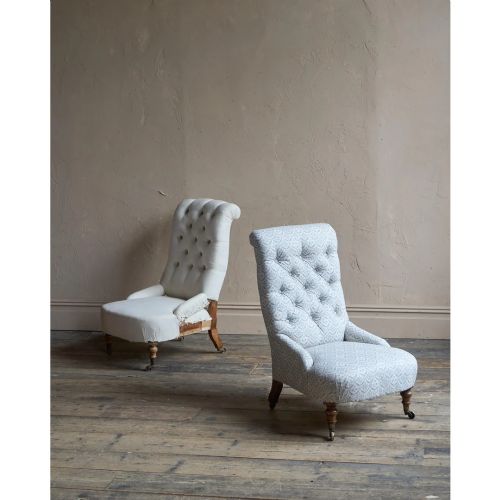
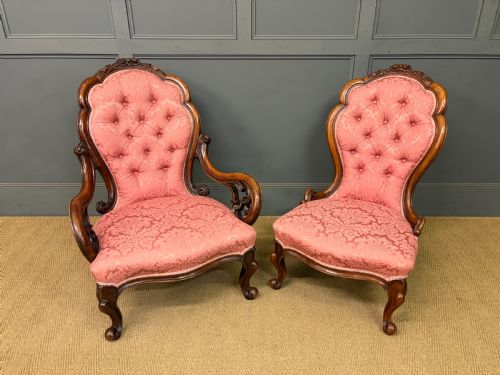
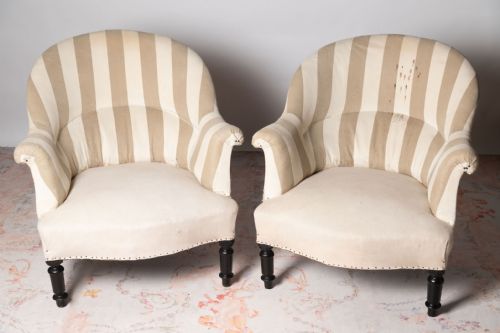
When searching for pair low accent chairs, buyers encounter a diverse selection of low-slung seating designed primarily for nineteenth-century bedrooms, dressing rooms, and salons. These forms frequently appear as nursing chairs, slipper chairs, and compact armchairs rather than standard fireside seating.
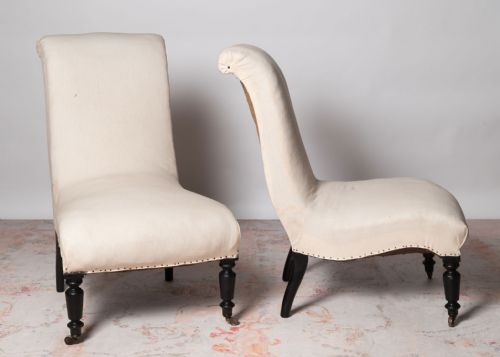
The inventory spans multiple decades from the mid-nineteenth century through the Edwardian period and into the nineteen thirties. Common variations include round seat nursing chairs, scroll back French slipper chairs, and low salon armchairs suited to intimate spaces.
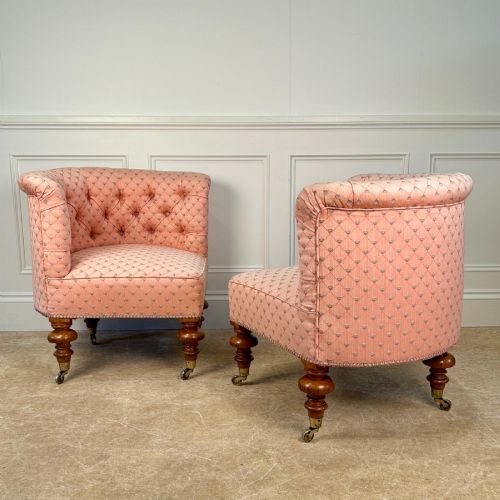
Makers and regional workshops produced these pieces in forms such as corner chairs, gossip chairs, and boudoir chairs. Walnut, mahogany, and oak frames provide the structural support beneath various fabric upholsteries.
How they were made
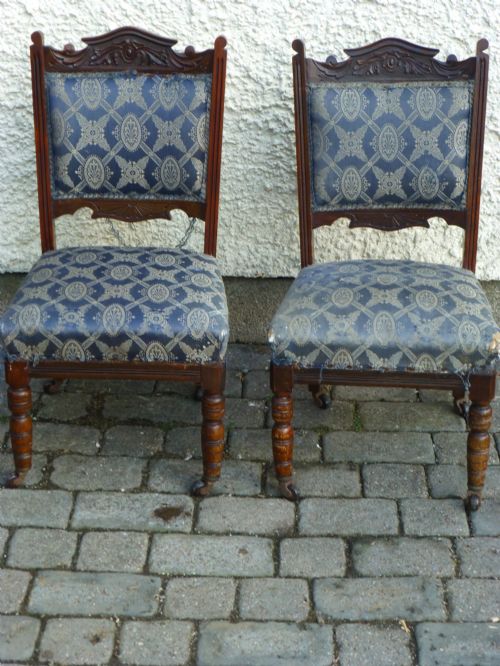
Cabinet makers utilised dense hardwoods such as mahogany, walnut, and oak to construct the underlying frames of these seats. Skilled artisans often carved decorative details into the wood or turned components like bobbin supports and brass-mounted legs.
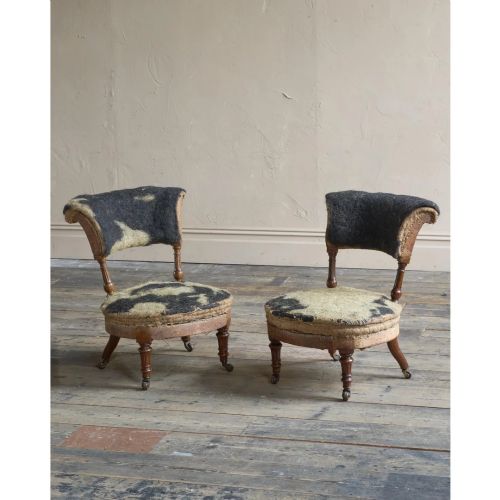
Upholstery techniques varied from deep-sprung seating to simpler pad designs ready for re-covering. Frames were frequently shaped into scroll backs, hoop backs, or low profiles specifically designed to accommodate nineteenth-century clothing fashions.
Listings feature periods spanning from eighteen-fifty through the nineteen-thirties, utilising materials like brass, mahogany, velvet, and oak.
What varies in quality
The distinction between standard production and superior examples lies in the crispness of the timber framing and the integrity of the original construction. Carved ornamentation, such as detailed foliage or structural inlay on mahogany, indicates a higher grade of workshop output.
Proportion and scale also define the better specimens, where the low-slung stance remains balanced and supportive. Frames that retain their original timber patina without excessive alteration command greater interest from collectors of period seating.
Howard and Sons
The Pair Low Accent Chairs Glossary
- Nursing chair
- A low-seated chair traditionally designed for comfort during infant feeding or grooming in Victorian bedrooms. These seats typically feature low wooden frames and upholstered backs.
- Slipper chair
- An upholstered seat sitting close to the floor, historically used in ladies dressing rooms for putting on footwear. They frequently lack arms to allow full freedom of movement.
- Prie-Dieu chair
- A devotional prayer chair characterised by a low seat and a high, narrow back often topped with a small ledge for kneeling support. Nineteenth-century examples often use walnut framing.
- Boudoir chair
- A small, decorative armchair intended for private sitting rooms or bedrooms during the late nineteenth and early twentieth centuries. They appear in various revival styles including French Rococo.
- Corner chair
- A square-seated chair designed to fit neatly into room angles, featuring a diagonal orientation and a continuous curved backrest supported by turned pillars.
Pair Low Accent Chairs: Frequently Asked Questions
What is a nursing chair?
A nursing chair is a low-slung Victorian seat designed for domestic comfort in bedrooms and dressing rooms. Their reduced height allowed women to sit easily while tending to infants or dressing.
These pieces typically feature upholstered backs and short wooden legs made from walnut or mahogany. They remain popular today for adding compact character to modern living spaces.
How do I date these chairs?
Dating involves examining the timber species, joinery methods, and stylistic cues present in the frame. Mid-nineteenth-century examples often display heavy walnut or mahogany frames with Victorian carved details, while Edwardian pieces frequently showcase inlaid mahogany.
Secondary indicators include upholstery remnants, castor types, and structural wear patterns. Comparing the overall silhouette against known nineteenth-century design periods helps narrow down the decade of production.
Where should I place a slipper chair?
Slipper chairs suit bedrooms, dressing rooms, and reading corners where space is limited. Their low seat height and armless profiles make them versatile accents that do not block sightlines.
They also function well in pairs flanking a fireplace or positioned beneath a window. Their compact proportions allow them to sit comfortably in smaller alcoves.
Are these chairs comfortable?
Comfort levels depend on the underlying suspension and the depth of the seat padding. Many period examples feature deep springing designed for relaxed lounging, though older upholstery may require professional renewal to achieve optimal support.
Buyers should consider whether the piece has been recently re-upholstered or retains its historical padding. A deep-seated slipper chair offers a different seating posture compared to an upright salon chair.