
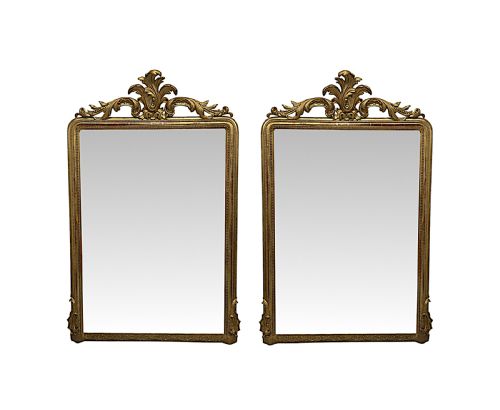
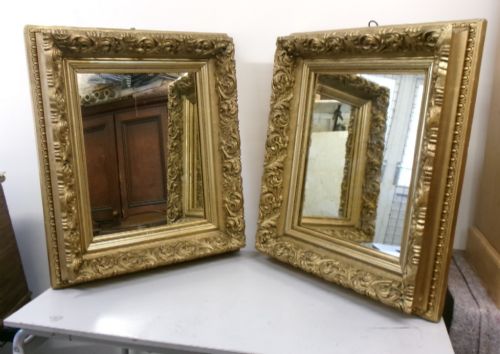
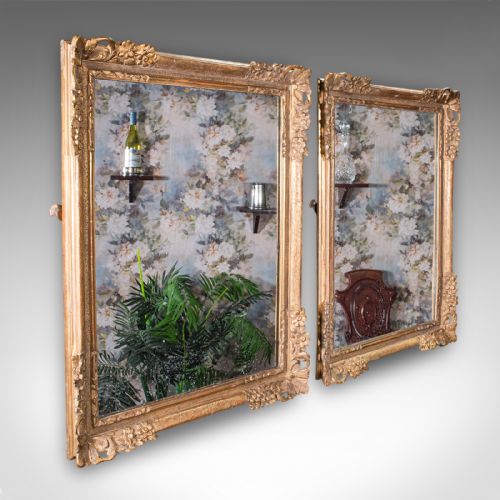
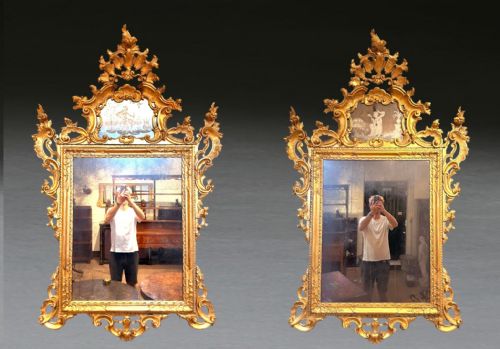
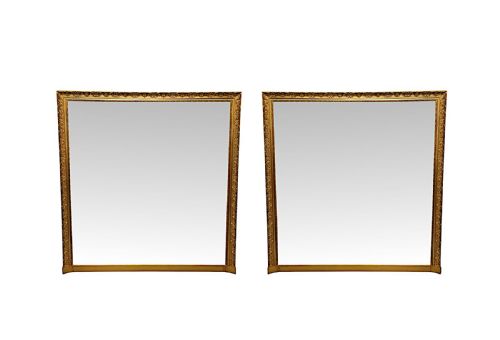
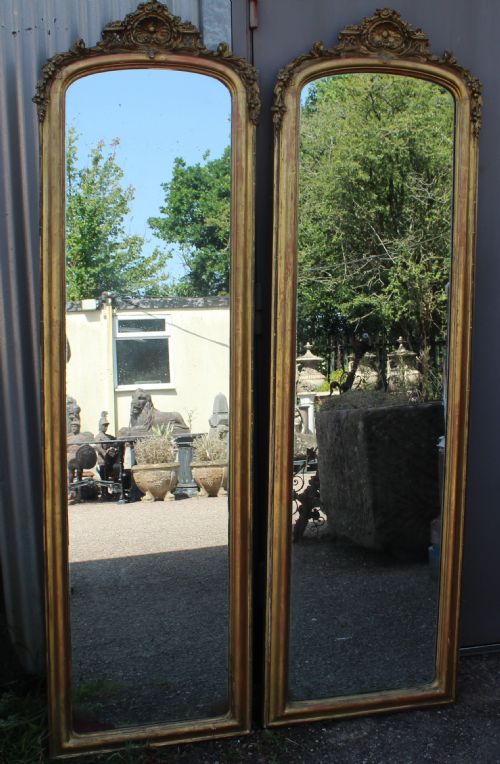
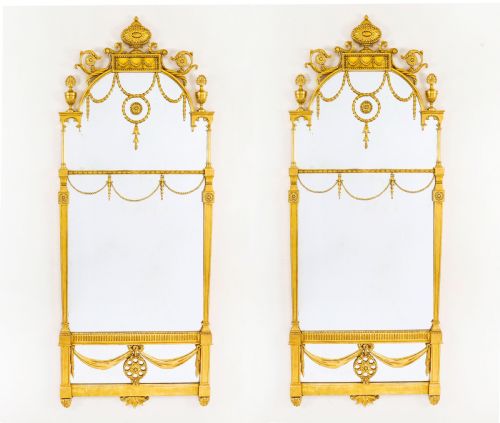
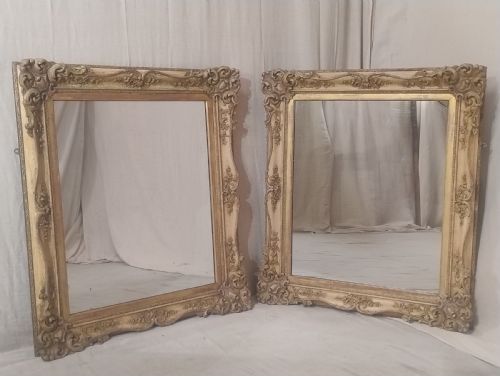
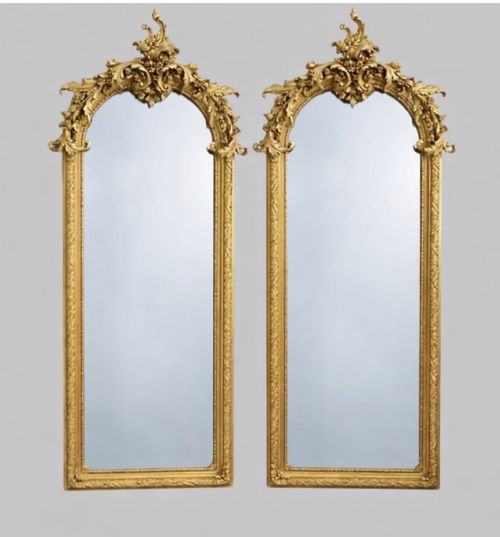
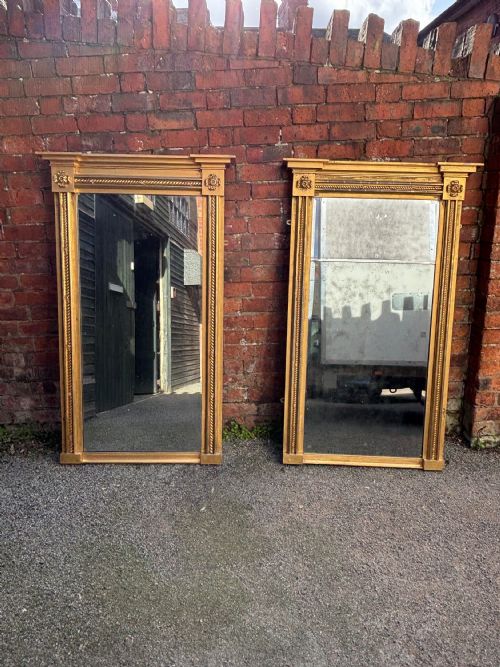


Pair Large Gilded Mirrors
Pair large gilded mirrors bring grand scale and reflected light into a room, spanning Regency elegance and Victorian excess.
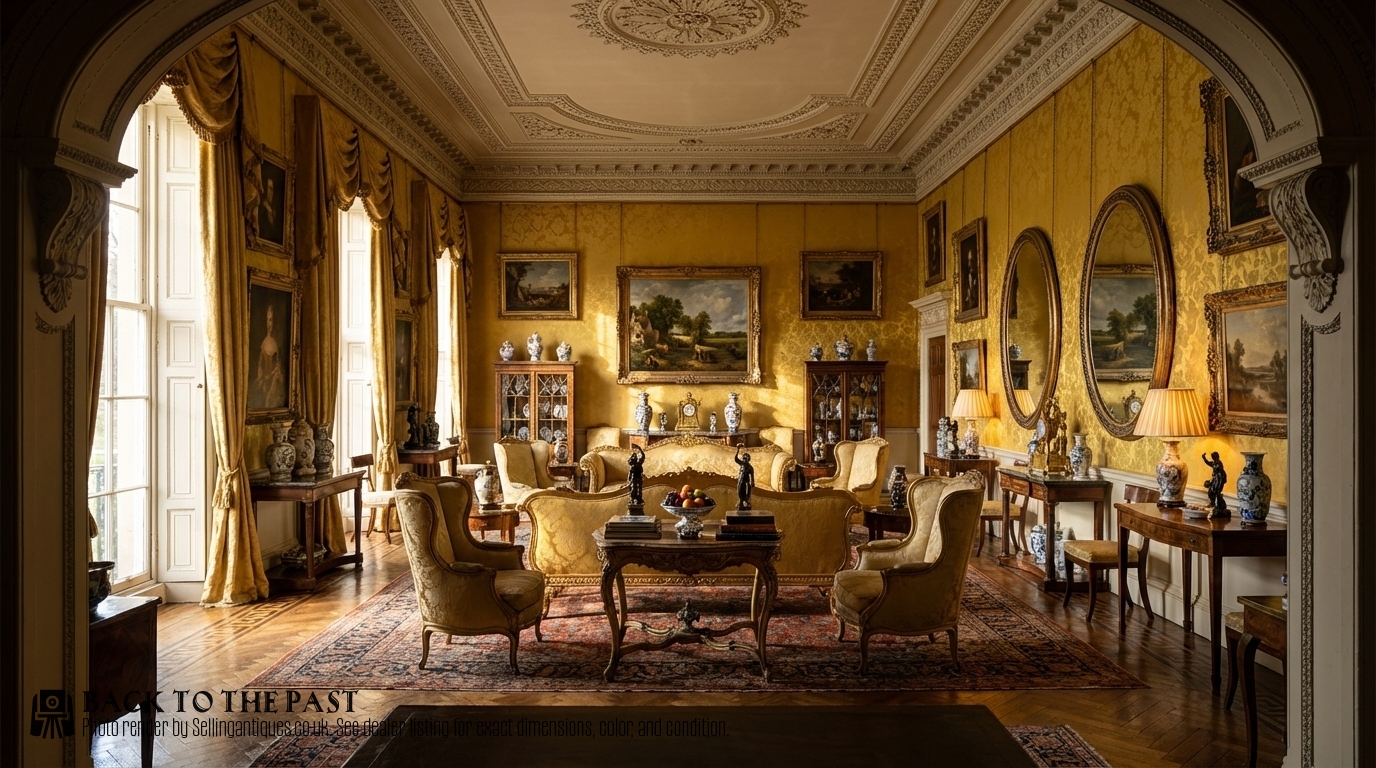
Pair Large Gilded Mirrors
These pair large gilded mirrors encompass monumental wall hangings, pier glasses designed to sit between windows, and substantial overmantels intended for principal reception rooms. The selection on this page stretches from the restrained symmetry of Regency and Adam Revival pieces to the exuberant curves of Italian Rococo and French Chateau designs.
Buyers encounter country house ovals alongside heavy carved pier glass frames and towering cheval mirrors framed in bronze. Materials range from traditional giltwood and gesso to composition ornament over timber, reflecting the diverse domestic interiors of the nineteenth and early twentieth centuries.
How they were made
Makers constructed the primary frames from carved timber, applying layers of gesso to build up intricate relief decoration before gilding the surface with gold leaf. Composition ornament, pressed from moulds, frequently supplemented hand-carved details on Victorian and later revival pieces.
Mirrors of this scale relied on thick glass plates, often bevelled at the edges and silvered by hand, fitted securely into rebated frames to support their own considerable weight.
Materials recorded across the inventory include traditional giltwood, gesso, pressed composition, and bronze alongside standard mirror glass.
What varies in quality
Quality rests in the crispness of the carving and the depth of the gilding, where hand-applied gold leaf retains a warmer tone than flat metallic paint. Finer examples display deep relief work in the gesso and substantial timber frames that prevent warping across large spans.
The integrity of the mirror glass itself marks the distinction between standard and superior pieces, with older plates showing subtle age characteristics rather than flat industrial uniformity.
The Pair Large Gilded Mirrors Glossary
- Giltwood
- Timber that has been coated with gold leaf over a prepared gesso ground. This traditional finish provides a warm, reflective surface that patinates gently over time.
- Pier glass
- A tall mirror designed specifically to hang on the narrow pier of wall between two windows. These pieces maximised natural light in period reception rooms.
- Overmantel mirror
- A wide glass created to sit directly above a fireplace mantelpiece. They frequently echo the architectural proportions of the fireplace surround.
- Composition
- A mouldable mixture of whiting, resin, glue, and linseed oil pressed into decorative reliefs. It offered a cost-effective alternative to deep hand carving on Victorian frames.
- Cheval mirror
- A freestanding full-length looking glass hung on a vertical swivelling frame between four pillars. They allowed occupants to view their entire outfit.
Pair Large Gilded Mirrors: Frequently Asked Questions
Where should I hang pair large gilded mirrors?
These large pieces demand substantial wall space to balance their visual weight, making them well-suited to principal drawing rooms, grand hallways, or above primary fireplaces.
Positioning them opposite windows maximises the reflection of natural light and opens up smaller interior spaces effectively.
How do I identify Regency versus Victorian examples?
Regency and Adam Revival frames typically display neoclassical restraint, featuring linear symmetry, urn motifs, and crisp, classical proportions.
Victorian and Rococo Revival pieces lean towards heavier ornamentation, asymmetric scrolls, and deeply moulded composition work that creates a more exuberant silhouette.
Can these mirrors support their own weight safely?
Period frames of this scale are exceptionally heavy, requiring robust wall fixings secured directly into masonry or structural studs rather than standard plaster.
Professional installation is essential to distribute the load evenly across the hanging brackets and protect both the timber frame and the glass plate.
What does parcel gilt mean?
Parcel gilt describes an object where only specific portions of the carved frame receive a gold leaf finish while the underlying timber remains exposed or painted.
This technique highlights particular decorative motifs and creates a subtle contrast across the surface of the mirror.