
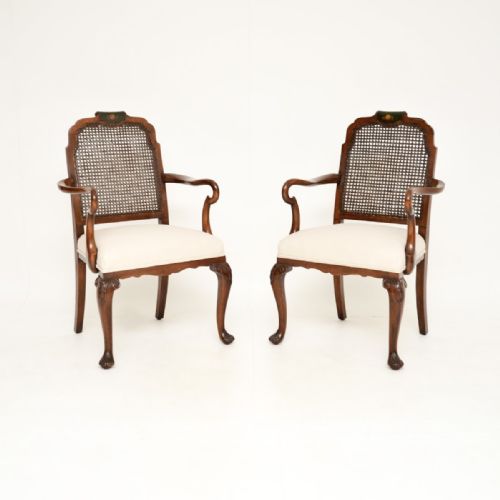


Pair Lacquer Chairs
These pair lacquer chairs bring together centuries of global craftsmanship, offering matched seating with distinctive painted and decorated surfaces.
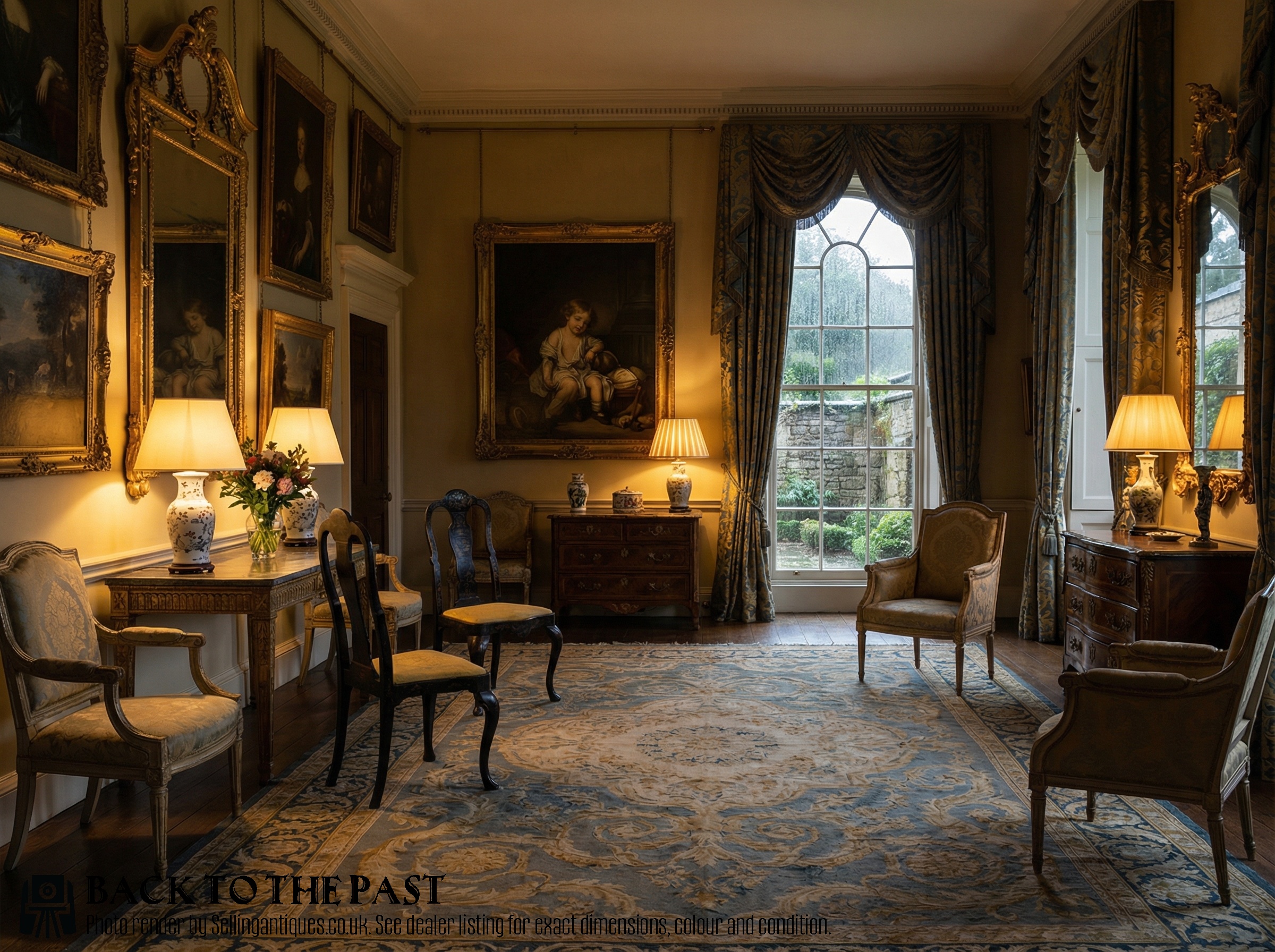
Pair Lacquer Chairs
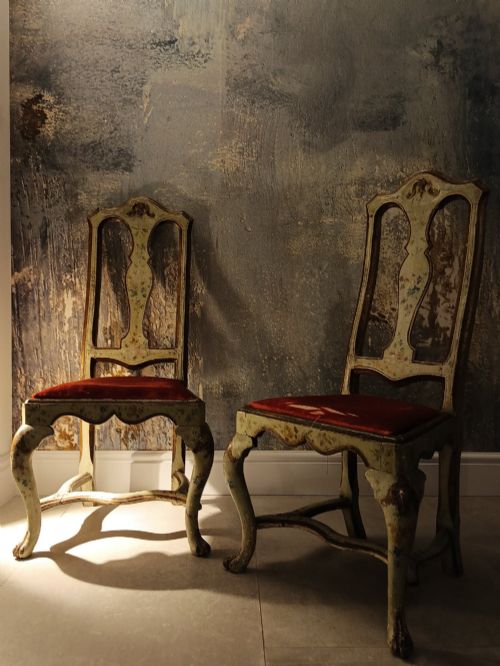
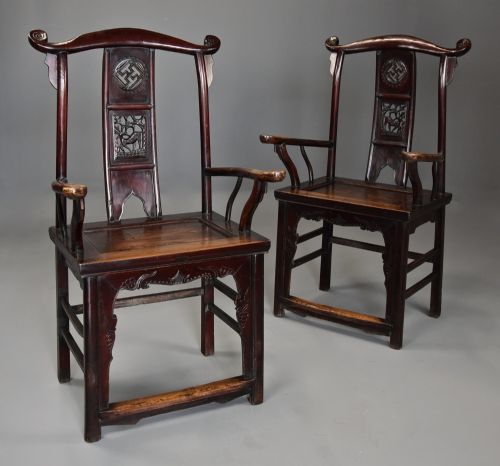
When you search for pair lacquer chairs, you encounter matched sets of seating unified by applied resinous finishes, spanning centuries of European and Asian workshops. The selection ranges from 18th-century North Italian and Dutch side chairs with gilt decoration to 19th-century Chinese elm yokeback armchairs and concubine chairs.
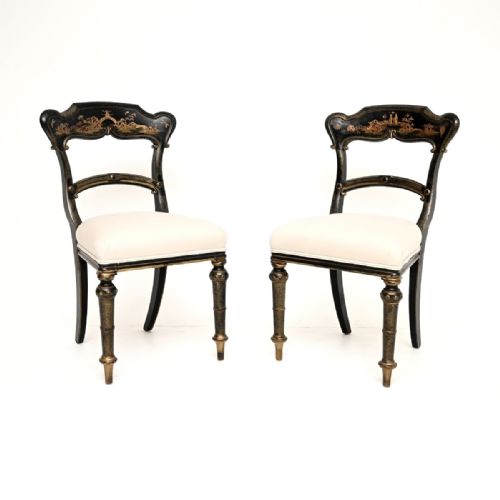
Victorian and Edwardian iterations frequently lean into Chinoiserie and Japanned aesthetics, applying black, red, or blue lacquer over walnut, beech, or papier-mâché. You also find specialised forms such as library chairs, hall chairs, and bedroom chairs alongside bamboo constructions.
The materials vary from native European hardwoods to Chinese elm, often incorporating cane seats, fabric upholstery, or textile panels. Whether following Qing Dynasty traditions or Italian Rococo styling, these matched pairs provide balanced interior placement.
Materials and construction
The structural foundations rely on timber species such as elm, walnut, satinwood, and bamboo, shaped into armchairs, side chairs, and bergere frames. Artisans built these forms using traditional joinery before applying successive layers of resinous lacquer or japanning to seal the wood.
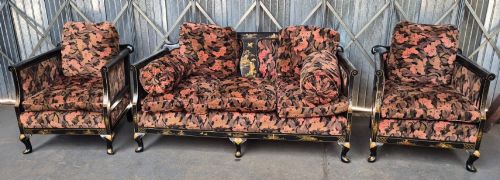
Surface ornamentation involved hand-painted Chinoiserie motifs, gilt decoration, and polished finishes applied over black, red, or blue ground colours. Many examples integrate cane panels or upholstered elements using fabric and textile inserts to provide functional seating comfort.
Children's papier-mâché chairs prove that miniature Victorians required equally elaborate lacquer decoration.
Assessing quality and preservation
The distinction between ordinary and exceptional examples rests upon the preservation of the original lacquered surface and hand-painted decoration. Pairs that retain their untouched gilt work, original red or black pigment, and authentic patina command greater interest than heavily restored or later repainted equivalents.
Structural integrity of the underlying timber frame, whether Chinese elm, walnut, or papier-mâché, dictates daily usability. Furthermore, the fidelity of matched pairs ensures that both chairs share identical proportions, carving details, and decorative schema without mismatched replacement components.
The Pair Lacquer Chairs Glossary
- Chinoiserie
- European artistic interpretation of Chinese and East Asian artistic traditions, popular in furniture decoration. It manifests through painted landscapes, figures, and motifs applied over lacquered grounds.
- Japanning
- European imitation of East Asian lacquering techniques developed during the seventeenth and eighteenth centuries. This process involved layering varnishes and heat-curing the surface before adding gilt ornamentation.
- Yokeback
- A traditional Chinese chair design featuring a curved top rail resembling a yoke. This form provides ergonomic support while utilising native timbers like elm.
- Bergere
- An enclosed upholstered armchair with sides filled in with cane or upholstery. These frames offer a wider seat profile than standard side chairs.
- Papier-mâché
- A composite material made from paper pulp or reinforced paper sheets mixed with glue and resin. Pressed into moulds, it formed lightweight chair frames during the Victorian era.
Pair Lacquer Chairs: Frequently Asked Questions
How do I clean lacquer chairs?
Dust these surfaces gently using a dry, soft microfiber cloth to prevent abrasion to the delicate finish. Avoid liquid cleaners, modern polishes, or harsh chemical sprays that can lift historic varnish or paint.
Keep the timber away from direct sunlight and rapid humidity fluctuations to protect the lacquer from cracking or crazing over decades of domestic use.
Are these chairs suitable for daily seating?
Many sturdy forms like Chinese elm armchairs and Victorian library chairs were built for functional daily use. Lighter decorative models, such as papier-mâché bedroom chairs or cane-seated side chairs, require a more careful approach.
Assess the structural joints and cane tension before regular placement in high-traffic areas of your home.
What is the difference between Chinoiserie and Japanned?
Chinoiserie describes the overall decorative style inspired by Chinese art, featuring pictorial scenes of figures, pagodas, and natural elements. Japanning specifically refers to the European technical process of imitating East Asian lacquer work.
A piece can be both japanned in its construction technique and Chinoiserie in its painted pictorial style.
How can I date an 18th-century pair?
Eighteenth-century examples often display hand-mixed pigments, deep patination on the timber frame, and authentic gilt decoration applied over early gesso grounds. Construction methods will reveal hand-cut joinery and timber preparation consistent with period workshop practices.
Compare the decorative motifs and turning details against documented Italian, Dutch, or English regional pieces from the same era.