







Pair Japanese Baluster Vases
Pair Japanese baluster vases bring symmetrical craft and historic form into a room, spanning bronze, porcelain, and earthenware.
Pair Japanese Baluster Vases
Pair Japanese baluster vases take their name from the curved, swelling profile that resembles a baluster column. These symmetrical vessels emerge across centuries of Japanese artistry, with examples appearing from the Edo period through the Meiji era and into the twentieth century. A buyer seeking this phrase encounters ceramic, porcelain, and bronze creations designed for decorative display or adapted as table lamps.
The selections span distinct aesthetic traditions, notably Imari, Satsuma, and Kutani wares alongside cast bronze specimens. Many date to the nineteenth century, reflecting the opening of Japan to Western markets during the Meiji period. Larger floor versions and monumental lidded urns sit alongside smaller cabinet pieces, offering diverse scales for interior schemes.
Materials and Technique
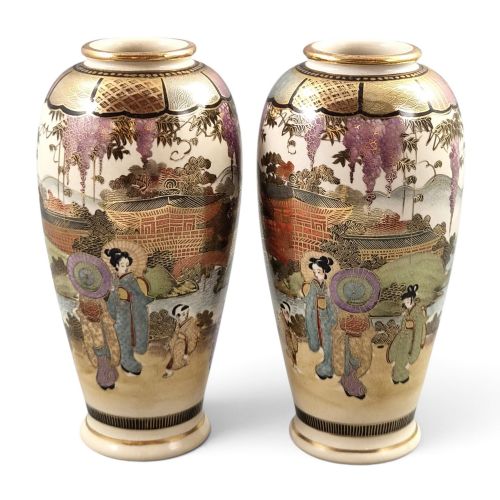
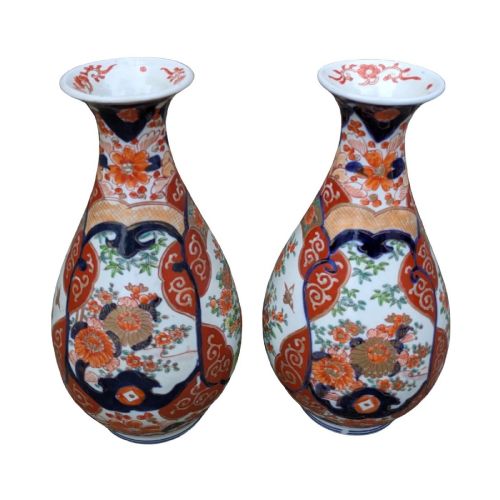
Makers shaped porcelain and earthenware on the wheel or in moulds before applying glazes, enamel, and gold leaf. Cobalt blue underglaze defines traditional Imari pieces, while Satsuma earthenware employs a fine crackle-glaze ground painted with polychrome enamels and gilding. Hand-painted details depict figures, foliage, and narrative scenes across the ceramic surfaces.
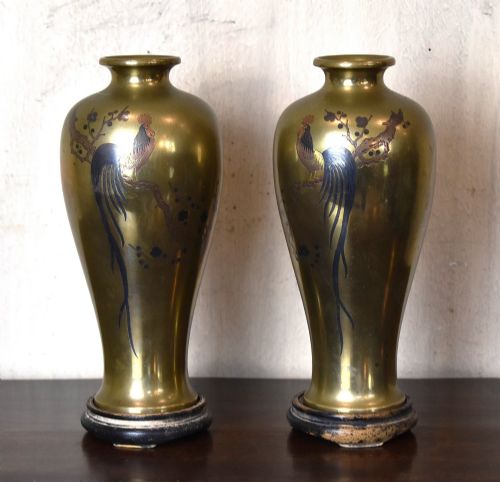
Bronze vessels utilise metal-casting techniques, often incorporating applied elements such as egret handles or low-relief wildlife motifs. Cloisonné examples integrate wire cells soldered to a metal base, filled with enamel paste and fired multiple times. Artisans combined these specialised skills to produce both robust utilitarian forms and delicate ornamental objects.
Pair Japanese Baluster Vases Retail Price Guide 2026
Typical asking prices for pair japanese baluster vases among the pieces listed under this phrase on Sellingantiques today, from the lower quarter to the upper quarter. They describe what is for sale here now, not the wider market.
Listings feature periods from the 17th century through the Victorian era, alongside materials including bronze, porcelain, and gold leaf.
Design and Execution
Quality rests upon the precision of the hand-painted or cast detail and the harmony of the palette. Superior ceramic pieces demonstrate disciplined brushwork in the enamel and gold leaf, with registration remaining sharp across the contours of the baluster form. Bronze and cloisonné examples depend on the crispness of the casting and the smoothness of the finished surface.
The reputation of the workshop or maker influences distinction, alongside the preservation of original lids and matched pairs. Early specimens from the seventeenth and eighteenth centuries carry historical weight, while nineteenth-century Meiji examples display ambitious scale and intricate pictorial complexity. The depth of the glaze and the weight of the metal distinguish superior specimens from standard commercial production.
Shozan·Kinkozan·Kizan
The Pair Japanese Baluster Vases Glossary
- Baluster
- A vertical architectural form featuring a swelling lower belly that tapers toward a narrow neck. This characteristic silhouette provides stability and visual balance to the vessel.
- Imari
- A style of Japanese porcelain named after the port of shipment, traditionally decorated in underglaze blue, iron red, and gold. These colourful wares became hugely popular in European interiors.
- Satsuma
- A type of earthenware originating from the Satsuma Province, characterised by a distinctive ivory-coloured, crackled glaze. Artisans painted these porous surfaces with elaborate polychrome enamels and raised gold.
- Kutani
- Japanese porcelain or earthenware distinguished by bold polychrome enamel decoration, often utilising a dominant green palette. The style originated in the Kutani region and evolved through various revival periods.
- Cloisonné
- A metalwork technique where thin metal strips are soldered to a body to create compartments, which are then filled with vitreous enamel and fired. This method produces intricate geometric and pictorial designs across the object.
Pair Japanese Baluster Vases: Frequently Asked Questions
What is a baluster vase?
A baluster vase is a vessel characterised by a rounded, bulbous lower section that tapers inward toward the neck, resembling a traditional architectural stair baluster.
This classic silhouette provides a stable base and a pleasing distribution of weight, making it a favoured shape for decorative ceramics and bronze urns.
How do I identify Meiji period pieces?
Meiji period items date from the reign of Emperor Meiji, spanning the late nineteenth and early twentieth centuries. This era saw a surge in export arts following the opening of Japan.
Pieces from this time often exhibit ambitious scale, detailed hand-painted polychrome decoration, and sophisticated metal casting techniques.
What is the difference between Satsuma and Imari?
Satsuma wares utilise a cream-coloured earthenware body with a fine crackle glaze, painted over the glaze with detailed enamels and gold. Imari pieces are hard-paste porcelains decorated under the glaze in cobalt blue and over the glaze in iron red and gold.
Satsuma offers a matte, textured surface with pictorial scenes, whereas Imari presents a smooth, vitrified finish with geometric and floral patterns.
Can these vases be used as lamps?
Many antique examples arrive converted into table lamps, utilising the original ceramic or bronze body with fitted electrical hardware. This adaptation preserves the decorative value of the vessel while providing functional lighting.
Buyers often find both historic conversions and pieces that retain their original hollow interiors and lidded forms.