




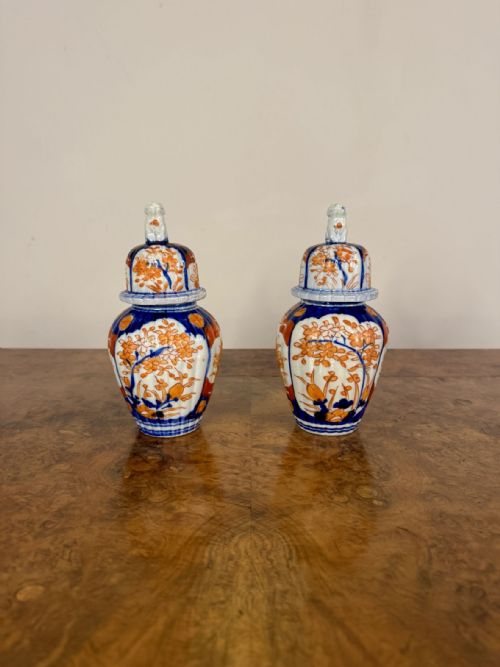


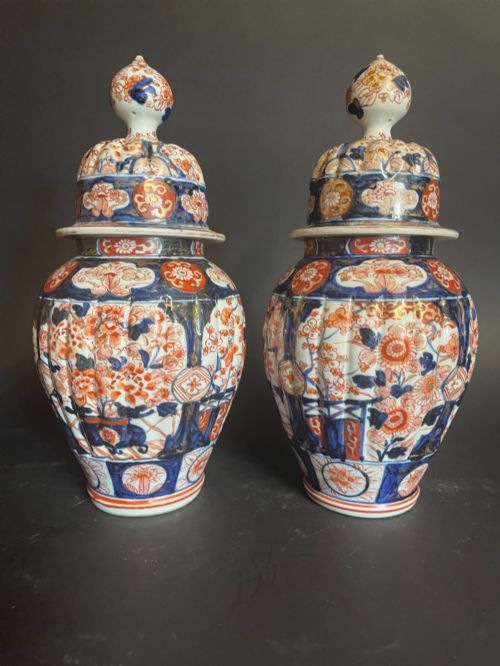
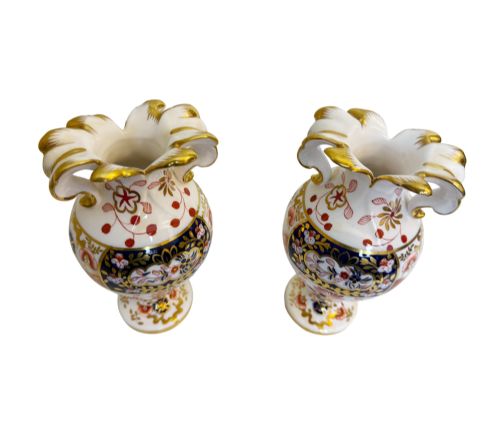

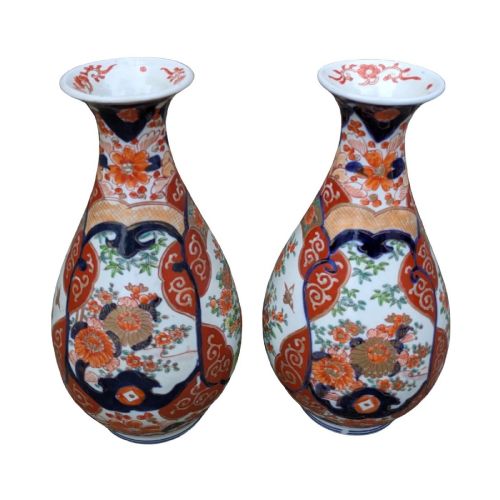


Pair Imari Porcelain Urns
Pair imari porcelain urns bring striking cobalt and iron red palettes to a room, offering symmetrical display value through centuries of craft.
Pair Imari Porcelain Urns
Pair imari porcelain urns comprise matched decorative vessels produced across the seventeenth, eighteenth, and nineteenth centuries, spanning Edo and Meiji periods alongside Georgian British interpretations.
Buyers encounter lidded jars, baluster forms, and double gourd shapes originating from Japanese Arita workshops or European factories inspired by Eastern palettes.
These matched pairs serve as mantel or tabletop centerpieces, combining ceramic bodies with hand-painted iron red, cobalt blue, and gilding.
How they were made
Potters shaped clay into ceramic bodies before applying underglaze blue and overglaze enamel colours, frequently enriched with gold leaf or gilding.
Firing in kilns set the glaze and fixed the intricate hand-painted designs characteristic of Japanese imari tradition and European imari style equivalents.
Pair Imari Porcelain Urns Retail Price Guide 2026
Typical asking prices for pair imari porcelain urns among the pieces listed under this phrase on Sellingantiques today, from the lower quarter to the upper quarter. They describe what is for sale here now, not the wider market.
Listings feature porcelain vessels spanning the seventeenth to the nineteenth centuries, incorporating both Japanese Arita originals and nineteenth-century British interpretations.
What varies in quality
Quality rests upon the crispness of the hand-painted detailing and the depth of the cobalt and enamel pigments applied to the ceramic surface.
Proportion and scale distinguish monumental lidded jars and double gourd vases from smaller spill vases, altering visual impact within a space.
Chamberlain Worcester·Mason's·Samson·Fukagawa
The Pair Imari Porcelain Urns Glossary
- Imari
- A style of ceramic decoration originating in Japan, characterised by a palette of cobalt blue, iron red, and gold.
- Arita
- The Japanese town and surrounding region where the porcelain production for imari wares historically centered.
- Meiji Period
- The era in Japanese history spanning from 1868 to 1912, associated with detailed export porcelain.
- Baluster
- A vase shape with a rounded body that tapers toward the neck and base.
- Gilding
- The application of gold leaf or powdered gold onto the ceramic surface to accent the painted design.
Pair Imari Porcelain Urns: Frequently Asked Questions
How do I display pair imari porcelain urns?
Place them symmetrically on mantels, sideboards, or large tables where their matching forms and rich palettes create balanced visual weight.
Keep them away from direct sunlight and heavy foot traffic to protect their delicate overglaze enamels and gilding over time.
Are these urns waterproof?
Many historical lidded jars and vases were designed purely for decorative display rather than for holding water and fresh stems.
Check the interior for firing flaws or historical repairs before filling any antique ceramic vessel with liquid.
How do I tell Edo period from Meiji period pieces?
Edo period pieces often date from the seventeenth or eighteenth centuries, displaying earlier potting techniques and restrained palettes.
Meiji period examples from the late nineteenth century frequently feature denser hand-painted decoration and monumental scales.
What is the difference between Japanese and European imari?
Japanese pieces originated in Arita and were shipped to Europe through the Dutch East India Company during the seventeenth and eighteenth centuries.
European factories like Spode, Mason's, and Chamberlain Worcester subsequently created their own interpretations in the imari style.