

Pair Grand Tour Bronzes
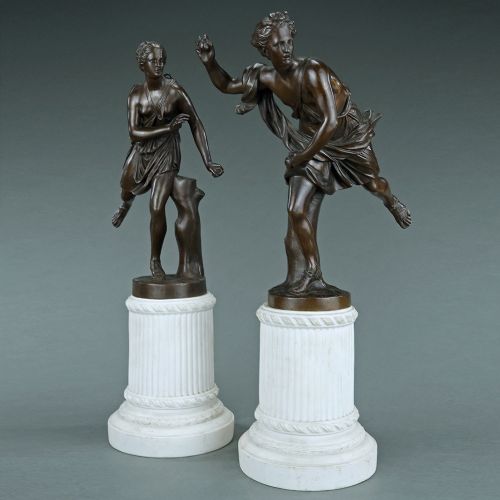
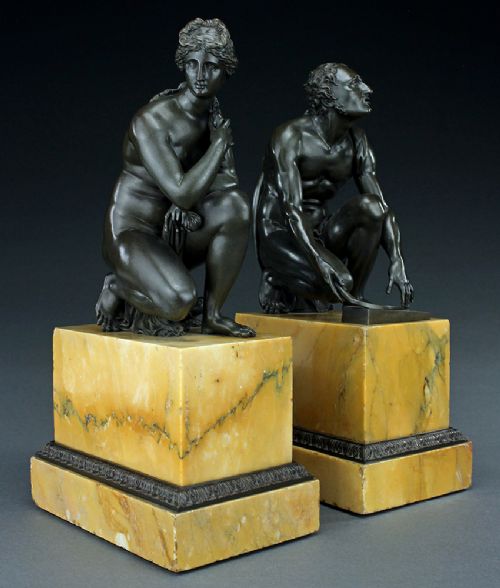
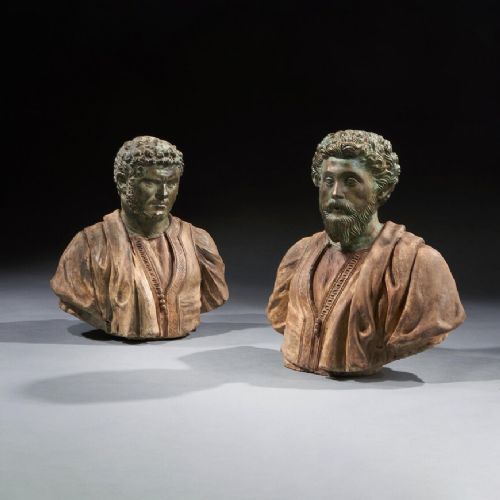
These pair grand tour bronzes bring home the classical sculpture and architecture of Italy, collected by travellers on the nineteenth-century Grand Tour.
Pair Grand Tour Bronzes
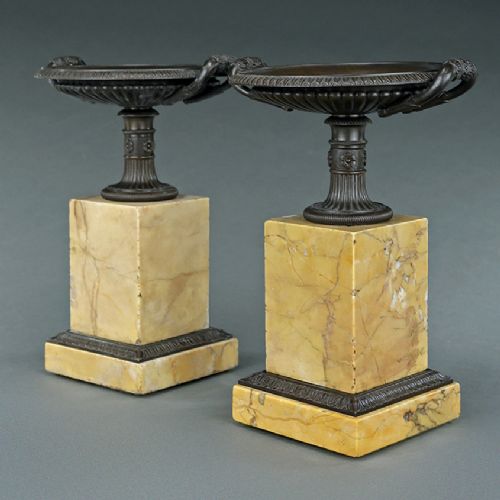
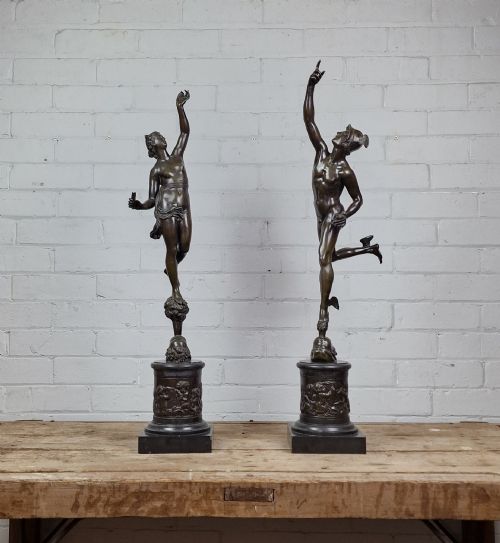
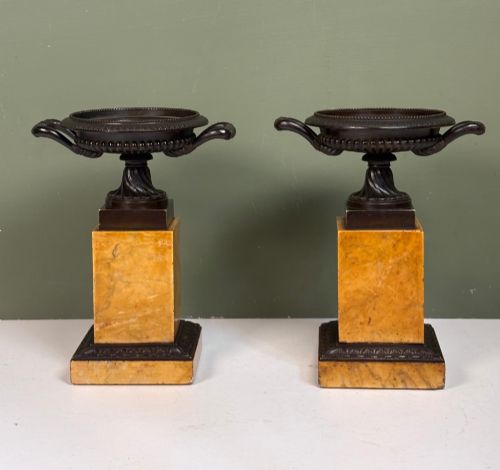
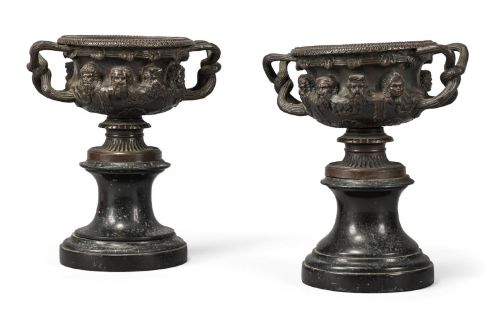
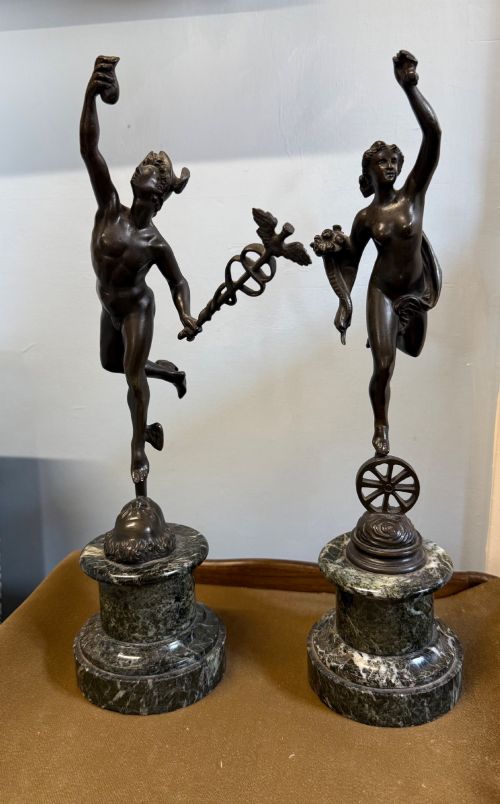
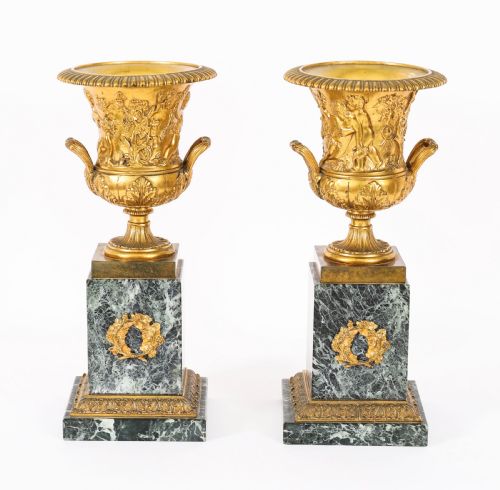
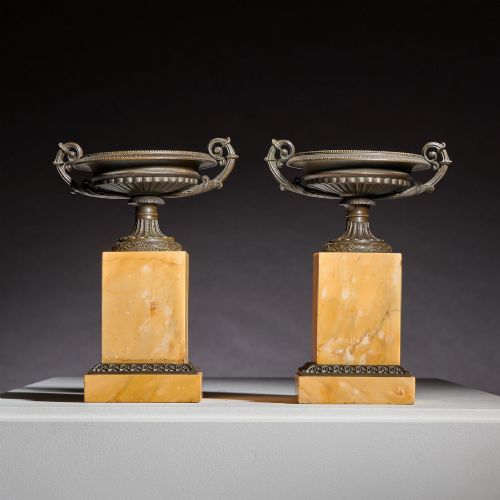
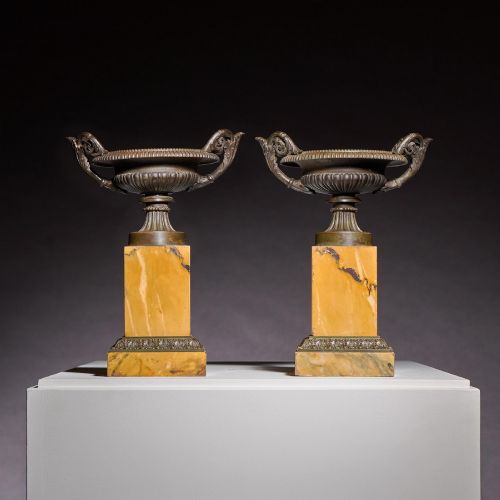
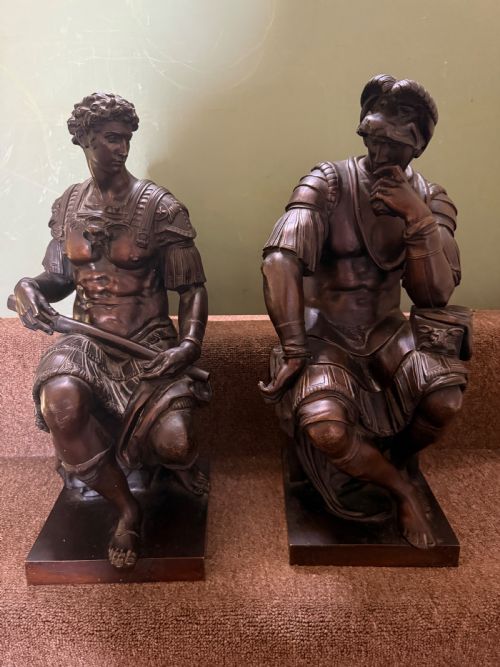
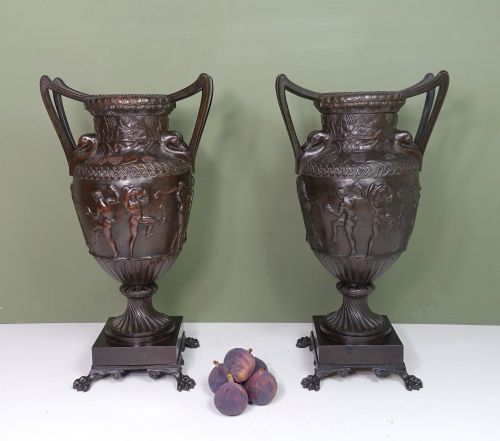
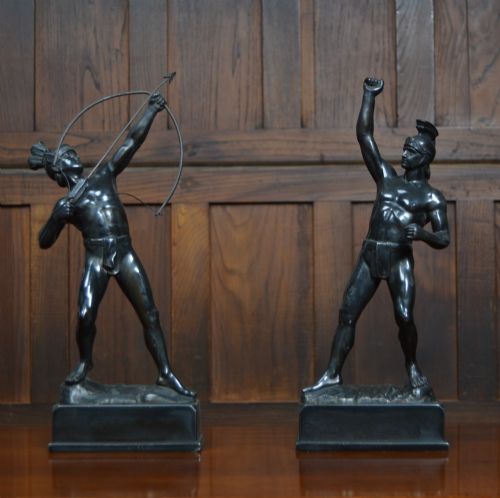
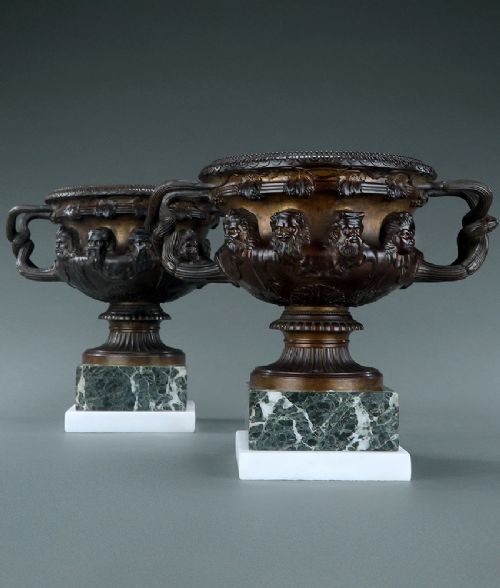
When you search for pair grand tour bronzes, you are looking at nineteenth-century souvenir sculptures, urns, and architectural models produced in workshops across Europe and Italy. These objects were purchased by travellers returning from the cultural capitals of Rome, Florence, and Naples as tangible records of their education and journeys. The items on this page range from reduced bronze figures after classical antiquities and Renaissance masters to decorative tazzas and campana urns.
The most common pairings you will meet here are mythological figures, classical deities like Mercury and Fortuna, and famous sculptural groups such as the Marly horses or the Medici tombs. Alongside figurative works, you will frequently find symmetrical pairs of decorative vessels, including Warwick vases, Albani vases, and Borghese urns. These pieces reflect the prevailing Neoclassical, French Empire, and Renaissance Revival tastes of the nineteenth century.
Makers and founders adapted the scale of monumental public monuments into cabinet-sized bronzes suitable for domestic display on mantelpieces, libraries, and sideboards. While many bear no signature, some carry marks from prominent nineteenth-century foundries or individual sculptors working in Paris and Italy. Their enduring appeal lies in the combination of classical subject matter and accomplished metalwork.
Materials and casting techniques
The primary material is patinated or gilt bronze, frequently mounted on heavy bases of marble, such as Siena or green marble, or sometimes olive wood. Founders utilised the lost-wax casting method or sand casting to achieve fine detail on small-scale figures and vessels. Ormolu and gilt bronze accents highlight specific architectural or sculptural elements.
Patination was applied chemically to achieve tones ranging from deep chocolate brown to rich verdigris and bright polished brass or gold. Marble plinths were turned and polished separately before the bronze components were secured with threaded pins or nuts underneath.
Object forms span sculptures, decorative urns, tazzas, candlesticks, and obelisks in Neoclassical, French Empire, and Egyptian Revival styles.
Distinctions in quality
The quality of the mounting and the stone base also marks the tier of the object. High-end pieces feature richly figured Siena or Carrara marble with finely turned mouldings, while standard pieces utilise simpler stones or plain patinated metals without secondary mounts.
Barbedienne·Canova·Giambologna·Michelangelo·Coustou·Houdon
The Pair Grand Tour Bronzes Glossary
- Campana urn
- A bell-shaped vessel form derived from classical antiquity, frequently rendered in bronze or marble on these pages.
- Tazza
- A shallow ornamental cup or vase set on a stem and foot, often paired as decorative centerpieces.
- Ormolu
- Gilt bronze, where a gold-mercury amalgam or gold leaf is applied to a bronze base for a bright golden finish.
- Patination
- The surface coloration of the metal achieved through natural ageing or chemical treatments.
- Grand Tour
- The traditional trip of Europe undertaken by upper-class young European men of the 18th and 19th centuries to a destination of key cultural value.
Pair Grand Tour Bronzes: Frequently Asked Questions
What are pair grand tour bronzes?
They are nineteenth-century miniature sculptures and decorative objects modelled after ancient Roman and Greek antiquities, collected during European travels.
Travellers bought them as portable souvenirs to display in home libraries and drawing rooms.
How were they used historically?
They served as decorative displays on mantelpieces, bookshelves, and tables, demonstrating the owner's classical education and cultured background.
Architectural models and decorative urns also functioned as bookends or visual centerpieces in period interiors.
How do I live with them?
Place them on stable surfaces away from direct moisture and handle them by their solid structural parts rather than fragile extremities.
Dust them gently with a dry, soft cloth to preserve the chemical patination and prevent buildup in recessed details.
How do I tell periods apart?
Nineteenth-century pieces often display nineteenth-century casting techniques, patination styles, and specific revival aesthetics like Egyptian or Renaissance Revival.
Earlier Regency examples tend to feature crisp ormolu mounts and classical Greco-Roman designs, while later Victorian versions frequently incorporate varied coloured marbles.