

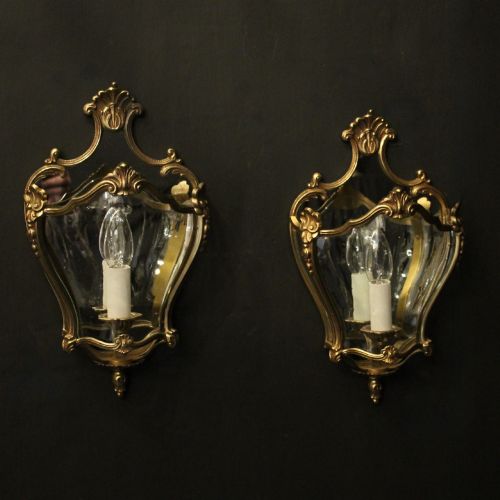
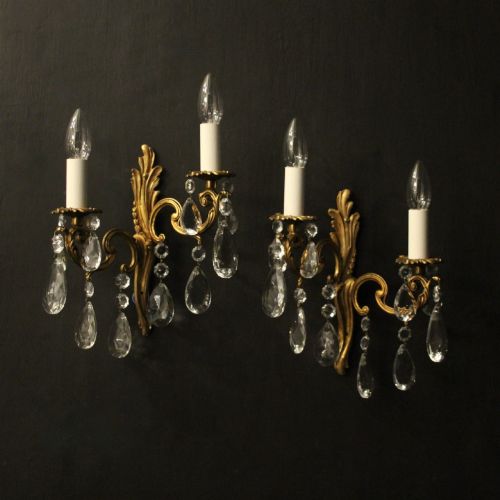
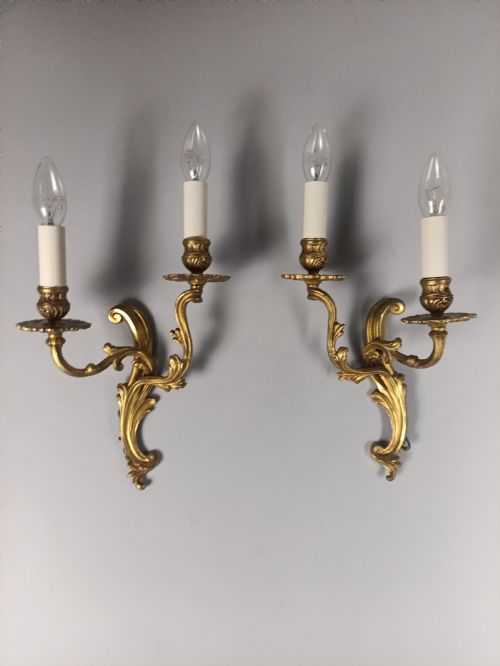
Pair Gilded Wall Appliques
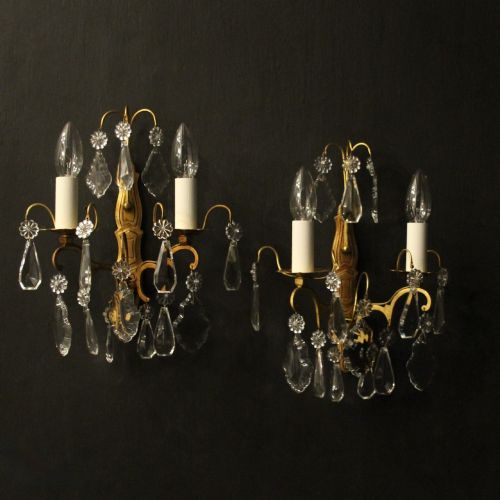
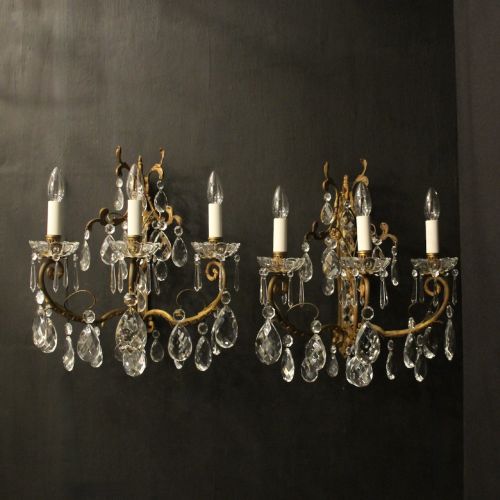
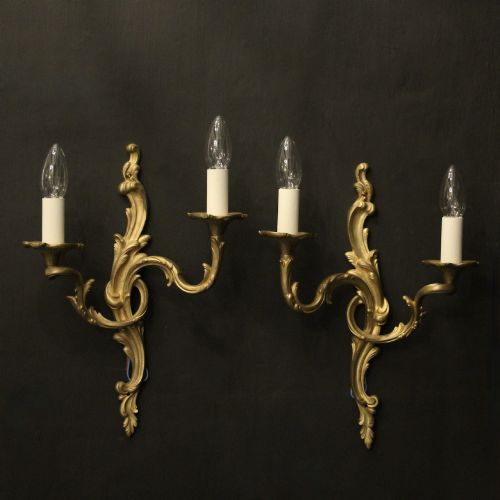
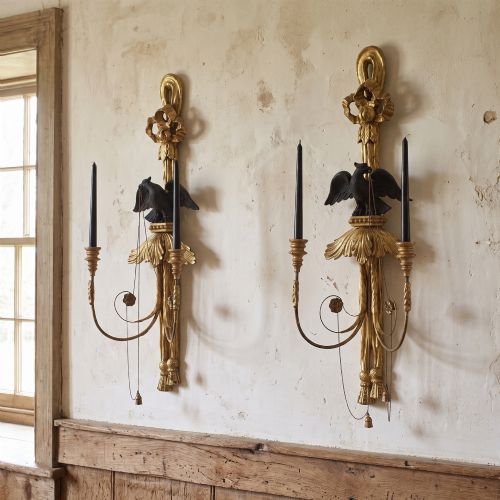
Pair gilded wall appliques bring warmth and candlelit drama to a room, cast in bronze and brass with rich gold surfaces.

Pair Gilded Wall Appliques
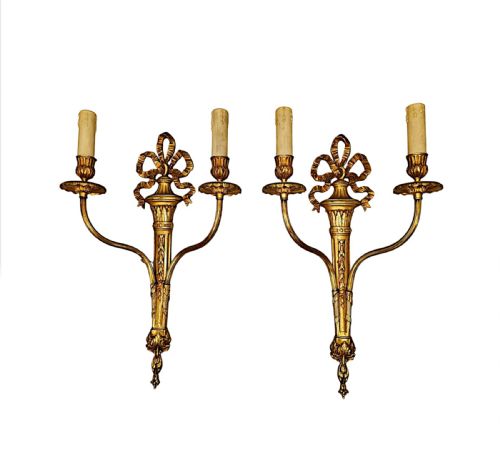
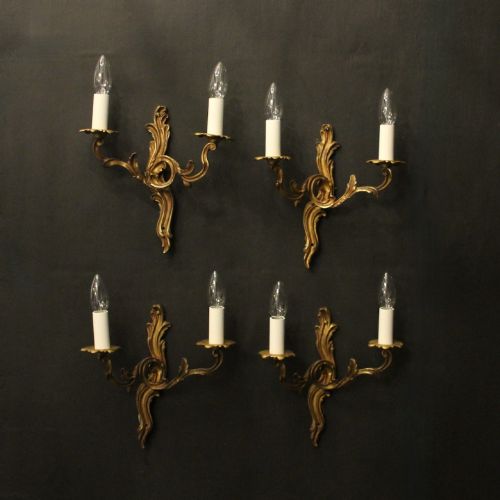
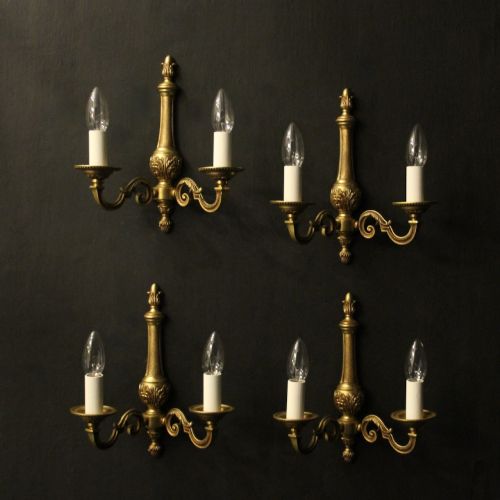
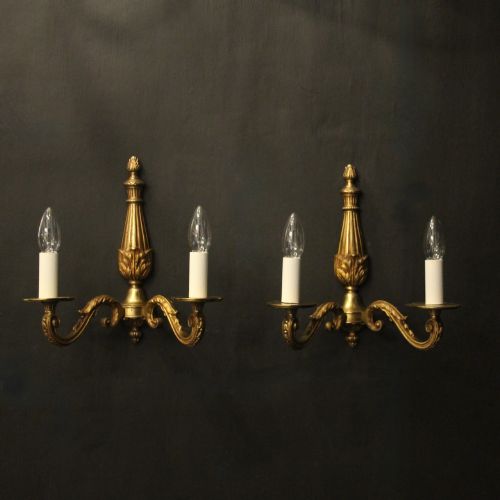
When you search for pair gilded wall appliques, you encounter decorative light fittings designed to mount directly onto a vertical surface and project illumination into a space. These fixtures take the form of wall lights, sconces, and half lanterns that draw the eye with their sculptural silhouettes and metallic sheens.
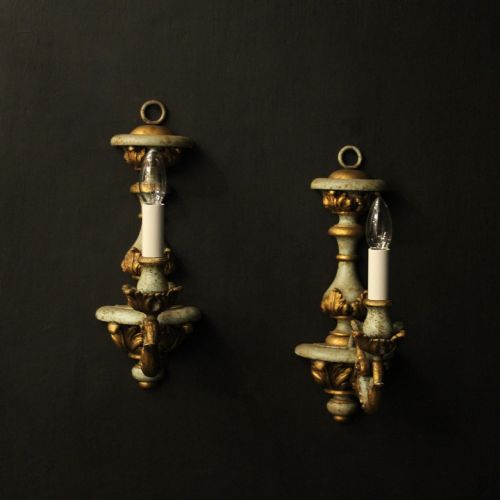
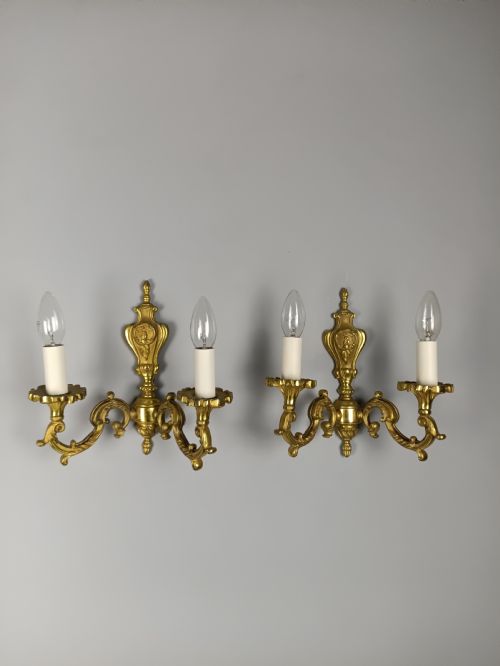
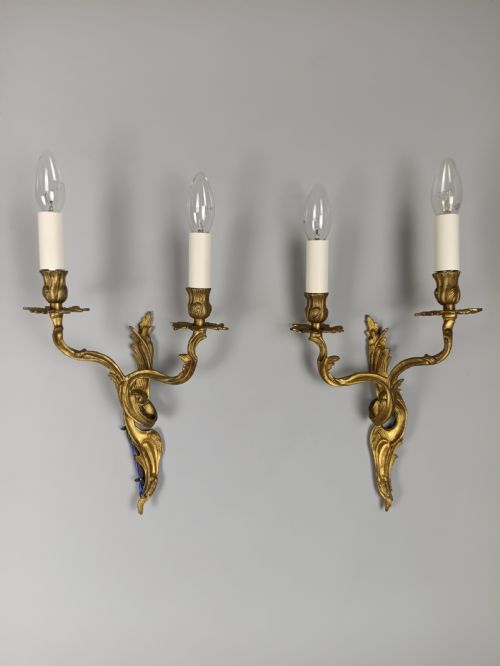
You are most likely to meet French and Italian examples dating from the eighteenth century to the early twentieth century. Common configurations include twin arm and triple arm designs styled in the French Rococo, Louis XVI, and Italian Baroque traditions, often ornamented with ribbons, cherubs, or crystal drops.
The pieces on this page span several decades, reaching from Georgian and nineteenth-century origins into twentieth-century revivals. Builders produced these lights to flank mirrors, fireplaces, or doorways, distributing ambient light across panelled walls.
Materials and technique
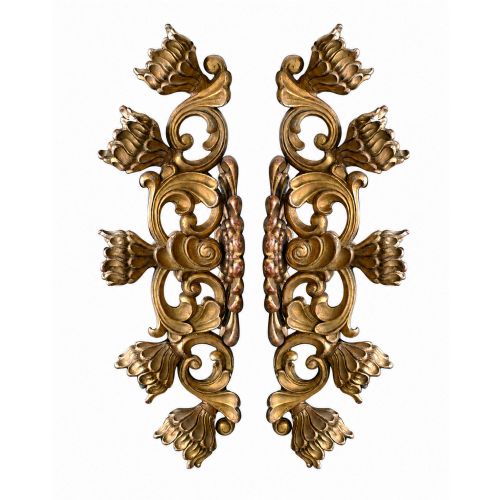
The makers of these fixtures worked primarily with cast metals such as bronze, brass, and ormolu, applying layers of gold leaf or gilding to achieve a lustrous metallic finish. Founders poured molten metal into intricate moulds to produce scrollwork, acanthus leaves, and figural motifs before hand-finishing the surfaces.
Wooden alternatives rely on hand-carved giltwood and gesso, particularly in Italian Venetian and Florentine workshops. Artisans carved solid timber before applying thin sheets of gold leaf over a prepared gesso base, creating rich textures that catch the light from single or multiple candle arms.
Listings feature items spanning the eighteenth century through to the 1930s, encompassing French and Italian origins.
Judging quality
The distinction between ordinary and superior pieces lies in the crispness of the metal casting and the depth of the hand-chasing. Top-tier bronze and ormolu fittings retain sharp relief in their ornamentation, whereas lesser examples show softened details and blurred edges from worn production moulds.
The integrity of the gilding and the weight of the metal distinguish the better specimens in this category. Heavier cast components and well-preserved surface gilding indicate workshops that invested greater labour in finishing each fixture.
The Pair Gilded Wall Appliques Glossary
- Ormolu
- Finely ground high-carat gold mercury-gilded onto a bronze base. This technique creates a deep, warm metallic lustre characteristic of fine French lighting.
- Gesso
- A plaster-like mixture applied to wood surfaces as a preparation for gilding. Artisans carved and smoothed this layer before laying gold leaf.
- Sconce
- A wall-mounted lighting fixture designed to hold candles or electric lamps. These pieces project outward to cast light across a room.
- Applique
- A decorative wall-mounted light fitting often synonymous with a wall sconce. The term derives from the French practice of applying ornaments to walls.
- Rococo
- An ornate design style marked by asymmetric scrolls, shell motifs, and natural curves. This aesthetic heavily influences many eighteenth-century and revival wall lights.
Pair Gilded Wall Appliques: Frequently Asked Questions
How do I install antique wall lights?
Most antique wall lights require professional mounting to ensure the heavy metal or carved wooden fixtures attach securely to wall studs. Modern wiring must be integrated safely behind the backplate.
Qualified electricians can adapt older brass and bronze arms to accept standard contemporary lamp fittings while preserving the external aesthetic.
Were these fixtures meant for candles or electricity?
The earlier examples in this category were designed exclusively to hold wax candles, often positioned in front of mirrors to multiply the flickering light. Nineteenth and twentieth-century versions frequently accommodate electrical wiring.
Many surviving pieces have undergone conversion to electricity over the decades, though some retain their original candle drip pans and sockets.
How do I clean gilded bronze safely?
Dust these fixtures gently with a soft, dry brush to prevent the accumulation of dirt within the intricate cast recesses. Avoid chemical polishes and abrasive cloths, which strip away fragile gold leaf and gilding.
Moisture can damage both exposed wood bases and old metal surfaces, so water and liquid cleaning agents should be kept away from the fittings.
What rooms suit wall appliques best?
These decorative lights function effectively in hallways, dining rooms, and drawing rooms where ambient illumination enhances architectural details. Mounting them at eye level on either side of a fireplace or painting creates balance.
Pairs look particularly striking when installed to frame large mirrors or architectural doorways.
How do I distinguish French and Italian styles?
French designs from periods like Louis XVI typically feature balanced Neoclassical geometry, ribbons, and crisp bronze or ormolu casting. Italian pieces often lean towards Baroque or Florentine traditions, utilising carved giltwood, polychrome accents, and expressive figures like cherubs.
Examining the underlying material helps separate metal-heavy French foundries from the carved wooden workshops of Italy.