

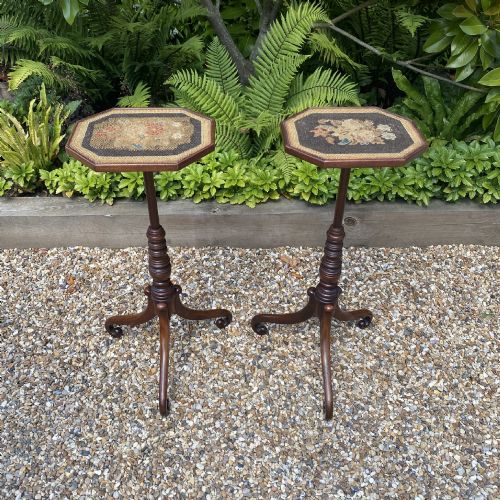
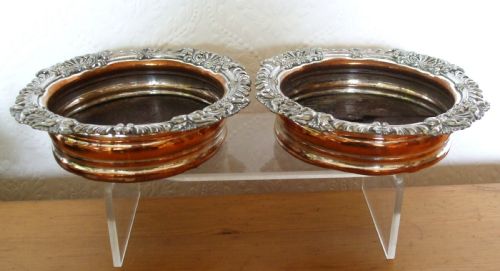
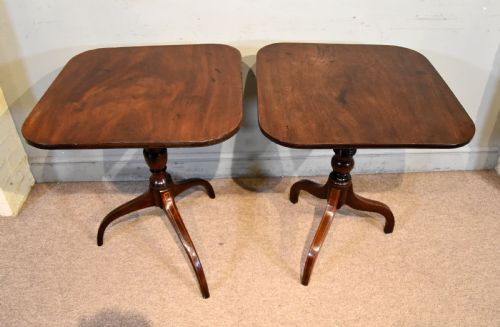

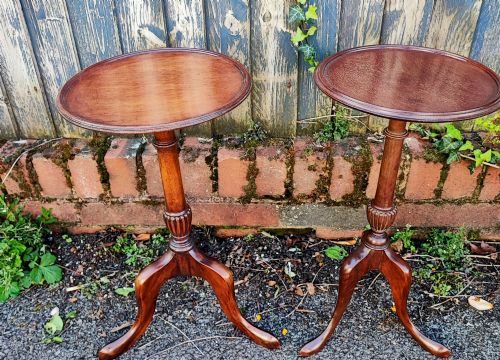
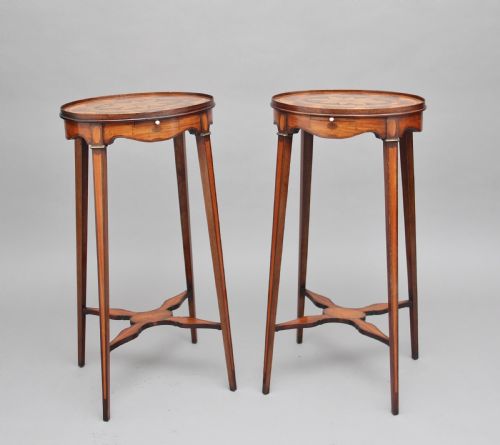


Pair Georgian Wine Stands
Pair georgian wine stands bring dual symmetry to dining and drawing rooms through historic timber and precious metals.
Pair Georgian Wine Stands
Examples span the Georgian, Regency and Edwardian eras, with later revivals appearing alongside authentic late eighteenth and early nineteenth century specimens. Mahogany and Old Sheffield plate dominate the selections, accompanied by rosewood, satinwood and sterling silver.
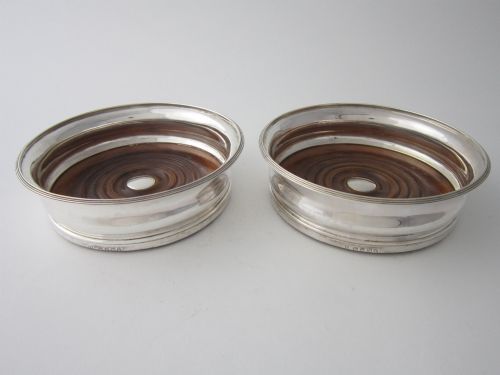
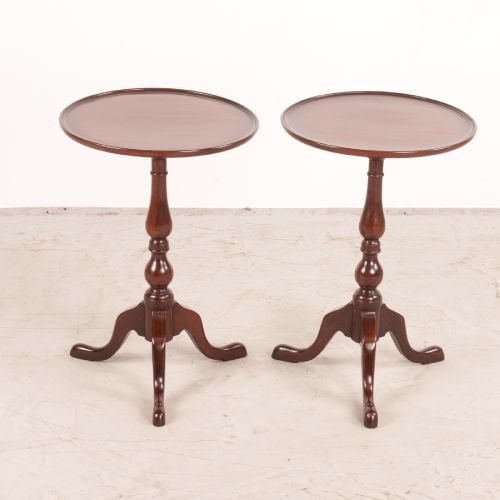
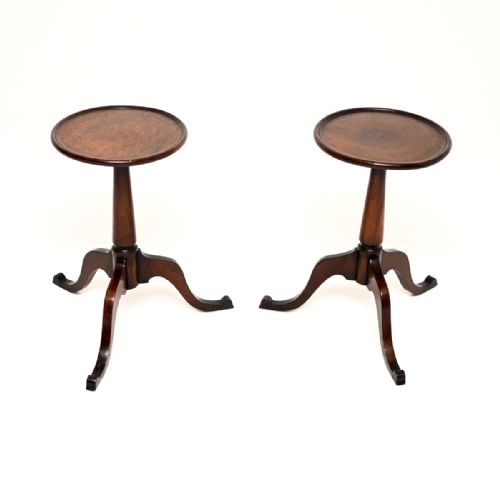
The forms serve varied functions from protecting polished dining surfaces from condensation to holding small vessels near guests. Buyers encounter round timber tables with tilt tops or fixed tops alongside low circular coasters featuring turned wooden bases or pierced metal galleries.
Materials and construction methods
Cabinetmakers utilised dense timbers such as mahogany and satinwood for the tables, often incorporating inlaid stringing, crossbanding and spiral fluted stems. Carpenters joined tripod bases with sturdy dovetail or tenon joints to support the central pillars while maintaining a light profile.
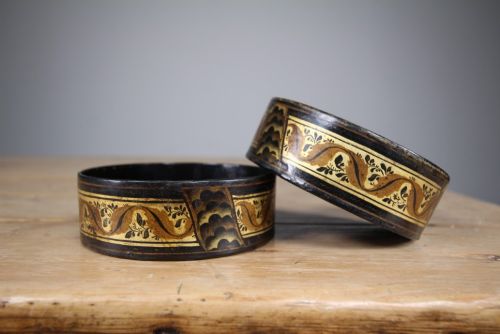
Silversmiths and platers shaped sterling silver and Old Sheffield plate into circular galleries, hammering and soldering sheet metal over copper cores or wooden inserts. Papier-mache versions utilised layers of bonded paper pressed into moulds before receiving dark lacquer and hand-painted or gilded surface decoration.
Several coasters feature baize undersides designed to glide silently past dinner guests without disturbing the port.
Distinctions in craftsmanship and materials
The distinction between standard examples and superior pieces rests on the choice of timber figure, the crispness of carved details like acanthus leaves or fluting, and the integrity of silver hallmarks. Finely figured mahogany grain and precise silver piercing demonstrate higher workshop standards.
Proportion and stability determine the success of the pairing, especially in matched sets where subtle differences in height or turning indicate independent origins brought together later. Original matching surfaces and minimal historic repairs preserve the visual harmony expected in a matched pair.
Matthew Boulton·John and Thomas Settle·Asprey
The Pair Georgian Wine Stands Glossary
- Old Sheffield plate
- A composite material made by fusing a thin sheet of sterling silver to a thicker copper base. This technique was widely employed for bottle coasters before modern electroplating.
- Tripod base
- A three-legged support structure commonly found on small occasional and wine tables. It provides stability on uneven floorboards.
- Papier-mache
- A durable composite material formed from paper pulp or layers of paper mixed with glue and resin. It accepts lacquer and gilt decoration smoothly.
- Crossbanding
- A decorative border technique where thin strips of veneer are laid perpendicular to the grain of the main surface. It frames table tops and stands effectively.
- Urn stand
- A small tall table designed to hold heated water or tea urns near a sideboard. The elevated form translates easily to wine service use.
Pair Georgian Wine Stands: Frequently Asked Questions
What is the difference between wine tables and coasters?
Wine tables stand on tall pedestals with tripod feet and hold glasses or bottles at seat height. Coasters are low circular trays placed directly on the dining table.
Coasters often feature wheels or green baize bases to slide smoothly across polished mahogany without scratching the surface.
How do you use wine stands today?
These pieces function as bedside surfaces, plant pedestals, or small display tables in sitting rooms. Coasters serve their original purpose for holding decanters.
Their compact proportions allow them to fit into narrow spaces where standard furniture is too large.
What is Old Sheffield plate?
Old Sheffield plate is an early fusion method where silver is bonded to copper before shaping. This creates durable metalware with authentic period weight.
Under magnification, the thin copper seam is sometimes visible along the cut edges of the gallery.
Are matched pairs original?
Some pairs were made together in the workshop, while others are assembled matches gathered by dealers from similar periods. Both types satisfy the desire for symmetry.
Examining the timber grain and turning details reveals whether two pieces share an exact workshop origin.