





George III Marquetry Tables
George iii marquetry tables bring together fine timbers and intricate floral or neoclassical designs, offering functional surfaces that anchor a room with period character.
George III Marquetry Tables
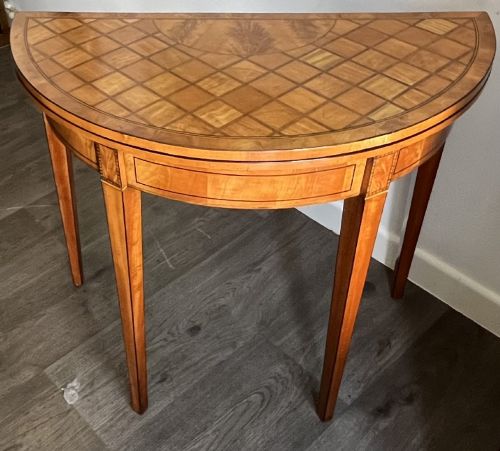
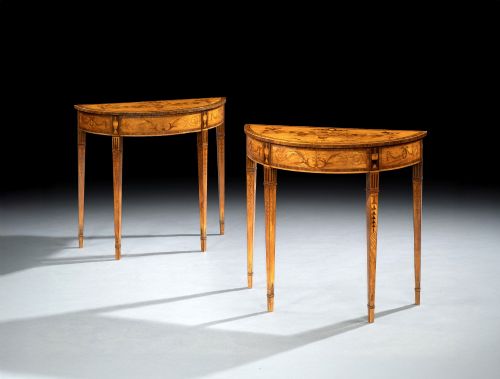
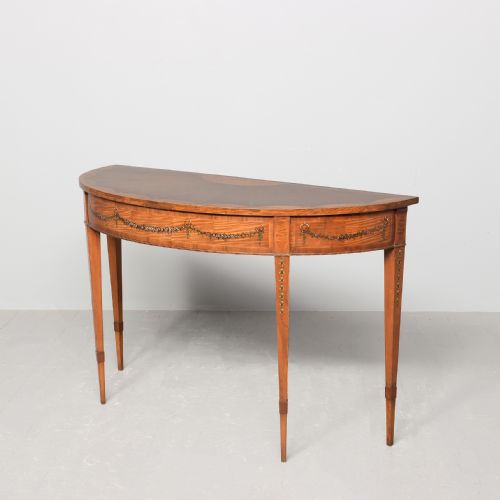
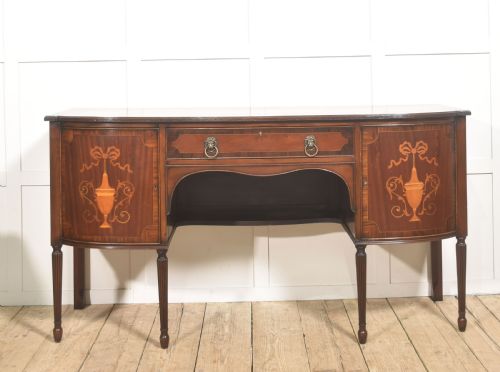
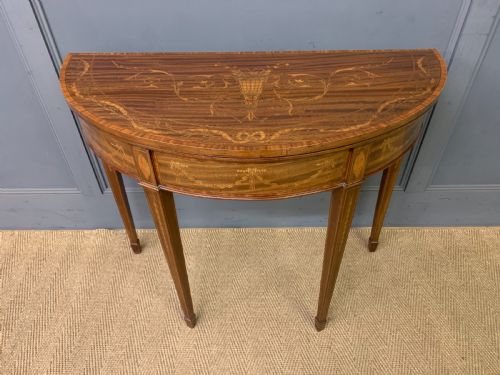
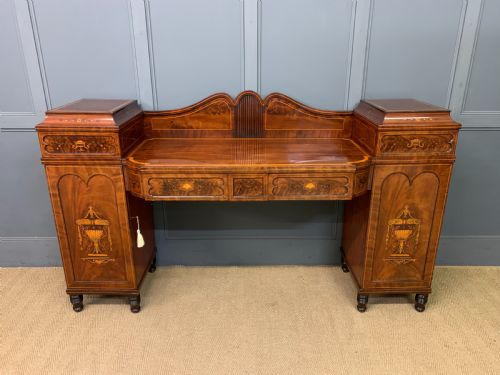
George iii marquetry tables are primarily card tables, side tables, and demi-lune console tables created during the georgian era. These pieces utilise sophisticated woodworking techniques to display contrasting timbers and elaborate geometric or floral motifs across their tops and skirts.
The versions most commonly met on this page date from the eighteenth century and combine structural forms like folding leaves or semicircles with decorative wood veneers. Makers of the period applied these designs to utilitarian furniture, transforming everyday items into decorative focal points.
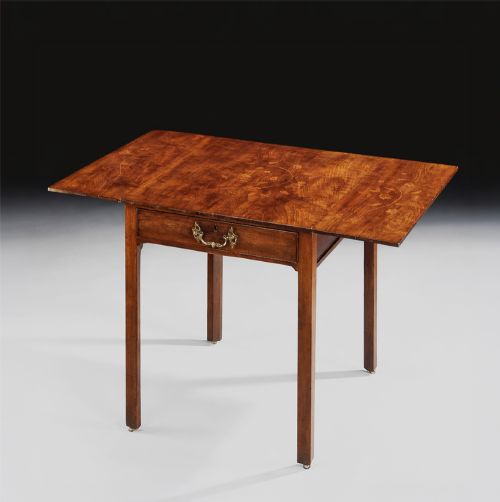
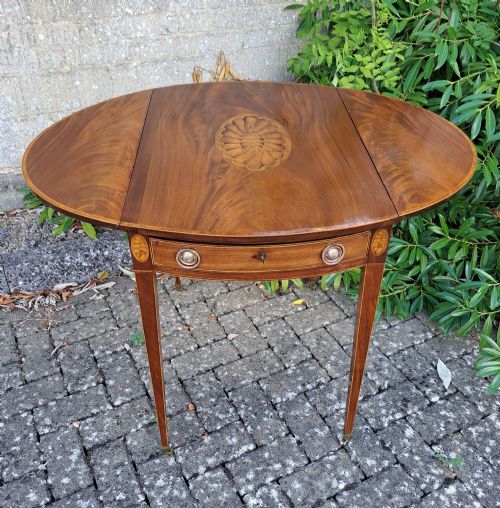
Buyers encounter forms ranging from Pembroke tables to candle stands, each reflecting the stylistic shifts of the georgian period towards neoclassical symmetry and refined proportions. The integration of satinwood and mahogany forms the backbone of the selection available here.
How they were made
Cabinet makers constructed these tables using a sturdy carcase of mahogany or walnut, onto which thin veneers of satinwood, rosewood, and boxwood were glued. Artisans then cut intricate patterns into the veneer layers, fitting contrasting woods together to form complex floral or architectural motifs.
Inlay and marquetry required steady hands and sharp saws, with elements often shaded by scorching edges in hot sand to create a three-dimensional effect. Brass hardware and giltwood accents were then added to complete the surface decoration of the higher-status tables.
Listings feature eighteenth-century and nineteenth-century pieces utilising satinwood, mahogany, rosewood, walnut, and boxwood.
What varies in quality
The division between standard and superior pieces rests upon the precision of the veneer work and the depth of the timber selection. Finer tables exhibit tight, seamless joints in the marquetry where contrasting woods meet without visible filler.
George Bullock
The George III Marquetry Tables Glossary
- Marquetry
- A decorative technique where small pieces of veneer are assembled into pictorial or geometric patterns on a wooden ground. This method allowed cabinet makers to create elaborate pictures on table tops using only natural timbers.
- Demi-lune
- A half-moon shape popular for console and card tables designed to stand flat against a wall. These tables often feature folding tops that open to reveal baize-lined playing surfaces.
- Satinwood
- A durable timber with a natural golden lustre and satin-like sheen, frequently used for veneers in eighteenth-century furniture. It provided a bright background that made dark wood inlays stand out clearly.
- Pembroke table
- A small rectangular table with hinged drop leaves on either side, supported by pivoting brackets. It typically includes one or two small drawers and served multiple domestic functions.
- Stringing
- Thin lines of contrasting wood inlaid into grooves on table legs and edges to create a neat border. This linear detail defines the structural outlines of many georgian pieces.
George III Marquetry Tables: Frequently Asked Questions
How were george iii marquetry tables used?
These tables served primarily as occasional surfaces for card games, tea service, or display in polite drawing rooms. Folding top versions could be placed flat against a wall when not in use.
Card and console tables adapted easily to social gatherings, providing stable surfaces that doubled as decorative room furnishings.
How do i tell a georgian table from later copies?
Examination of the timber construction, secondary woods used underneath, and the hand-cut nature of the marquetry reveal the true period of manufacture. Eighteenth-century pieces display tool marks and construction methods consistent with workshop production before industrial machinery.
Checking the underside and interior drawer linings helps confirm the age of the timber and the methods used to assemble the carcase.
Where should I place a demi-lune table?
Demi-lune tables suit hallways, landings, or flat against living room walls where their curved fronts soften linear architectural spaces. Placing a mirror or candle stand above them completes a traditional arrangement.
Because their straight edge sits flush against a wall, they occupy minimal floor space while offering a display surface for decorative objects.
How do I care for antique marquetry surfaces?
Keep these pieces away from direct sunlight and steady heat sources to prevent the delicate veneer from drying out and lifting. Regular dusting with a soft, dry cloth maintains the timber without building up heavy wax residues.
Applying a traditional beeswax polish occasionally helps nourish the old wood and preserves the natural lustre of the satinwood and mahogany.