





Octagonal Side Table Pair
An octagonal side table pair brings symmetrical geometry and distinct period character to a room.
Octagonal Side Table Pair
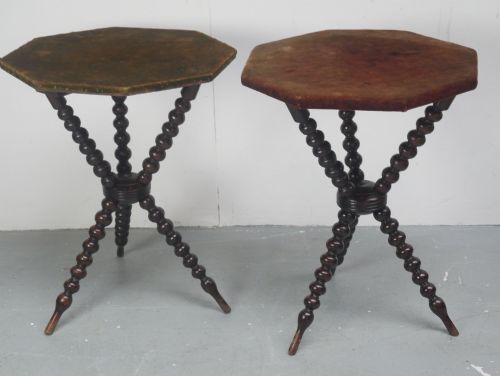
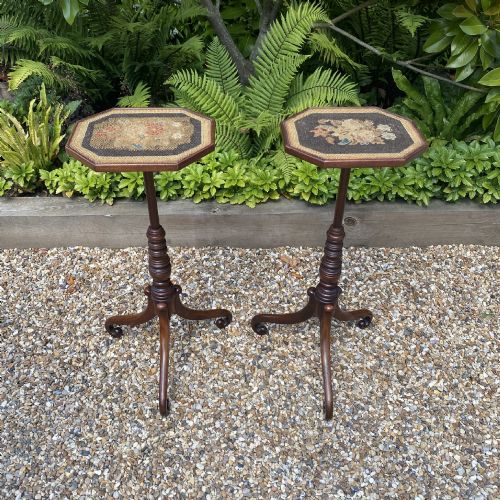
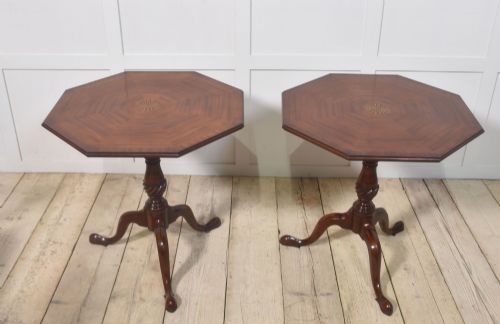
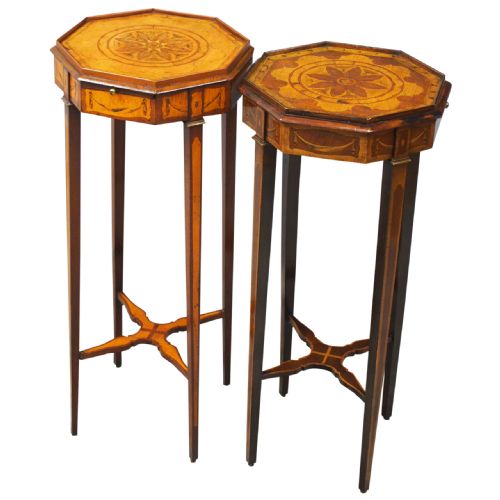
An octagonal side table pair brings together matched eight-sided surfaces intended for companion placement within domestic interiors. These pieces appear across Georgian, Regency, Victorian, Edwardian, and late nineteenth-century periods, showing forms such as wine tables, occasional tables, kettle stands, and etageres. The selection spans diverse stylistic traditions, including Sheraton, Anglo-Indian, Moorish Revival, and gipsy table designs.
Buyers encounter variations ranging from mahogany wine tables with spiral fluted stems to inlaid tripod supports and collapsible padauk tables. Materials such as satinwood, ebonised wood, velvet, bone, mother of pearl, and needlepoint textile appear frequently alongside traditional hardwoods. Such variety reflects both formal British cabinetmaking and exotic revival influences from the nineteenth century.
How they were made
Cabinetmakers constructed these pieces primarily using solid and veneered hardwoods, notably mahogany, padauk, and oak, often incorporating intricate satinwood inlay. Turning and carving techniques shaped structural elements like spiral fluted stems and tripod legs, while specialised joinery allowed for collapsible formats.
Surface ornamentation involved contrasting timbers, mother of pearl, and bone inlay, alongside textile elements such as velvet and needlepoint incorporated into gipsy tables. Traditional polishing and finishing methods sealed the timber surfaces while highlighting natural grain patterns and inlaid details.
Some nineteenth-century tables packed flat for travel, proving that temporary furniture design existed long before modern flat-pack culture.
What varies in quality
Quality rests in the crispness of the timber turning, the precision of inlaid details, and the overall structural integrity of the matched pair. Superior examples exhibit harmonious matching between the two items, balanced proportions, and refined carving that endures through regular use.
Distinctions also arise from material selection and decorative ambition, moving from straightforward utilitarian stands to elaborately carved Anglo-Indian or finely inlaid Sheraton pieces. The execution of secondary details, such as stem fluting or border marquetry, separates standard production from exceptional craftsmanship.
Liberty and Co
The Octagonal Side Table Pair Glossary
- Octagonal
- Having eight sides and eight angles. This geometric form defines the top surface of the tables in this category.
- Tripod
- A three-legged support structure used for stability. Many occasional and wine tables utilise this configuration beneath the octagonal top.
- Padauk
- A dense tropical hardwood known for its deep reddish-brown colour. It appears frequently in Anglo-Indian furniture production.
- Etagere
- A set of open shelves for displaying small objects. These pieces function as tiered stands within the room.
- Marquetry
- Decorative inlay work using various woods to form patterns. Craftsmen applied this technique to tabletop surfaces for visual enrichment.
Octagonal Side Table Pair: Frequently Asked Questions
How were these tables used?
These tables served various domestic functions, acting as surfaces for serving tea, holding wine bottles, or displaying decorative items. Their pairs allowed for balanced placement beside seating furniture or within corners of reception rooms.
Smaller variants functioned as movable stands or bedside supports, adapting easily to the changing social requirements of period interiors.
Are matched pairs original?
Some pairs left the workshop together as matched suites, while others represent assembled pairs brought together later due to similar dimensions and style. Cabinetmakers often produced tables in sets or pairs for formal rooms.
Buyers evaluate timber ageing, construction methods, and stylistic consistency to determine whether the two pieces share an identical origin.
How do I date an octagonal table?
Dating relies on stylistic markers, timber choices, and construction techniques characteristic of specific periods such as the Georgian era or the late nineteenth century. Earlier pieces often display restrained classical lines, whereas later Victorian and Edwardian examples incorporate diverse revival motifs.
Examining secondary timbers and fixing methods helps clarify the period of manufacture.
Where should I place them?
A matched pair works effectively when positioned symmetrically in a room, such as flanking a fireplace, sofa, or doorway. Their eight-sided tops offer generous surface area while softening straight architectural lines.
Placement depends on scale and height, ensuring the tables complement surrounding furniture without overcrowding the space.