
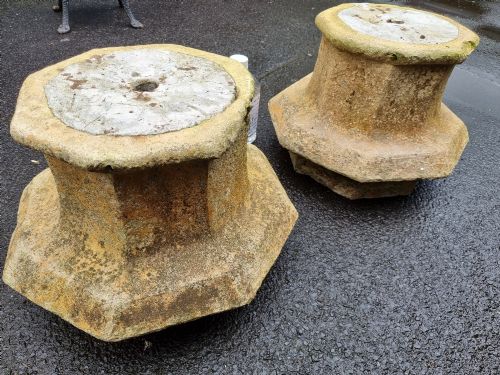

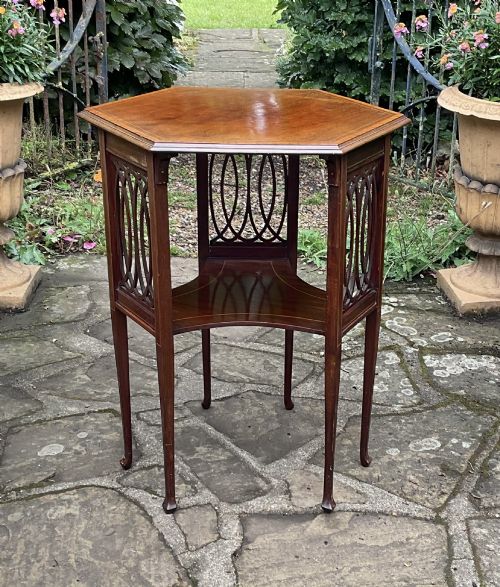


Antique Octagonal Display Stand
An antique octagonal display stand is a striking piece to elevate your objects, with eight-sided geometry that brings immediate structure to a room.
Antique Octagonal Display Stand
When you search for an antique octagonal display stand, you encounter a variety of multi-tiered tables, torcheres, and pedestals designed to showcase items. The pieces on this page span the Georgian, Victorian, and Edwardian periods, utilising shapes from simple lamp tables to multi-tiered cake stands.
You are most likely to meet mahogany and walnut examples dating from the nineteenth and early twentieth centuries. These take the form of occasional tables and centre tables with eight-sided tops, intended to display ornaments or lamps in a principal room.
Materials and construction
Cabinetmakers constructed these stands predominantly from timbers such as mahogany, walnut, and oak, frequently adding boxwood inlay for visual detail. Composite stone and marble also appear among the heavier garden plinths and columns.
Joinery methods reflect the period of production, utilising traditional turning, framing, and polishing techniques suited to each wood type. Inlaid surfaces receive careful hand-fitting of contrasting veneers to define the eight-sided geometric borders.
Some stands fold up neatly when not in use, proving that even Victorian cake stands understood the value of floor space.
Factors of quality
The standard of a piece depends on the crispness of the eight-sided edge geometry and the selection of timber grain. Mahogany and walnut with rich, unblemished figuring elevate the visual impact of a table or torchere.
Finishing details such as fine boxwood stringing, stable tier construction, and well-turned columns distinguish finer examples. Maker attribution, as seen in pieces by firms like Shoolbred, also marks a higher grade of craftsmanship.
Shoolbred
The Antique Octagonal Display Stand Glossary
- Torchere
- A tall stand or pedestal designed to hold a light or a decorative object. These slender pieces often feature carved shafts and raised platforms.
- Occasional table
- A small, portable table used for various informal purposes around a room. They frequently appear in multi-tiered formats for display.
- Boxwood inlay
- A decorative technique using thin strips of pale boxwood set into recesses in darker wood. It creates sharp linear contrast along table edges.
- Composite stone
- A manufactured material resembling natural stone, utilised for garden pedestals and plinths. It provides durability for outdoor display settings.
Antique Octagonal Display Stand: Frequently Asked Questions
What is an octagonal display stand used for?
These stands serve primarily to elevate and display decorative objects, lamps, or small sculptures within living spaces. Their eight-sided tops offer a distinct geometric framing for whatever is placed upon them.
Depending on the height and tier count, they function as lamp tables, plant stands, or occasional furniture pieces. Their compact footprints make them versatile for corners and landings.
How do I date an antique display stand?
Dating relies on identifying the prevailing timber choices, construction methods, and stylistic ornament characteristic of specific eras. Georgian and Victorian pieces often display heavier proportions and distinct turning styles.
Later Edwardian examples tend toward lighter framing and delicate inlay work. Comparing the secondary woods and joinery details helps confirm the period.
Where should I place a torchere stand?
Torcheres suit corners, alcoves, or spaces beside seating where vertical height adds balance to a room. Their elevated platforms draw the eye upward and utilise vertical wall space.
Ensure the floor is level, particularly with taller or heavier marble and wooden columns. Placing them away from heavy foot traffic protects both the stand and the displayed object.
How do I care for mahogany and walnut stands?
Maintain polished wood surfaces by dusting regularly with a soft, dry cloth to prevent abrasion. Avoid placing them in direct sunlight or near heat sources to protect the finish.
Periodic application of appropriate furniture wax preserves the moisture and lustre of the timber. Handle tiered joints and inlaid edges with care during cleaning.