
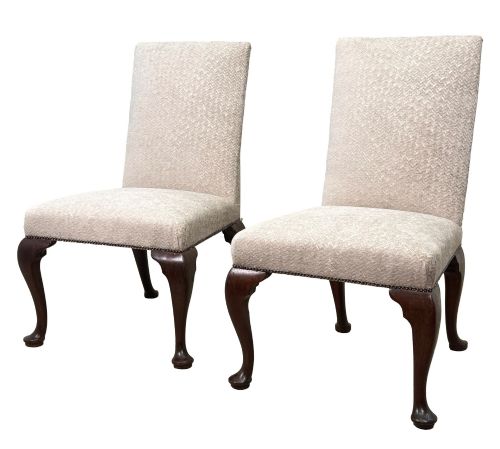
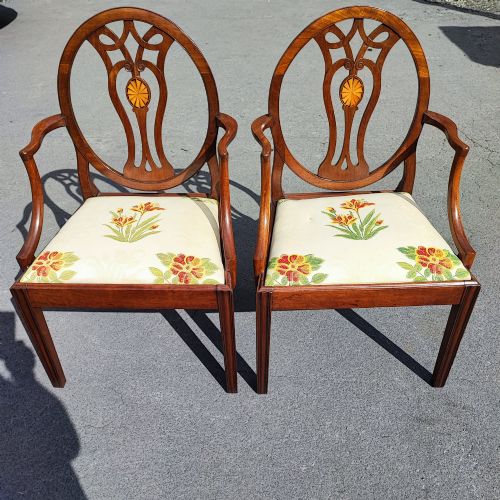

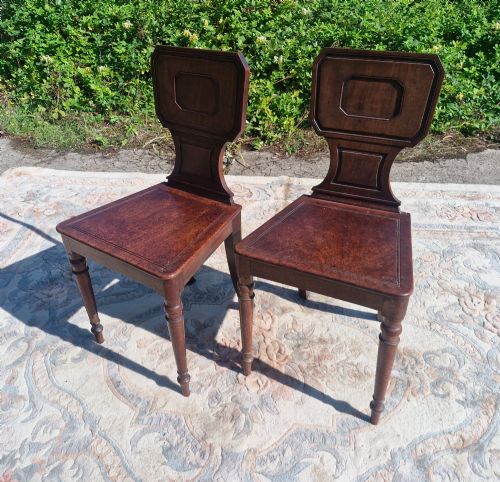
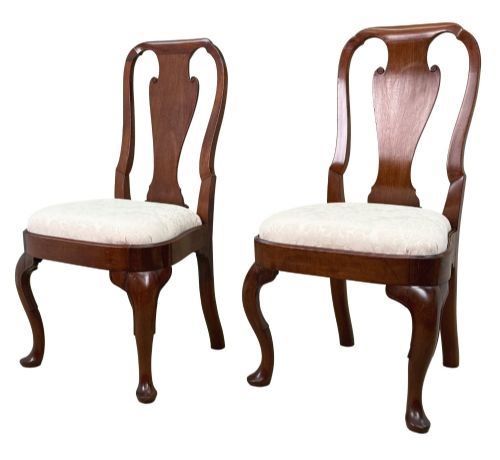
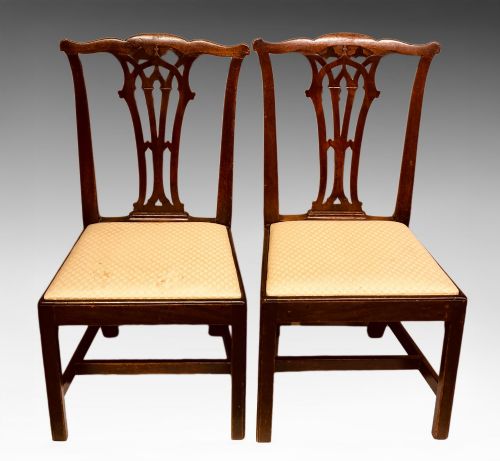
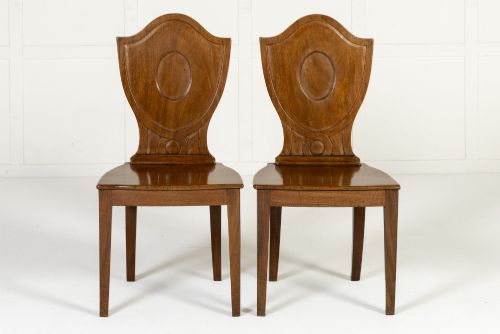
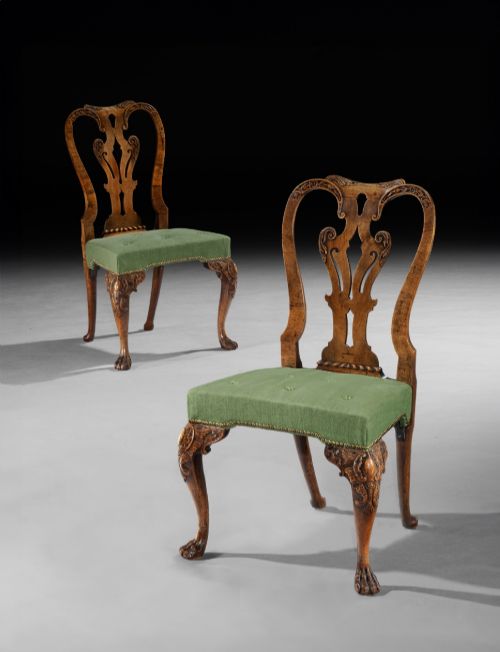
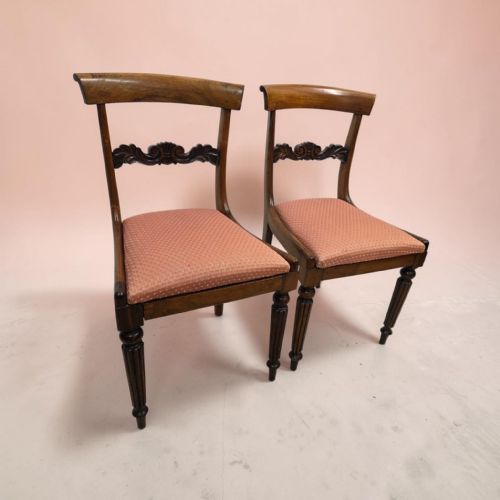
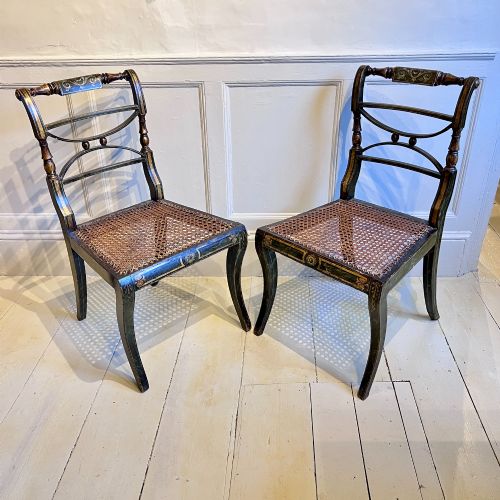
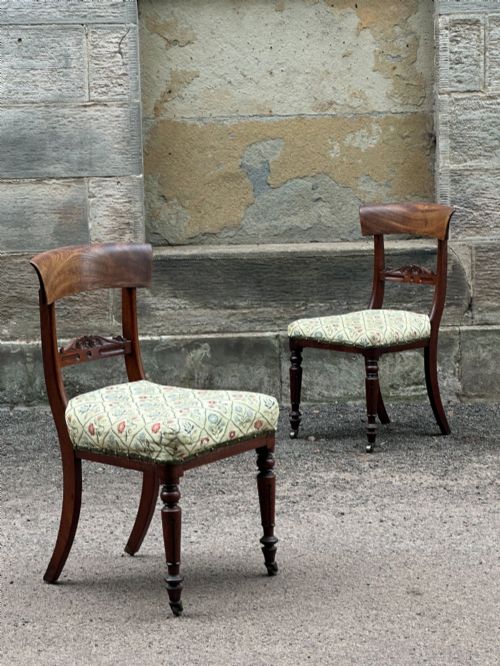
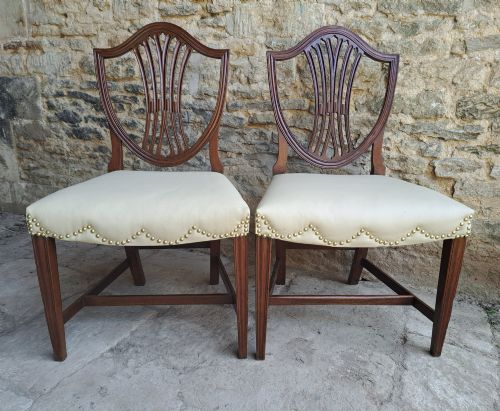

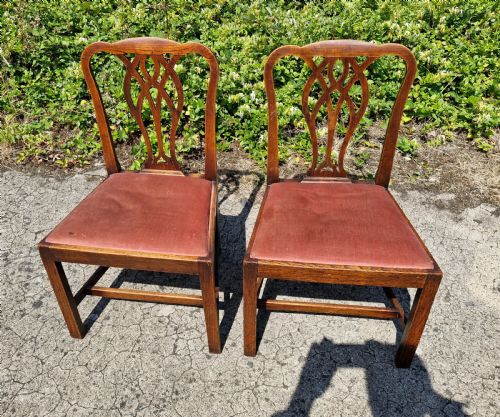
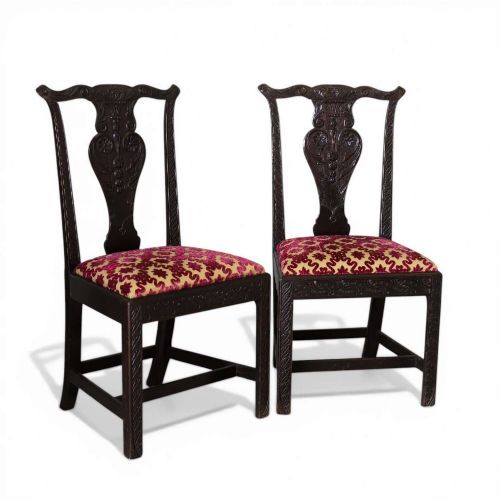
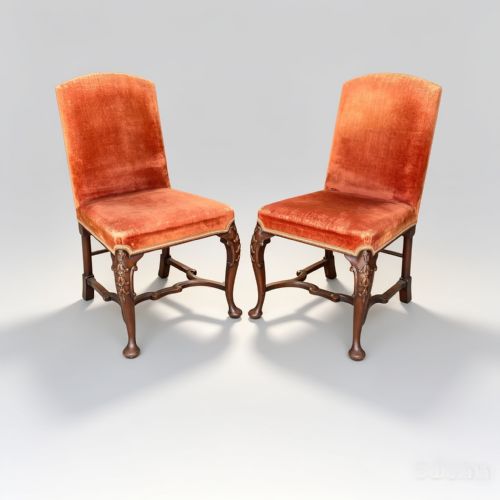
Pair Georgian Side Chairs
When you handle a pair georgian side chairs, you touch centuries of domestic design shaped by solid timber and honest cabinetmaking.
Pair Georgian Side Chairs
A pair georgian side chairs brings formal dining rooms and country interiors from the eighteenth and early nineteenth centuries directly into modern spaces. These seating forms served diverse household roles, from grand mahogany dining suites to utilitarian elm and oak hall chairs.
The selections here range from early walnut and carved mahogany pieces bearing distinct Chippendale or Sheraton influences down to robust regional country styles in elm. Most examples date from the Georgian and Regency eras, though later nineteenth century revivals appear frequently.
How They Were Made
Cabinetmakers relied heavily on dense hardwoods like mahogany, walnut, and rosewood for urban seating, employing complex joinery and detailed carving on splats and legs. Country variants utilised local timbers such as oak, elm, and ash, often featuring simpler turned members or bobbin work.
Upholstery methods varied from drop-in silk seats and leather panels to modern fabric coverings over traditional webbing. Surface treatments ranged from hand-polished mahogany to painted and decorated Regency finishes.
Mahogany and elm appear most frequently among the primary timbers, spanning the eighteenth and nineteenth centuries.
What Varies in Quality
The integrity of the timber framing and the depth of carving determine the standing of an individual pair. Crisp detailing on the crest rail and properly tensioned structural joints separate utilitarian workshop output from master cabinetmaker productions.
Original surface patination and minimal timber replacement preserve historical value. Matched pairs displaying identical grain patterns command greater attention than assembled sets brought together at a later date.
Gillows
The Pair Georgian Side Chairs Glossary
- Splat
- The vertical central strip of wood in the back of a chair. It frequently displays carved or pierced ornamentation characteristic of specific cabinetmaking periods.
- Side Chair
- An upholstered or wooden seat without arms designed primarily for dining tables or hall placement. These pieces lack the broader proportions found on library armchairs.
- Cane
- Split rattan woven into open mesh patterns for lightweight chair seats. This material appeared often on Regency painted seating.
- Marquetry
- Decorative veneer work arranged in pictorial patterns using contrasting woods. Craftsmen applied this technique to surface panels on select late examples.
Pair Georgian Side Chairs: Frequently Asked Questions
Were these made for dining?
Many examples served households during formal meals, while others functioned as hall chairs meant for display near entranceways. Sturdier country variants saw service in farmhouse kitchens and libraries.
Dining configurations typically prioritized padded or upholstered seating surfaces, whereas hall chairs often utilised solid wood panels.
How can I tell the period?
Stylistic markers such as cabriole legs point toward early eighteenth-century production, while straight tapered legs or saber legs indicate later Georgian and Regency periods. Timber selection also shifts from walnut and early oak toward mahogany and exotic rosewood.
Construction methods inside the seat frame reveal assembly techniques that evolved from pegged joints to later screw fastenings.
How do I care for the wood?
Protect antique timber surfaces by maintaining stable indoor humidity and avoiding direct placement near heating sources. Natural waxes nourish the wood grain and preserve the historic finish without causing buildup.
Avoid chemical sprays or excessive moisture during cleaning. Gentle dusting with a soft cloth keeps the polished surface secure.