
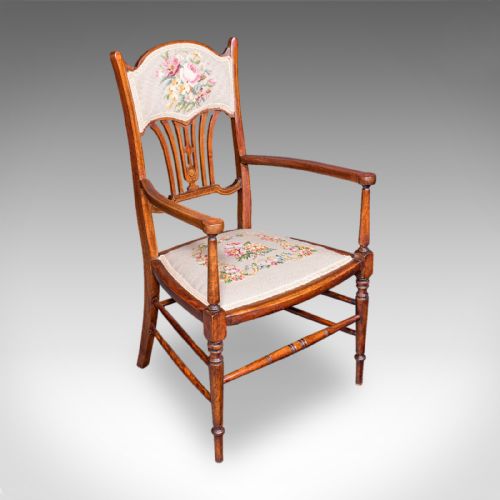
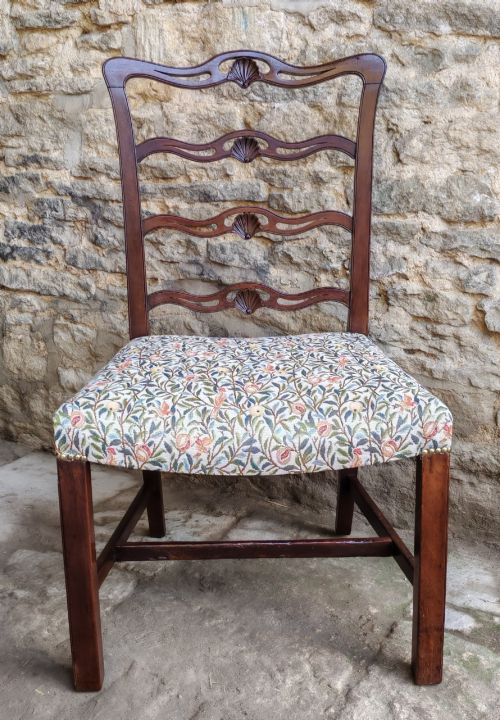
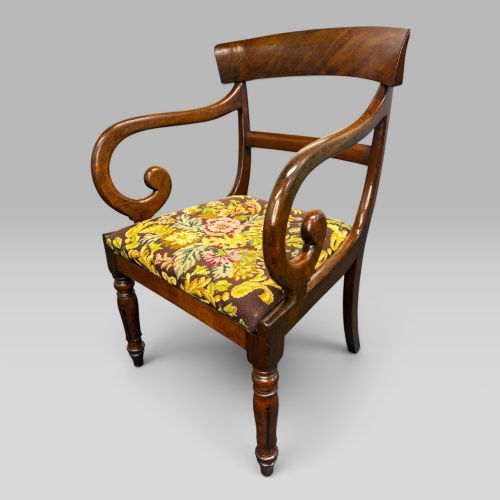
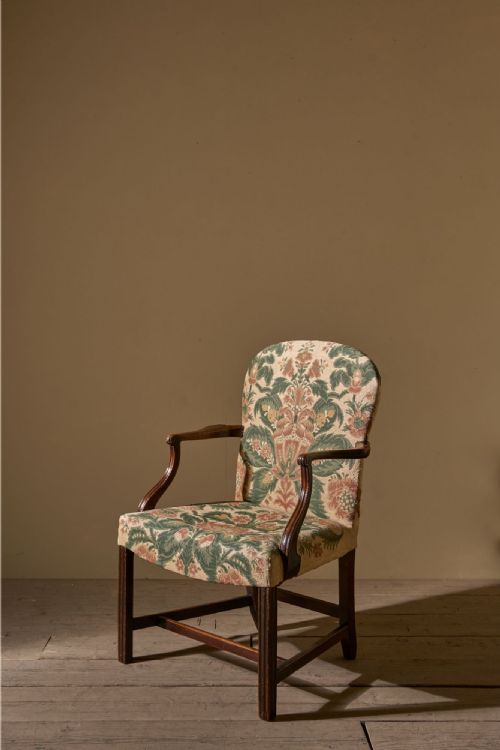
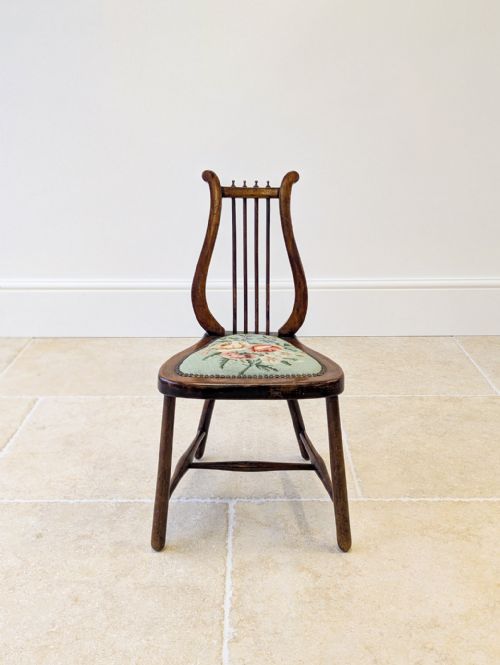
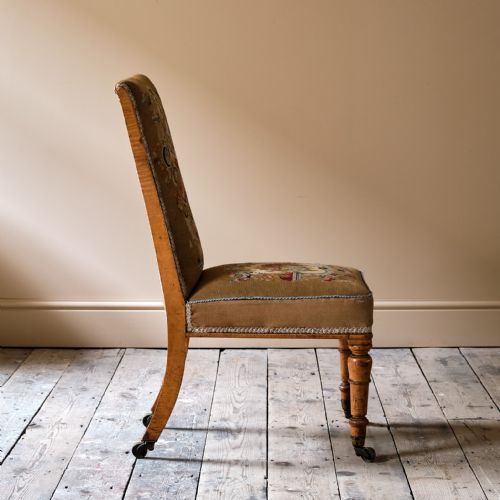
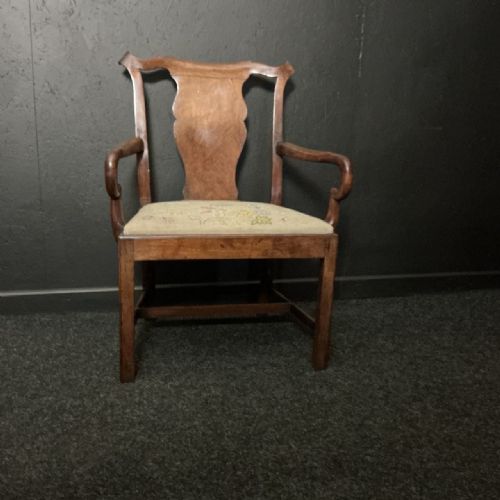
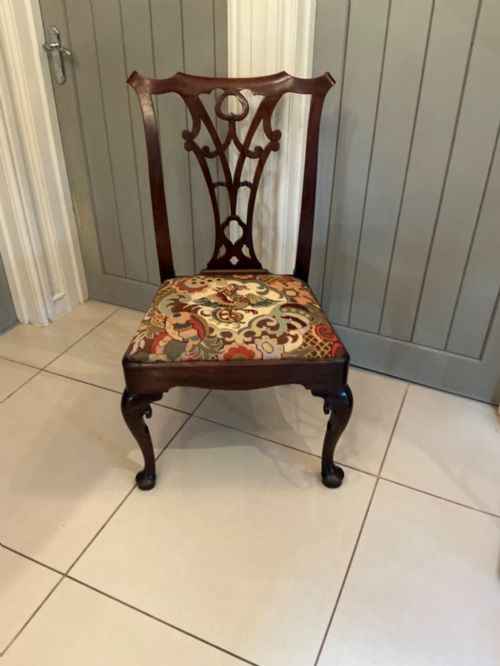


Antique Tapestry Desk Chair
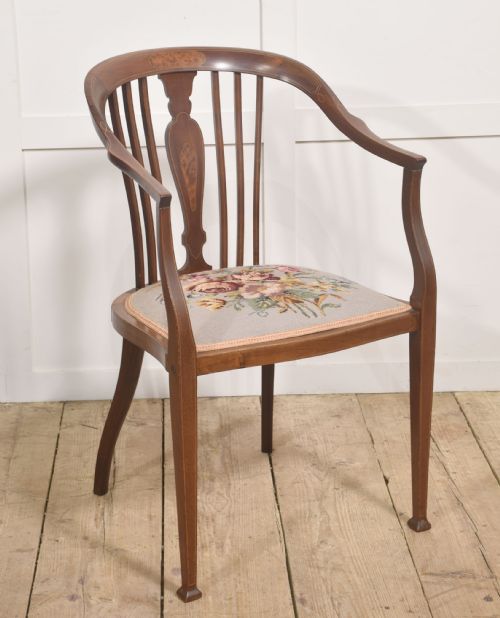
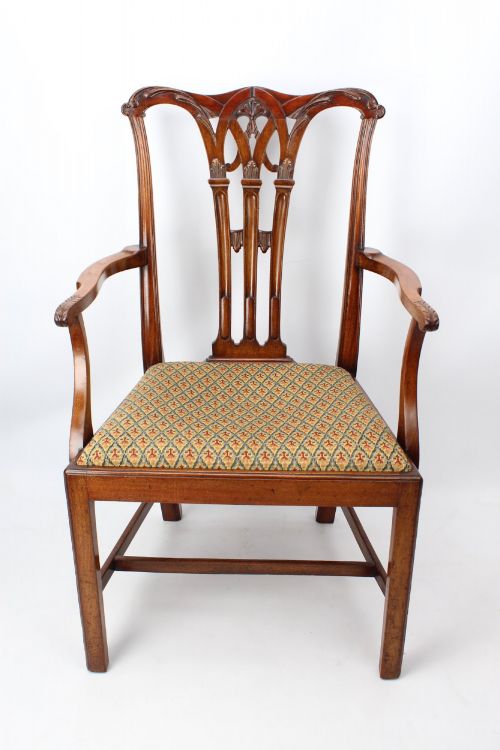
An antique tapestry desk chair brings tactile warmth and period form to a study, offering sturdy timber framing paired with needlework seats.
Antique Tapestry Desk Chair
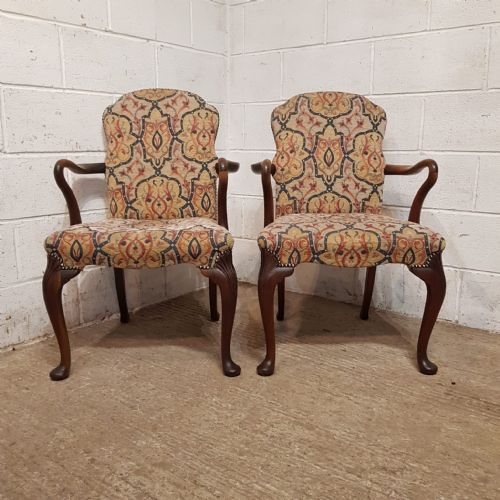
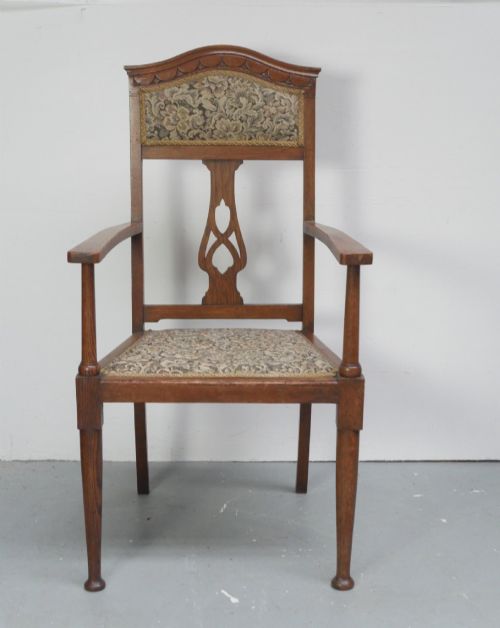
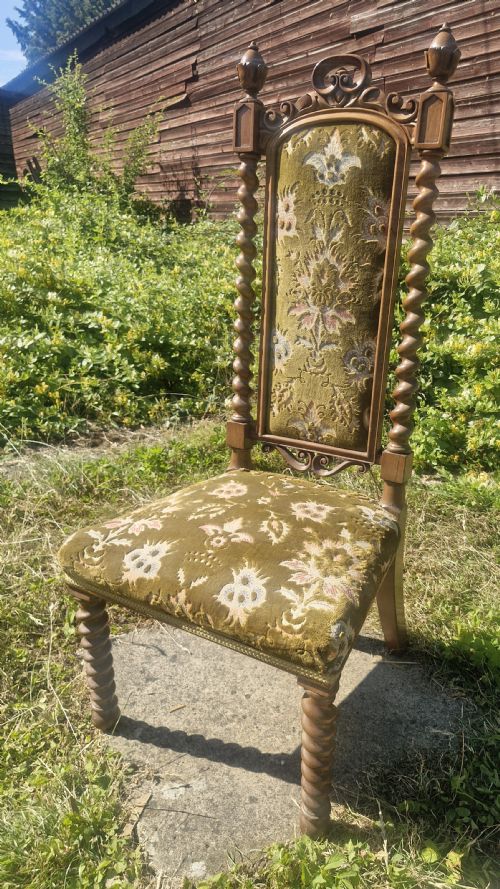
An antique tapestry desk chair combines a supportive timber frame with textile upholstery suited to a study or library. Pieces span the Georgian, Regency, Victorian, and Edwardian eras, reflecting changing domestic fashions across centuries.
Makers utilised woods such as mahogany, walnut, and oak to build robust armchairs and side chairs. The inclusion of tapestry or needlepoint fabric transforms utilitarian seating into decorative furnishings.
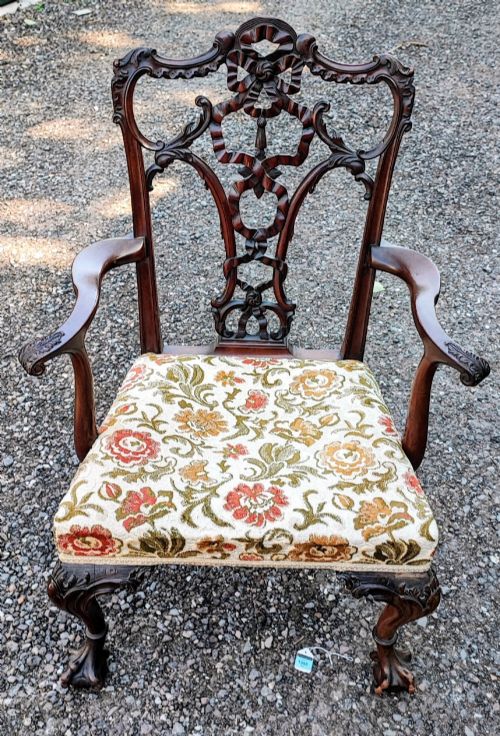
Examples range from early eighteenth-century designs to later revival styles referencing Chippendale and George II forms. Buyers encounter both elbow chairs designed for desks and lighter side seating adapted for workspace use.
Materials and Construction
Carpenters shaped dense hardwoods like mahogany and walnut, employing mortise and tenon joints to ensure structural rigidity. Carved details such as ladderbacks and ornate splats demonstrate traditional hand-tool methods.
Upholstery relied on woven textiles, needlepoint, and tapestry fabrics stretched over padded frames and secured with brass tacks. These tactile materials provided comfort during long hours of correspondence and study.
Historical periods represented in the collection range from the early eighteenth century through the Edwardian era.
Evaluating Build and Preservation
Quality rests in the crispness of the timber carving and the structural integrity of the frame joints. Superior examples exhibit tightly grained mahogany or walnut without excessive timber replacement.
The condition and execution of the tapestry or needlepoint upholstery significantly influence the character of the piece. Fine needlework retains vibrant coloration and secure stitching across the seat platform.
The Antique Tapestry Desk Chair Glossary
- Tapestry
- A thick textile featuring woven designs, frequently utilised for durable upholstery on antique seating. It provides both visual pattern and a robust surface.
- Elbow chair
- An armchair featuring low arms designed to fit comfortably beneath a writing table or desk. These pieces offer side support while allowing movement close to the workspace.
- Chippendale
- A cabinetmaking style originating in the eighteenth century, characterised by carved ribbon-backs and cabriole legs. The design language emphasises refined proportions and sturdy mahogany construction.
- Needlepoint
- Hand-stitched embroidery executed on an open-weave canvas ground, commonly seen on nineteenth-century chair seats. This technique allows for detailed pictorial or geometric patterns.
- Padouk
- A dense tropical hardwood displaying reddish tones, occasionally utilised for overseas export furniture during the nineteenth century. It provides exceptional weight and durability.
Antique Tapestry Desk Chair: Frequently Asked Questions
How do I identify a genuine period frame?
Examine the underside of the seat and the joinery for traditional hand-cut joints and consistent timber ageing.
Tool marks and natural oxidation provide reliable indicators of age that modern reproductions struggle to replicate accurately.
Are these chairs comfortable for daily work?
Most antique desk chairs offer upright support designed for historical writing postures rather than deep lounging.
Their ergonomic profiles suit modern writing tables, though cushion firmness varies according to the original padding survival.
How should I care for old tapestry fabric?
Protect textile seats from direct sunlight to prevent the fading of natural threads and delicate wool fibres.
Gentle vacuuming with a low-suction attachment removes dust without disturbing the woven structure of the needlework.
What distinguishes Georgian from Victorian examples?
Georgian seating relies on restrained classical proportions, elegant cabriole legs, and understated mahogany frames.
Victorian pieces frequently display heavier carved elements, rosewood timbers, and revival motifs reflecting broader historicism.