



Late Georgian Carver Armchair
A late georgian carver armchair is a sturdy timber seating piece built for the head of a dining table, combining period craftsmanship with practical comfort.
Late Georgian Carver Armchair
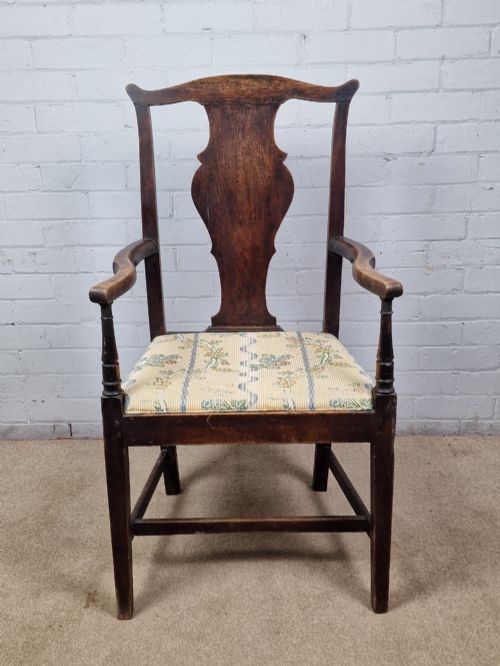
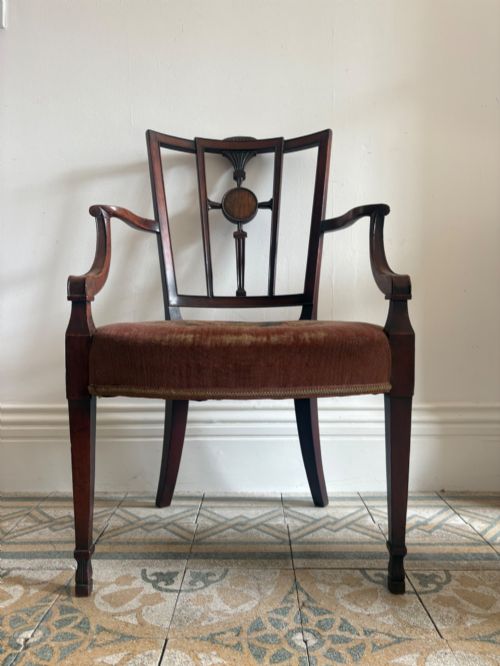
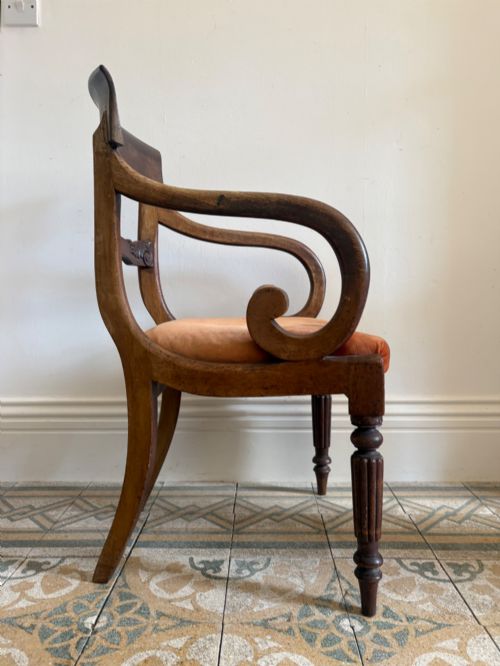
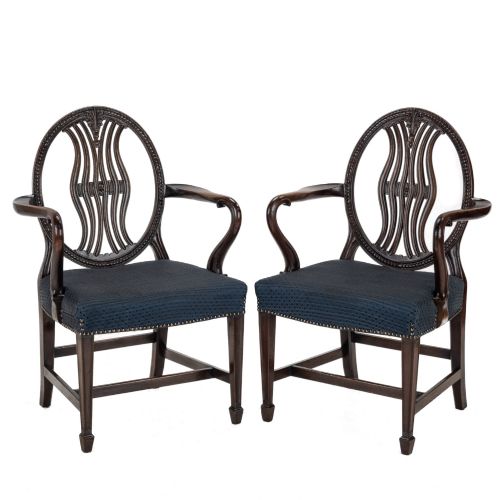
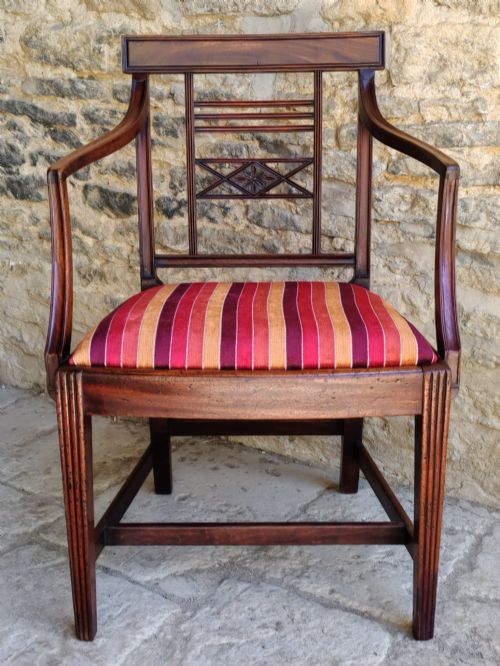
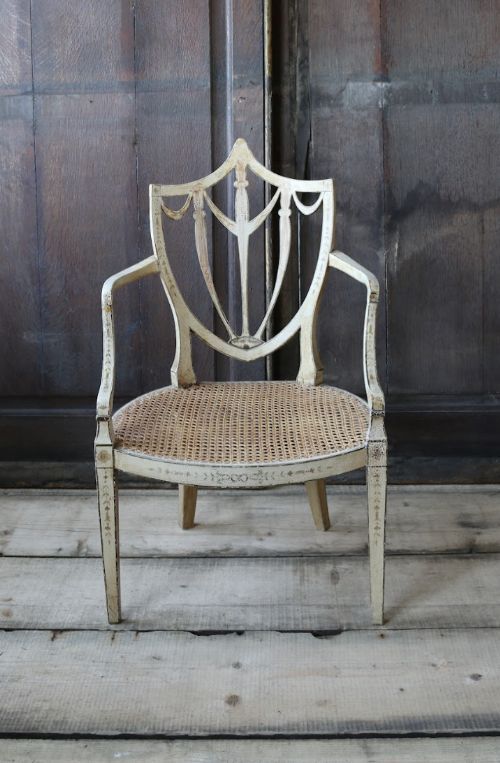
A late georgian carver armchair bridges the late eighteenth and early nineteenth centuries, emerging in mahogany, oak and painted finishes. These seating pieces typically feature open arms, drop-in seats or fixed upholstery in leather, velvet and fabric.
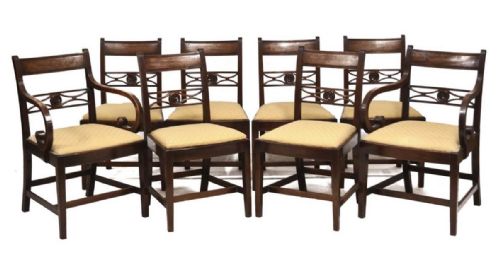
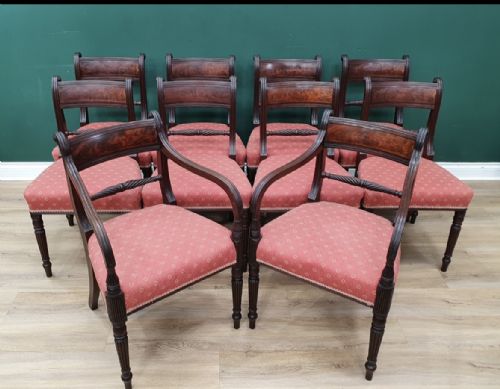
The versions most commonly encountered on this page date from the late eighteenth century through the Regency period, alongside revival pieces from the late nineteenth century. Makers of the period produced these armchairs both individually and as part of larger dining sets with matching single chairs.
Regional workshops and prominent cabinet-makers utilised traditional joinery to construct these armchairs for formal dining rooms and libraries. Surviving examples display stylistic influences ranging from George III neoclassical to Hepplewhite and Chippendale revivals.
Materials and Construction
Timber selection focuses primarily on dense hardwoods like mahogany and oak, chosen for structural strength and rich grain. Selected pieces incorporate brass details, parcel gilding and contrasting woods such as rosewood for decorative emphasis.
Upholstery methods involve drop-in frames covered in leather, needlepoint or velvet, secured over webbing or canvas foundations. Joinery relies on traditional mortise and tenon techniques, ensuring rigid frames capable of daily domestic use.
Late Georgian Carver Armchair Retail Price Guide 2026
Typical asking prices for late georgian carver armchair among the pieces listed under this phrase on Sellingantiques today, from the lower quarter to the upper quarter. They describe what is for sale here now, not the wider market.
Some nineteenth-century makers enjoyed carving shields so thoroughly that even the house cat refused to sit anywhere else.
Quality and Distinction
Superior examples display crisp carving on shield backs and arm terminals, reflecting the hand of a skilled artisan rather than routine workshop production. The crispness of proportion and the integrity of the timber frame separate standard utility seating from finer parlour pieces.
Original surface patina and minimal structural alteration elevate a piece significantly above examples that have undergone heavy timber replacement or aggressive stripping. The presence of maker stamps or documented provenance further distinguishes top-tier examples within the category.
Gillows
The Late Georgian Carver Armchair Glossary
- Carver armchair
- A sturdy dining chair featuring armrests, traditionally placed at the head of a table for the master of the house. These pieces share stylistic traits with the matching single chairs in a dining set.
- Drop-in seat
- A removable wooden frame upholstered in fabric, leather or needlepoint that rests upon internal ledges within the seat rails. This construction allowed for easy reupholstery without dismantling the main chair frame.
- Shield-back
- A chair back shaped in the outline of a shield, popularised during the late eighteenth century by designers such as Hepplewhite. This form often incorporates carved vertical splats and delicate openwork.
- Block feet
- Rectangular wooden terminals at the base of chair legs, frequently seen on mid-to-late eighteenth-century seating. They add visual weight and structural stability to straight-legged designs.
- Parcel gilt
- A decorative technique where specific carved details or highlights on a wooden surface are covered with thin gold leaf. This treatment contrasts against painted or dark wood grounds.
Late Georgian Carver Armchair: Frequently Asked Questions
What is a carver armchair?
A carver armchair is a dining chair fitted with arms, traditionally designed to sit at the head or foot of a table. These pieces offer wider proportions and greater decorative detail than standard dining chairs.
Cabinet-makers built these chairs to match larger sets of single chairs while providing additional comfort for the principal diner.
How do I care for leather seats?
Leather upholstery requires regular dusting with a soft, dry cloth and occasional treatment with appropriate leather balms to prevent drying and cracking. Avoid placing antique leather near direct heat sources or strong sunlight.
Proper maintenance preserves the suppleness and natural colour of hand-dyed finishes built up over generations.
Are these chairs comfortable for daily use?
Late Georgian armchairs were designed for upright dining posture rather than lounging, offering supportive high backs and padded drop-in seats. The generous arm clearance allows users to sit comfortably at standard dining heights.
Many collectors use single antique armchairs at desks or as occasional seating in living spaces.
How can I tell original upholstery?
Original upholstery fabrics rarely survive intact on eighteenth-century seating due to wear, though underlying webbing, stuffing and tacks often show considerable age. Most pieces have been reupholstered multiple times to suit changing domestic tastes.
Examinations of the drop-in frame and rebate edges reveal the historical layers of canvas and tack holes.