


Antique English Elbow Chairs
These antique English elbow chairs bring both architectural strength and vernacular character to a room, offering a supportive seat with integrated armrests.
Antique English Elbow Chairs
Antique English elbow chairs encompass a diverse group of seating forms designed with armrests, ranging from rustic country workshop creations to formal urban library and drawing room seats. The phrase covers everything from sturdy Windsor armchairs and smoker's bows to refined mahogany carvers reflecting Georgian and Regency design periods.
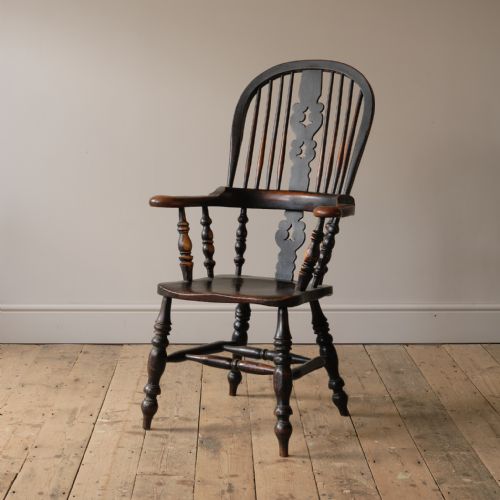
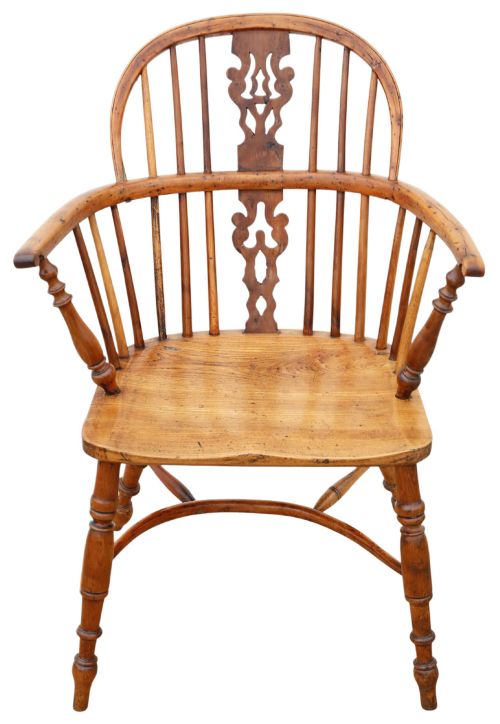
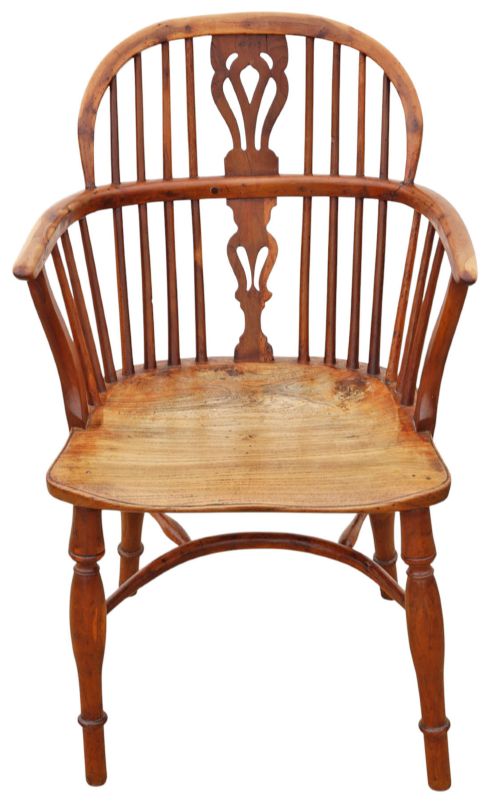
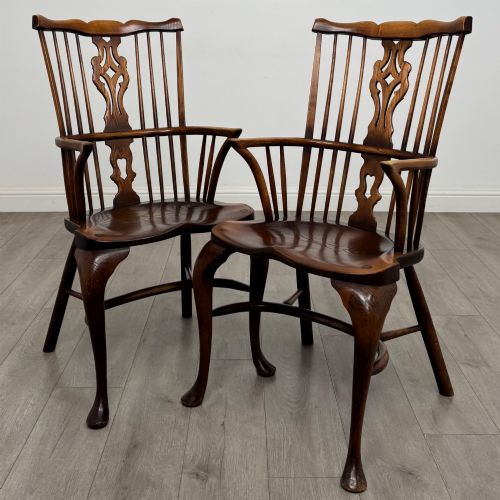
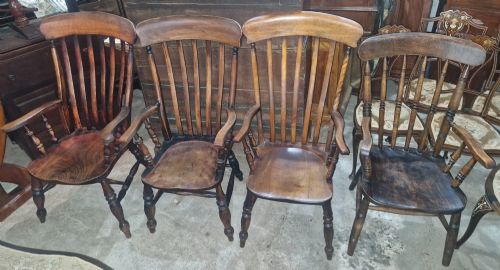
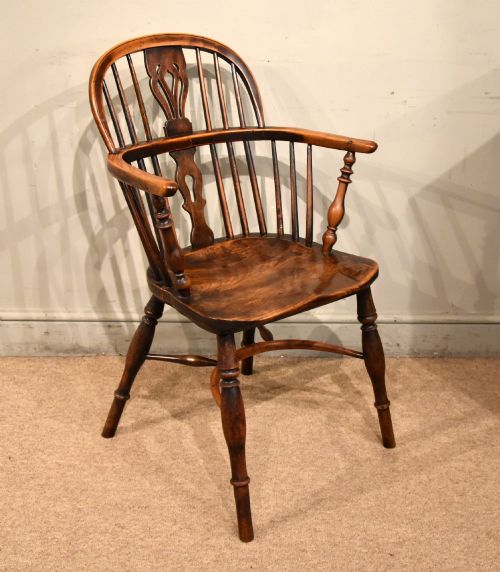
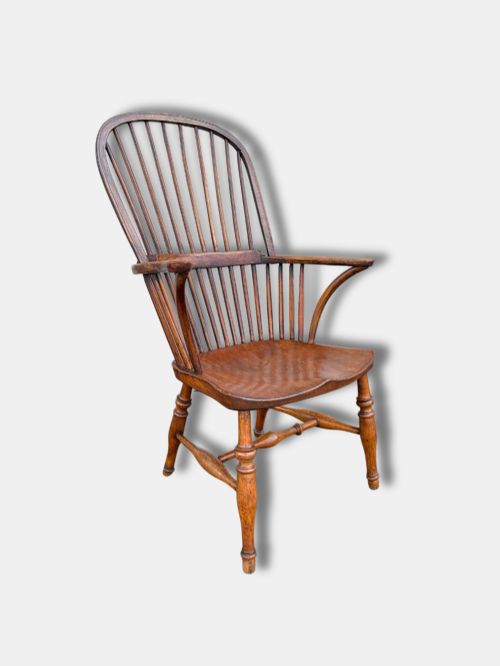
The versions most frequently met on this page are country Windsor chairs and vernacular elm, ash, and yew armchairs originating from the eighteenth and nineteenth centuries. These rural pieces showcase traditional spindle backs, stick backs, and broad wooden seats intended for practical farmhouse and kitchen use.
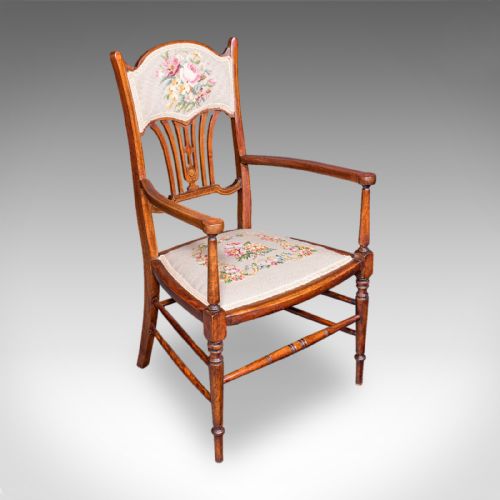
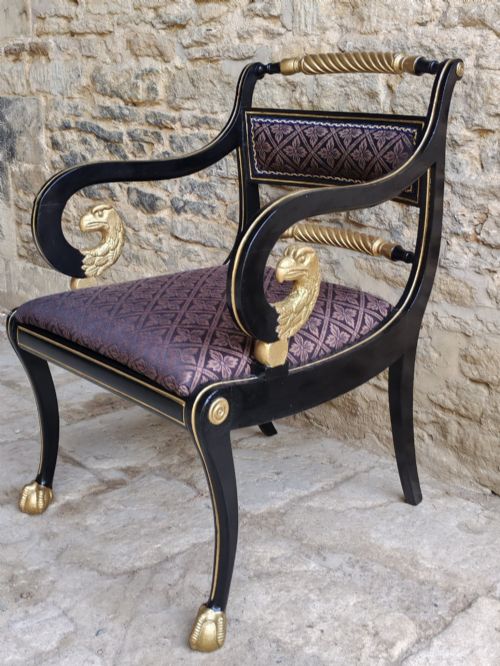
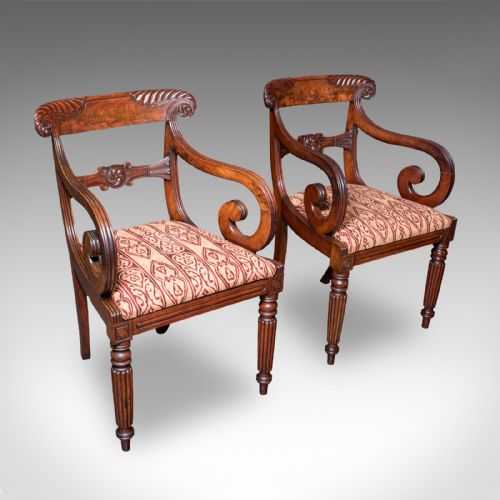
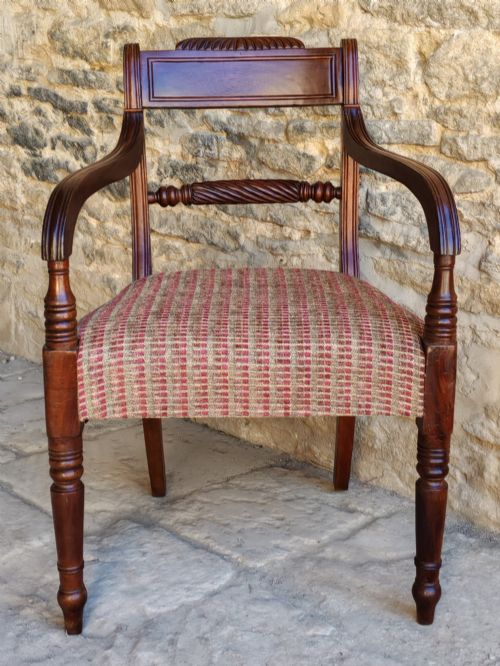
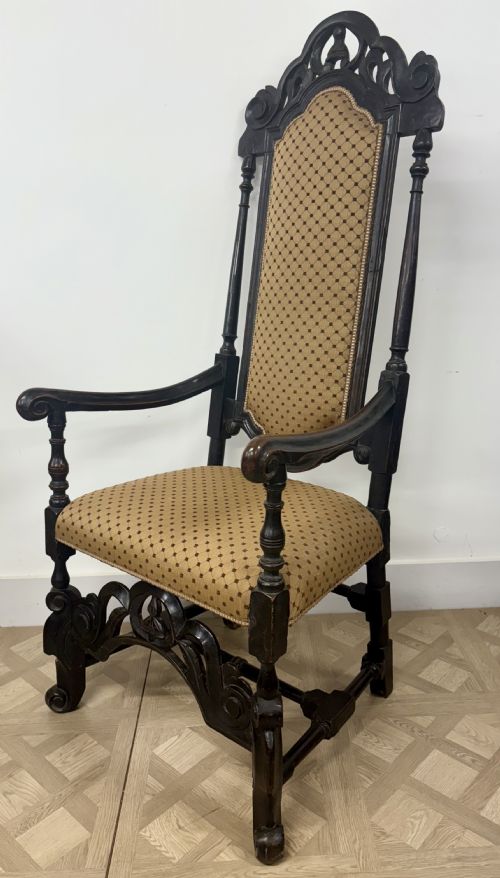
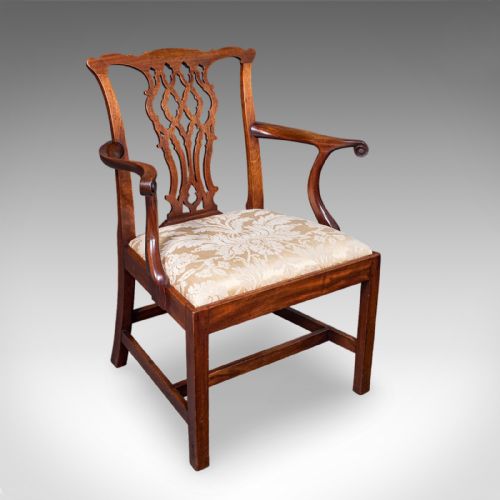
Alongside vernacular country pieces, buyers also encounter formal parlour and morning room elbow chairs constructed from mahogany, walnut, and beech. These urban examples span Georgian, Regency, and Victorian styles, often featuring carved details, cane seats, or upholstered panels suited to reception and library spaces.
How they were made
Country Windsor and vernacular elbow chairs rely heavily on a combination of native timbers, joining solid elm seats to bent ash or fruitwood bows and spindle legs. Cabinetmakers and bodgers turned spindles on pole lathes and steam-bent green wood to form the characteristic curved armrests and high backs.
Formal urban elbow chairs utilise dense hardwoods such as mahogany, walnut, and oak, joined with traditional mortise and tenon construction. Workshops employed skilled carving techniques for splats, scroll arms, and reeded legs, occasionally incorporating cane work or drop-in rush seats.
Materials recorded in the inventory range from native British timbers like elm, ash, yew, oak, and beech to imported mahogany and padouk.
What varies in quality
The distinction between standard examples and top-tier pieces rests on the selection and figuring of the timber, particularly the grain of the elm seat or the richness of the yew and mahogany. Superior examples retain their original surface patination, uncompromised structural joints, and balanced proportions without excessive later repairs.
Maker execution and regional craftsmanship dictate the refinement of the arm supports, the delicacy of the spindle turnings, and the overall comfort of the elbow rest geometry. Well-balanced country windsor chairs demonstrate careful tapering and pegging that elevate them above utilitarian workshop output.
E W Godwin
The Antique English Elbow Chairs Glossary
- Windsor chair
- A wooden chair built with a thick solid timber seat into which the legs and back spindles are independently tenoned. These traditional seats are frequently constructed from a mix of elm, ash, and yew.
- Carver
- A traditional term for an armchair, often matching a set of smaller dining chairs, used at the head of a table. These pieces feature integrated elbow supports.
- Smoker's bow
- A low-backed Windsor armchair with a continuous curved armrail resting on short spindles, commonly found in nineteenth-century country settings and farmhouses.
- Rush seat
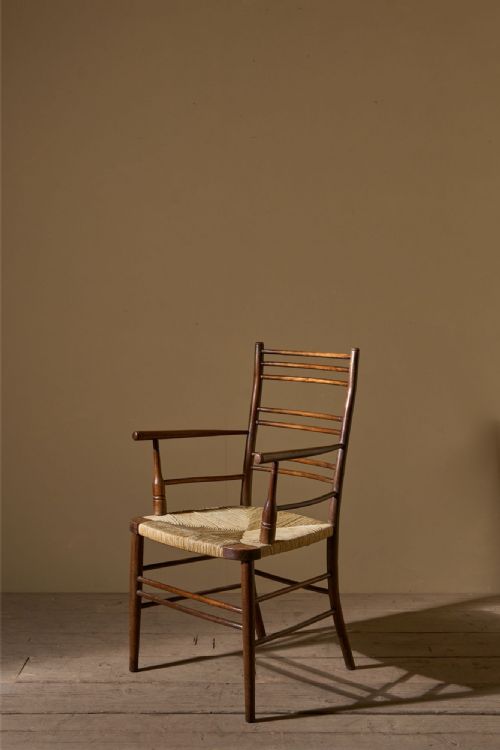
- A woven seating surface made from dried marsh rushes twisted around a frame. This technique appears on both vernacular country chairs and Arts and Crafts revival pieces.
- Splat
- The vertical central strip of wood within a chair back, often shaped or pierced. Formal Georgian and Victorian examples display elaborate scroll or lyre designs.
Antique English Elbow Chairs: Frequently Asked Questions
What is an English elbow chair?
An English elbow chair is any seating piece featuring built-in armrests designed to support the elbows. The category includes both formal parlour carvers and sturdy country armchairs.
These chairs serve functional and decorative roles across various historical periods, utilising native woods like oak, elm, and mahogany.
How do I tell a Windsor chair apart?
A Windsor chair is defined by its solid wood seat, into which the legs and back sticks are driven directly rather than forming part of a continuous frame. They often combine different timber species, such as an elm seat with ash spindles.
Country versions feature high comb backs or low smoker's bow configurations, reflecting regional English vernacular woodworking traditions.
Where were these chairs used historically?
Country elbow chairs found places in farmhouses, cottages, and kitchens for daily utility. More formal mahogany and walnut carvers occupied libraries, dining rooms, and morning rooms.
Their placement depended entirely on the construction materials and the social status of the interior they inhabited.
How do I live with antique elbow chairs?
Living with these chairs involves placing them where humidity and direct sunlight remain stable to protect historic wood and rush materials. Their sturdy construction allows for regular seating use in modern living spaces.
Pairing a vernacular Windsor with contemporary furniture highlights the texture of aged elm, ash, and yew.