



Mahogany Tapestry Seat Chairs
These mahogany tapestry seat chairs bring rich timber frames and tactile textile covers together, offering both solid seating and period character.
Mahogany Tapestry Seat Chairs
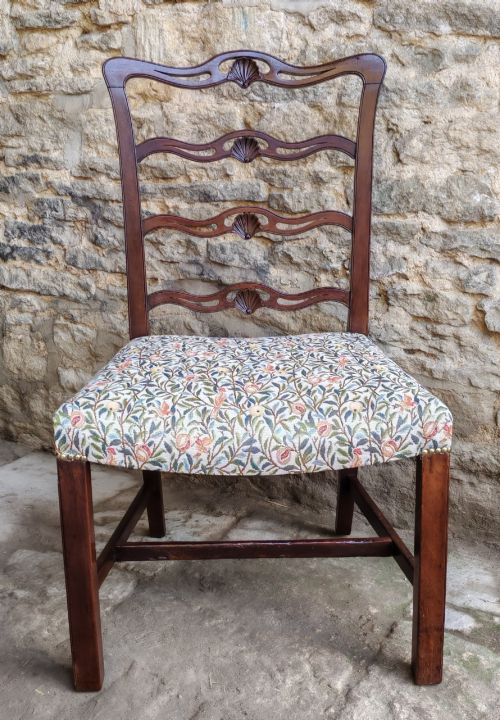
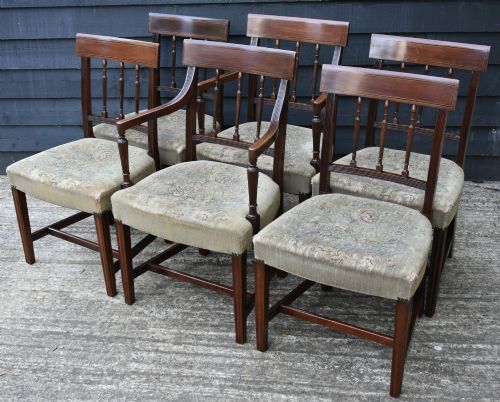
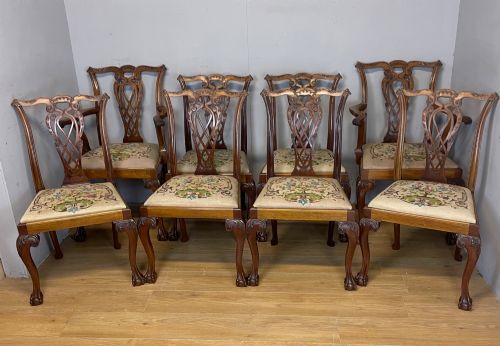
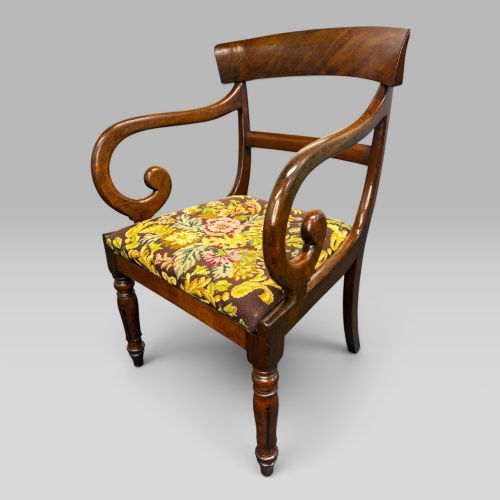
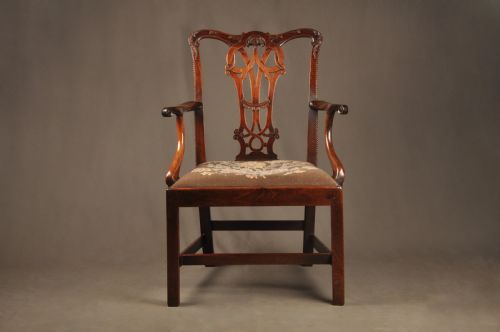
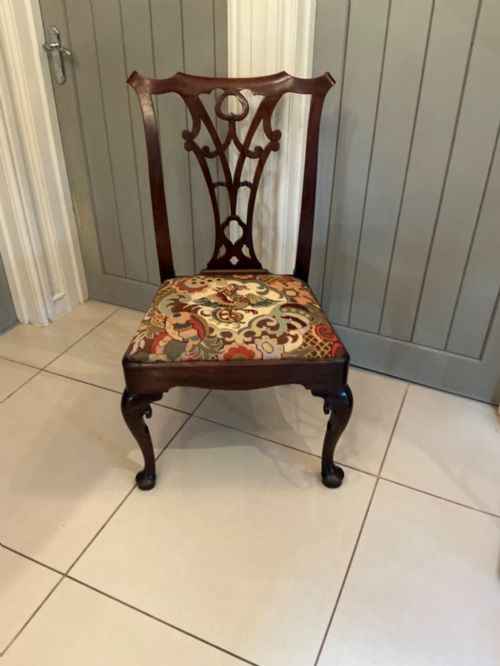
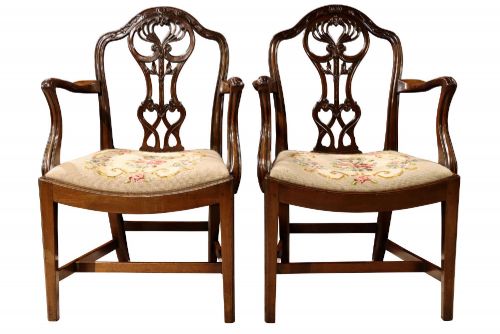
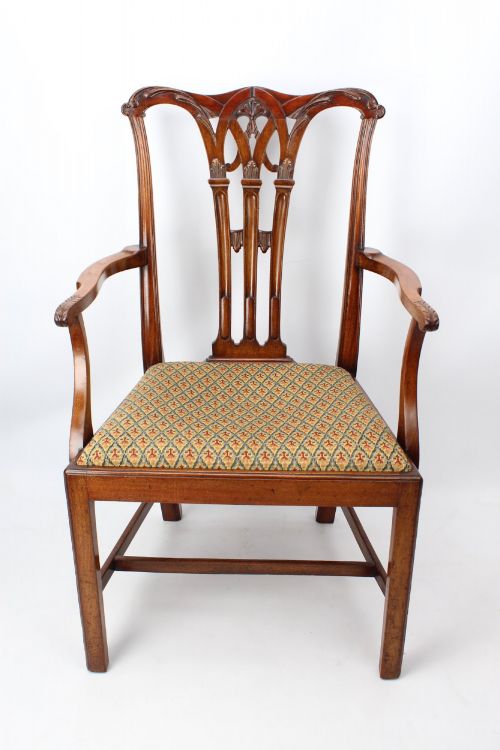
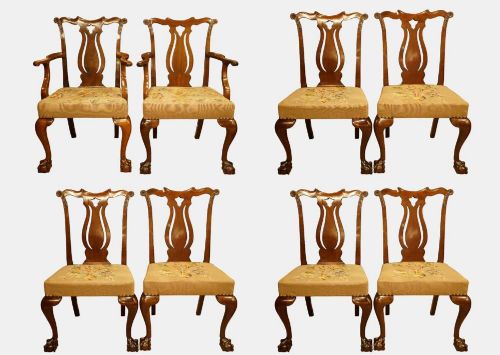
When you search for mahogany tapestry seat chairs, you encounter seating designed primarily for dining rooms, parlours and libraries across several centuries. The forms range from single side chairs and carvers to large matched sets intended around a dining table.
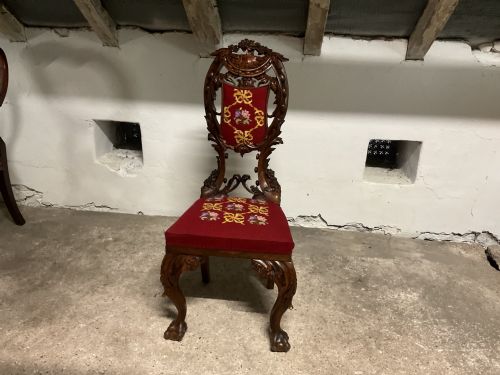
The selection spans periods from the Georgian era through the Regency and Victorian epochs into Edwardian revivals. Dining chairs and side chairs appear most frequently, alongside elbow chairs, desks seats and occasional hall chairs.
How they were made
Frames are constructed from solid mahogany, often shaped with carved details like ladderbacks, splats, and armorial motifs. Joinery relies on traditional methods such as mortise and tenon to ensure rigid structural integrity.
Seats are upholstered using wool, fabric, and tapestry or needlework textiles, sometimes styled as drop-in pads. Brass tacks or internal webbing secure the textile coverings to the wooden framework.
Materials recorded across the inventory include wool tapestry, needlework fabric, brass tacks, and structural mahogany timber.
What varies in quality
Depth and crispness of timber carving distinguish standard examples from finer workshops. Sharp lines in foliate or interlaced splats indicate skilled handwork rather than mass production.
Condition and originality of the upholstery play a major role. Pieces retaining period needlework or wool tapestry carry distinct historical texture compared to later replacements.
Warings
The Mahogany Tapestry Seat Chairs Glossary
- Mahogany
- A durable tropical hardwood known for its deep reddish-brown tone and fine grain. It became the favoured timber for high-end British furniture from the eighteenth century onwards.
- Tapestry
- A form of heavy textile art woven on a loom or worked with a needle in wool. These panels depict floral or pictorial scenes for seat covers.
- Elbow Chair
- An armchair with short armrests designed for dining or desk use. They frequently matched a larger set of single side chairs for the head of the table.
- Drop-in Seat
- A wooden frame holding upholstery that drops into a rebate in the chair rails. This removable construction allowed easy recovering or cleaning.
Mahogany Tapestry Seat Chairs: Frequently Asked Questions
How do I clean tapestry seats?
Gently vacuum wool tapestry using a low suction setting with a soft brush attachment to lift dust without snagging the fibres. Avoid harsh chemical cleaners and excessive moisture.
For stubborn marks, consult a specialist textile conservator who understands historic woven fabrics. Spot cleaning can alter the colour unevenly if attempted at home.
Can I use these chairs daily?
Most of these chairs are structurally robust enough for everyday dining or desk use if the timber and joints remain sound. Regular checks on the underframe prevent sudden loosening.
Avoid placing antique seating in direct sunlight or beside heat sources to protect the mahogany finish and prevent the dry rot of interior webbing.
How do I identify a Georgian chair?
Look for dense, dark mahogany timber with characteristic hand-cut joinery and proportions typical of the eighteenth century. Details often include plain or carved splats and solid drop-in seats.
Chairs from this period frequently display subtle asymmetry in hand-carved elements, which helps distinguish them from later nineteenth-century revival pieces.
What is a Chippendale revival chair?
These are later nineteenth or early twentieth-century interpretations of mid-eighteenth-century designs. They copy classic motifs like interlaced splats and carved cabriole legs.
Revival pieces often show machine assistance in the joinery or internal framing methods distinct from original eighteenth-century construction techniques.