
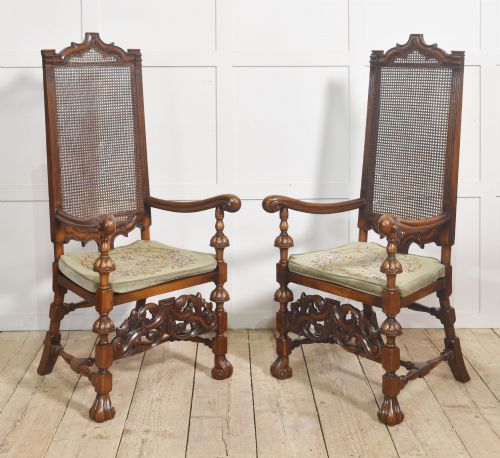
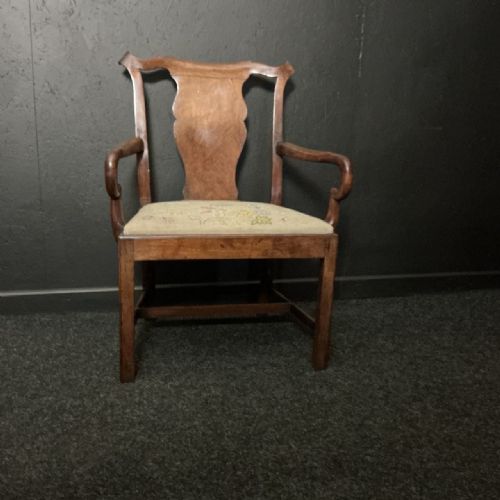
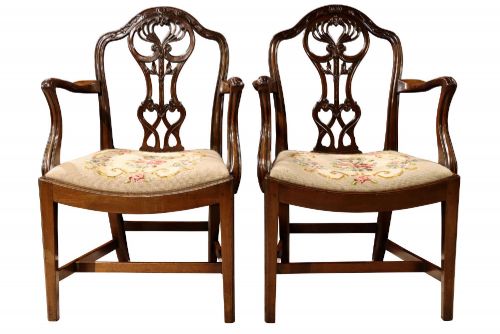
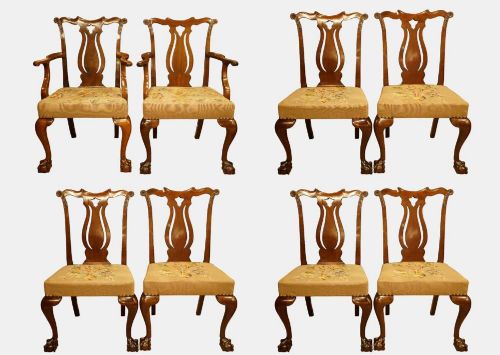


Needlepoint Carver Chairs
Needlepoint carver chairs are substantial seated furniture pieces featuring upholstered needlework, offering both comfort and historic presence for the home.
Needlepoint Carver Chairs
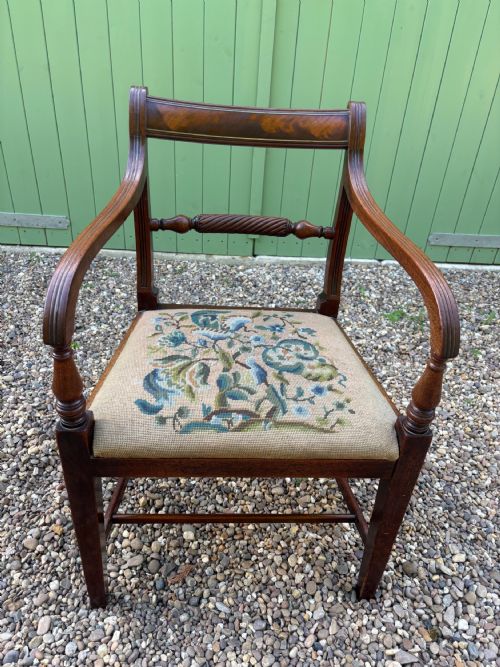
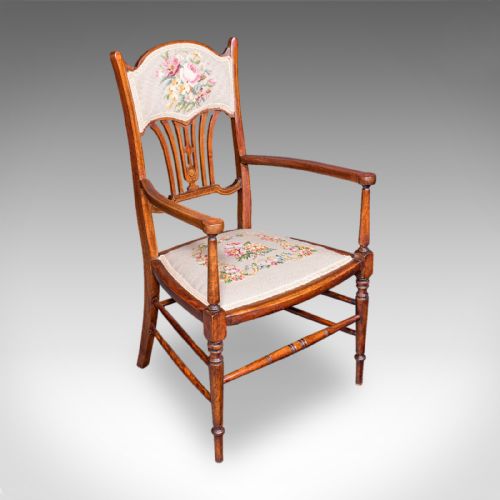
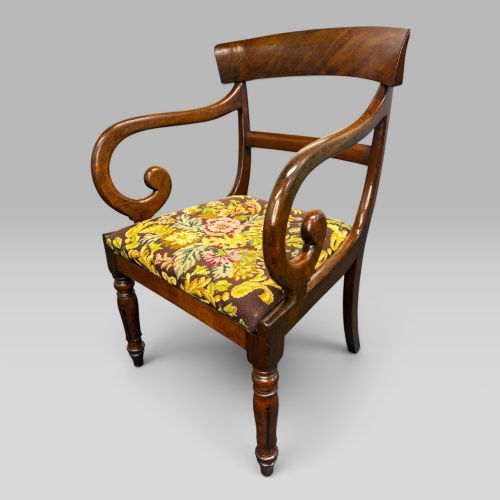
Needlepoint carver chairs appear across multiple historical periods, with pieces originating from the Georgian, Regency, and Victorian eras most frequently encountered here. These items function as larger elbow chairs or armchairs, often accompanying dining sets or serving as distinct morning room seats.
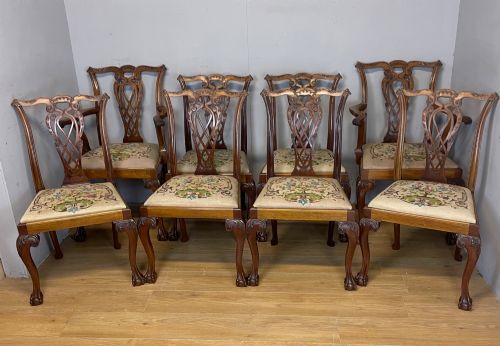
The selection encompasses revival styles such as Chippendale and George II, alongside distinct regional examples like those from Dublin workshops. Timber frames in mahogany and walnut dominate the offerings, matched with textile or tapestry upholstery.
Assessing quality in carver chairs
The sophistication of the timber carving sets superior examples apart, particularly in revival pieces where crisp detail on the arms and legs reflects skilled craftsmanship. Timber selection also dictates grade, with dense, well-figured mahogany and walnut representing the upper tier of production.
Condition and originality of the needlepoint upholstery influence overall merit. Intact period tapestry work preserved on original frames commands greater attention than later replacement textiles.
Master's armchairs command attention, perfect for anyone wishing to rule the dining room with dignified authority.
Warings·Robert Strahan Dublin
The Needlepoint Carver Chairs Glossary
- Carver chair
- A sturdy armchair, traditionally placed at the head of a dining table or used as a desk seat. These pieces feature integrated armrests for added support.
- Needlepoint
- A type of counted thread embroidery stitched onto a stiff open-weave canvas. It forms the durable pictorial or geometric upholstery seen on historic seats.
- Drop-in seat
- A removable wooden frame padded and upholstered separately before being dropped into a recess in the chair rails. This design allows for easier reupholstery.
- Elbow chair
- An alternative term for an armchair, referencing the supportive rests for the arms. They appear frequently in Georgian and Victorian settings.
- Sabre leg
- A concave tapering furniture leg that curves outward in the manner of a cavalry sabre. This form is particularly characteristic of the Regency period.
Needlepoint Carver Chairs: Frequently Asked Questions
What is a carver chair used for?
Carver chairs traditionally served as the principal seat at the head of a dining table, designated for the head of the household. Their sturdy armrests also made them suitable for use as desk chairs or parlor seating.
Today, they function well as accent pieces in living rooms or bedrooms, offering a combination of historical character and practical arm support.
How do I identify a Regency armchair?
Regency armchairs typically feature classical lines inspired by ancient Roman and Greek designs, often constructed from dark mahogany. Elements such as sabre legs and curved backrests help distinguish pieces from this specific period.
Cabinetmakers of the era favoured clean architectural forms, sometimes incorporating subtle brass inlay or carved reed details into the woodwork.
Are needlepoint seats original?
Needlepoint upholstery can be original to the chair if the stitching shows age-appropriate wear and is mounted correctly over period padding. Many historic chairs have been re-stitched or reupholstered over the centuries to preserve their usability.
Examining the underside and the attachment methods helps determine whether the tapestry work dates to the construction of the frame or represents a later addition.
How should I care for antique wood and tapestry?
Maintain antique mahogany and walnut frames by applying a quality beeswax periodically to nourish the timber and prevent drying. Avoid placing wooden furniture in direct sunlight or near heat sources to protect the finish.
Protect needlepoint tapestry by vacuuming gently through a mesh screen on a low setting to remove dust without pulling the wool threads. Keep upholstered pieces away from excessive moisture.