

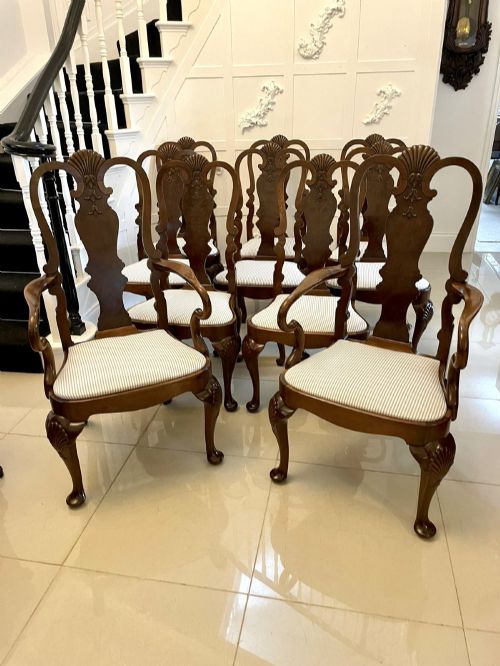
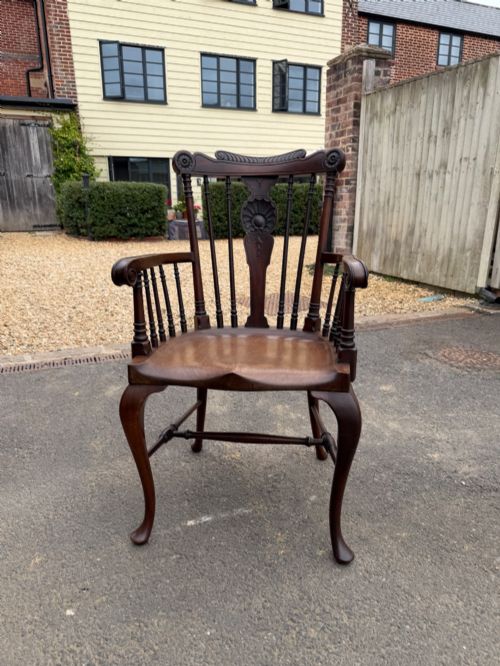
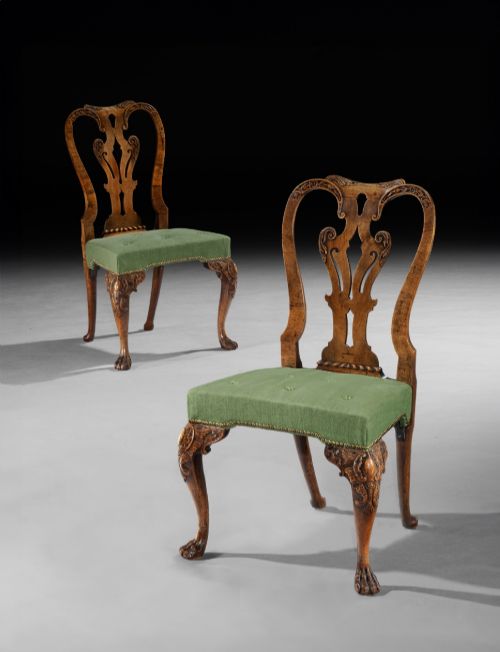

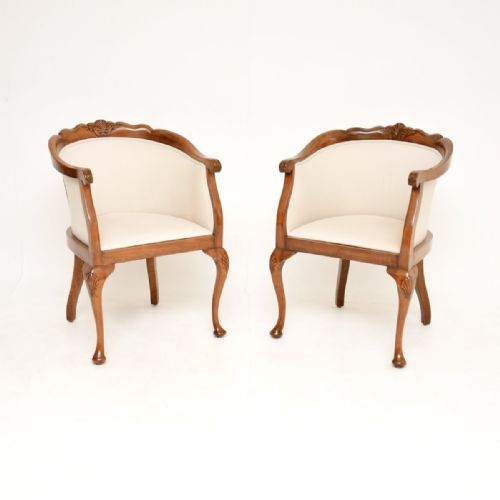


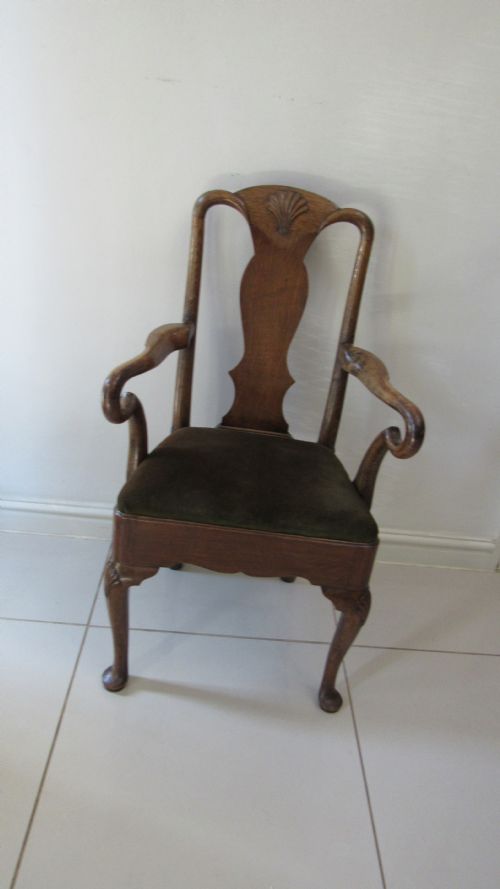

Carved Shell Cabriole Chairs
These carved shell cabriole chairs bring historic seating to any room, combining robust timber frames with classic shell motifs.
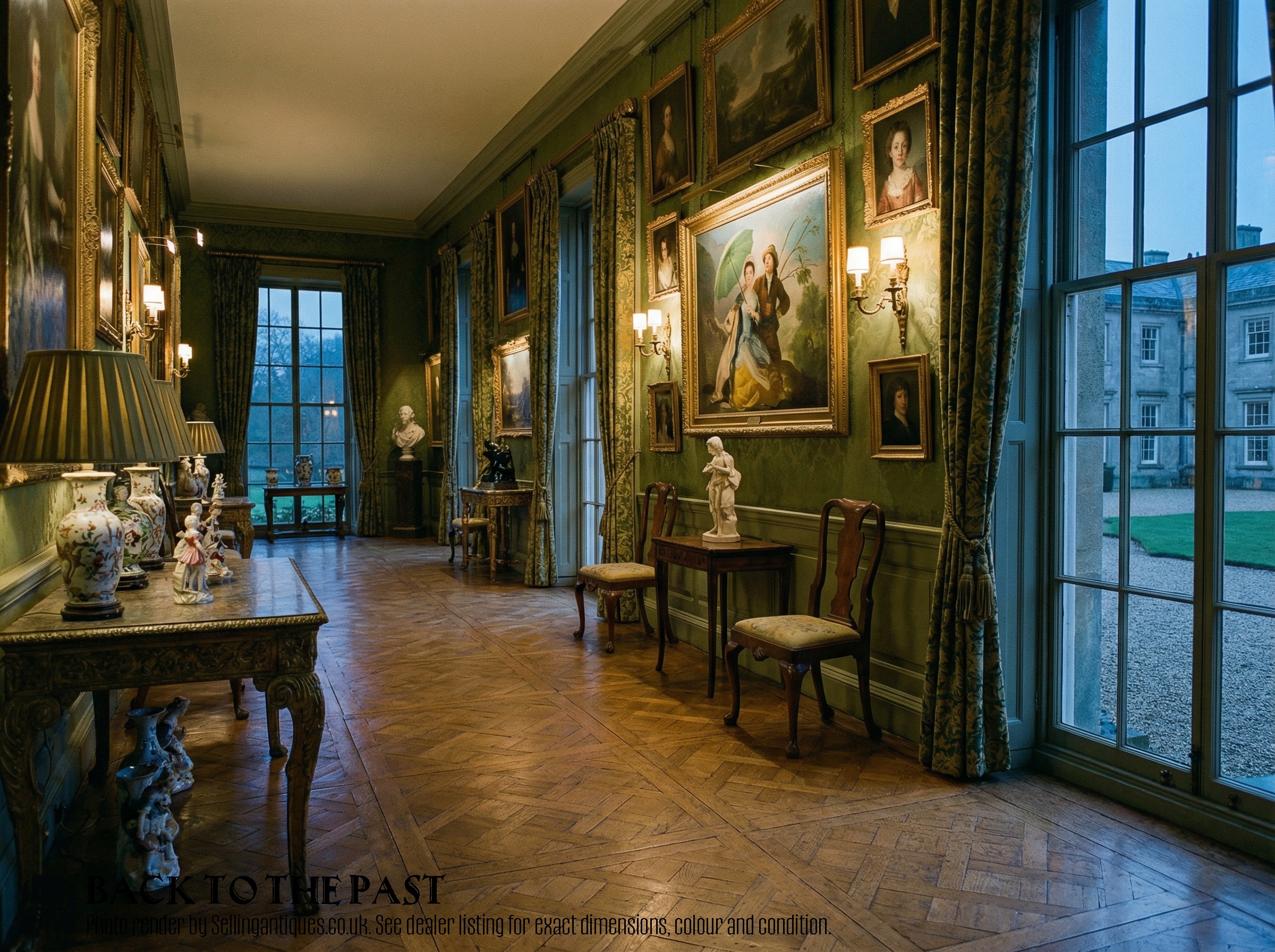
Carved Shell Cabriole Chairs
When buyers search for carved shell cabriole chairs, they encounter seating spanning from the eighteenth century to revival periods in the early twentieth century. The selection ranges from single armchairs and side chairs to larger sets of dining chairs and desk chairs.
The versions most frequently met on this page include walnut and mahogany frames shaped in Queen Anne, George II, and Georgian styles, alongside Victorian and later revival iterations. These pieces appear in forms such as barrel-backed armchairs, footstools, and side chairs.
How they were made
Cabinet makers constructed these chairs primarily from dense hardwoods like walnut and mahogany, shaping the distinctive curved cabriole legs directly from the timber. Carvers applied shell motifs onto the knees or crest rails by hand, using chisels to achieve deep relief.
Seats and backs were upholstered using textiles such as tapestry, velvet, and various traditional fabrics, sometimes secured with brass tacks.
Carved Shell Cabriole Chairs Retail Price Guide 2026
Typical asking prices for carved shell cabriole chairs among the pieces listed under this phrase on Sellingantiques today, from the lower quarter to the upper quarter. They describe what is for sale here now, not the wider market.
Among the seating, a small childs armchair waits quietly for a very miniature occupant.
What varies in quality
The standard of carving dictates much of the distinction across these chairs, separating crisp, deep relief work from softer, shallower detailing. Timber selection also plays a vital role, with richly figured walnut and dense mahogany marking the higher tiers.
Originality of the frame construction and the integrity of the joinery determine the standing of each piece. Chairs that retain their early timber surfaces and sturdy internal framing hold greater presence.
The Carved Shell Cabriole Chairs Glossary
- Cabriole
- A furniture leg that curves outward at the knee and tapers inward toward the foot, mimicking animal limbs. This form appeared widely on seating from the eighteenth century onward.
- Shell motif
- A carved ornament shaped like a scallop shell, frequently applied to the knees or top rails of chairs. It serves as a defining decorative feature of the period.
- Side chair
- An upholstered or wooden chair without arms designed for dining or occasional use around a room. These pieces form a large part of traditional seating sets.
- Armchair
- A seat fitted with lateral supports for the arms, often built with a more substantial frame than a side chair. Versions here include barrel-backed and revolving formats.
- Revival
- A later artistic movement that recreates historical designs from earlier centuries, such as Queen Anne or Georgian styles. Pieces from the late nineteenth and early twentieth centuries often fall into this category.
Carved Shell Cabriole Chairs: Frequently Asked Questions
What is a cabriole leg?
A cabriole leg is a shaped support that curves outward at the knee and tapers inward to a foot. This design mimics the natural shape of an animal limb.
Cabinet makers used this form extensively on seating during the eighteenth century and subsequent revival periods.
Are these chairs comfortable for daily use?
Many of these armchairs and dining chairs provide sturdy support, though upholstery firmness varies depending on when the padding was renewed. Barrel-backed and upholstered models offer a more enclosed seating position.
Buyers often place them in studies, living rooms, or dining spaces as functional seating.
How do I identify the wood?
Walnut and mahogany dominate the construction of these chairs, displaying distinct grain patterns and colour variations. Walnut often shows rich, dark figuring while mahogany tends toward a reddish-brown tone.
Examining the underside or unpolished areas helps reveal the true timber.
What defines a George II chair?
George II chairs typically feature robust proportions, carved ornamentation such as shell motifs on the knees, and sturdy cabriole legs. These pieces reflect the neoclassical and baroque influences of mid-eighteenth-century design.
Revival makers later copied these exact characteristics in the twentieth century.