

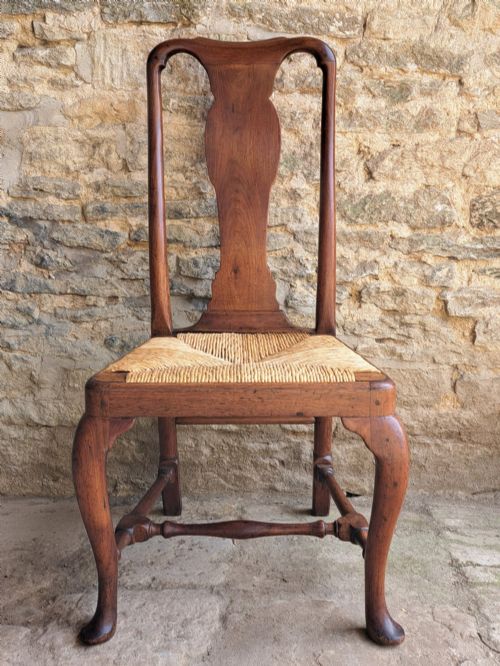


Georgian Walnut Dining Seating
Georgian walnut dining seating brings warmth and rich grain to the table through chairs made in walnut, red walnut, and burr walnut.
Georgian Walnut Dining Seating
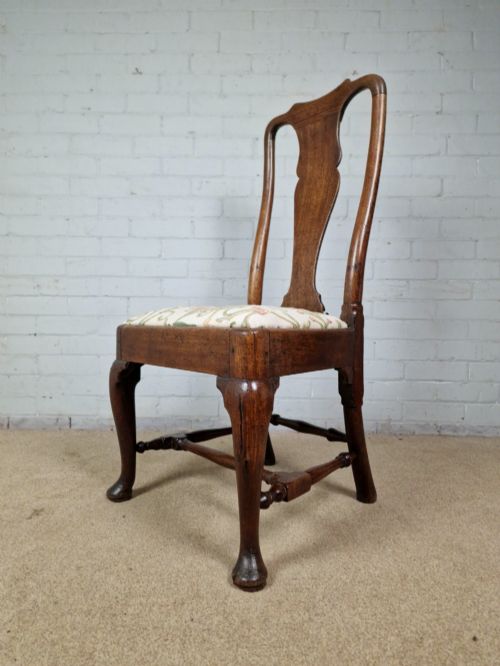
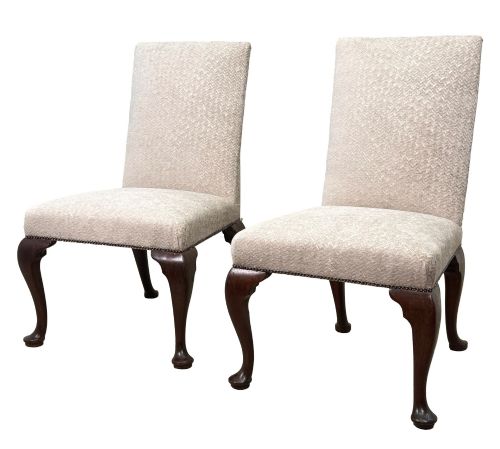
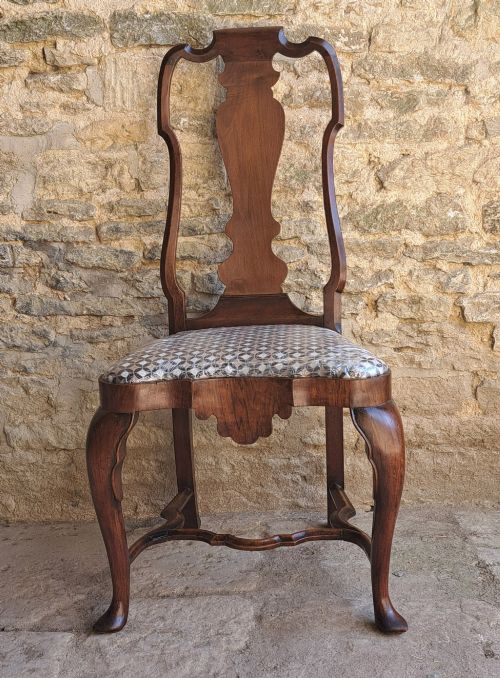
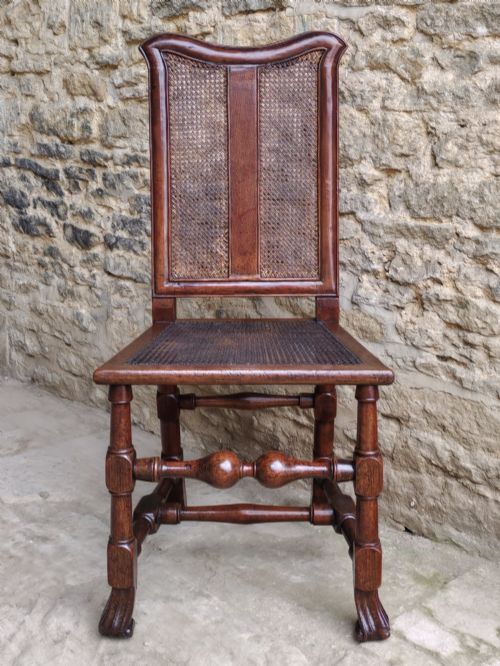
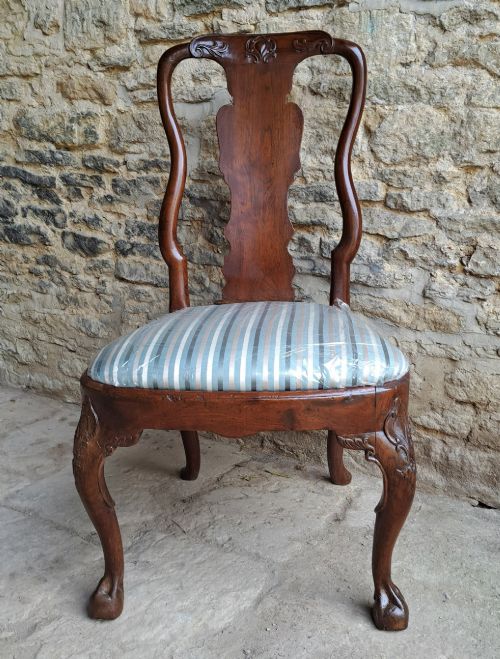
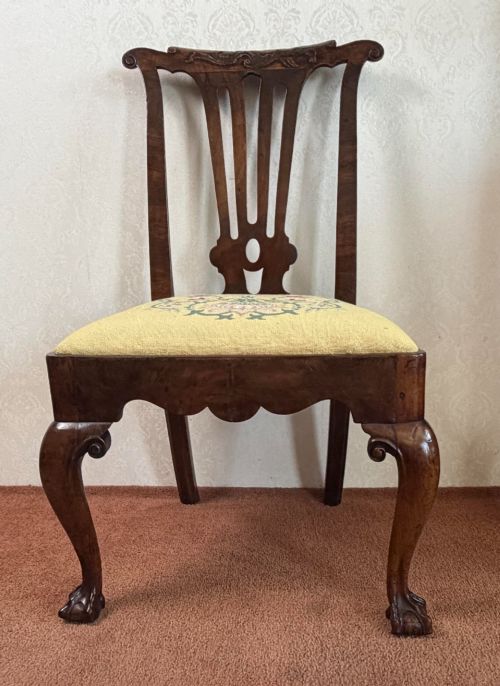
Georgian walnut dining seating comprises side chairs and armchairs designed for the dining room. These pieces appear primarily from the eighteenth century, including the Queen Anne, George I, and George II periods, alongside later nineteenth-century revivals.
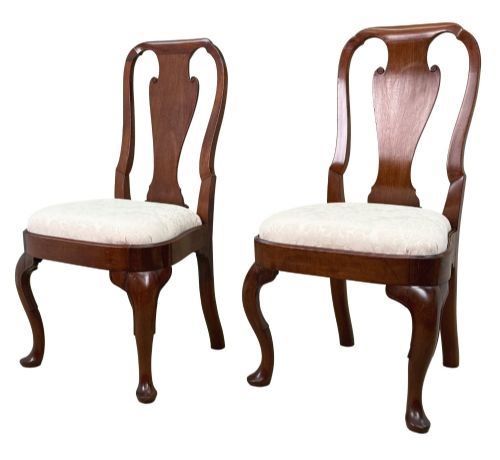
The inventory on this page ranges from single chairs and pairs to substantial sets of twelve. Forms include high back chairs, ribbon back chairs, and hand chairs, often featuring drop-in seats covered in period textiles, tapestry, needlepoint, or velvet.
What varies in quality
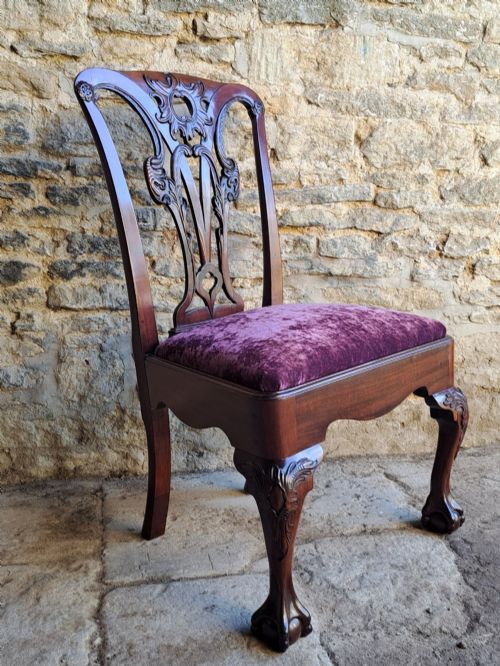
The depth and figure of the walnut timber set the visual standard for each chair, with burr and red walnut variants commanding attention for their grain patterns. Crispness in carved elements, such as shell motifs or ribbon backs, distinguishes finer workshops from simpler production.
Originality of the frame construction and the survival of early upholstery foundations dictate the standing of a set. Larger matched groups maintain higher value than assembled sets or single survivors.
Georgian Walnut Dining Seating Retail Price Guide 2026
Typical asking prices for georgian walnut dining seating among the pieces listed under this phrase on Sellingantiques today, from the lower quarter to the upper quarter. They describe what is for sale here now, not the wider market.
The listings span from the early eighteenth century into the twentieth century, capturing both original Georgian craftsmanship and later revival pieces.
Spillman & Co
The Georgian Walnut Dining Seating Glossary
- Drop-in seat
- A removable wooden frame padded and upholstered separately, designed to drop into a recess in the chair rails. This innovation allowed easier recovering without dismantling the frame.
- Cabriole leg
- A furniture leg that curves out at the knee and tapers inward at the ankle, mimicking animal limbs. It appears frequently on Queen Anne and George I seating.
- Ribbon back
- A chair back featuring carved splats interwoven in imitation of billowing ribbons. This design flourished during the mid-eighteenth century.
- Burr walnut
- Timber sliced from the irregular growths on walnut trees, yielding a turbulent, highly decorative grain pattern. It was often used for cabinet veneers and prominent chair panels.
Georgian Walnut Dining Seating: Frequently Asked Questions
How do I care for antique walnut chairs?
Keep wooden surfaces nourished with appropriate wax polishes and protect upholstery from direct sunlight. Avoid placing them near heat sources that could dry out the historic timber.
Check joinery periodically during use to ensure frames remain stable under daily seating conditions.
Are these chairs suitable for daily dining?
Many of these chairs remain structurally robust enough for regular dining use, particularly sturdy eighteenth-century and revival examples. Proper care ensures they withstand everyday seating.
Consider the seat height and frame capacity when pairing them with modern dining tables.
How do I spot a Queen Anne chair?
Queen Anne chairs typically feature vase-shaped splats, cabriole legs, and pad or slipper feet. The overall silhouette emphasises curved lines rather than straight architectural members.
Walnut was the primary timber of choice during this distinct design phase.
What is the difference between a side chair and an armchair?
Side chairs are built without armrests, designed originally to be tucked away or placed along dining room walls. Armchairs include structural arm supports for seated comfort at table ends.
Both forms share matching stylistic motifs within defined sets.