





Yellow Damask Accent Chairs
Yellow damask accent chairs bring rich texture and period silhouette to a room, ranging from 17th Century walnut elbow chairs to Victorian nursing seats.
Yellow Damask Accent Chairs
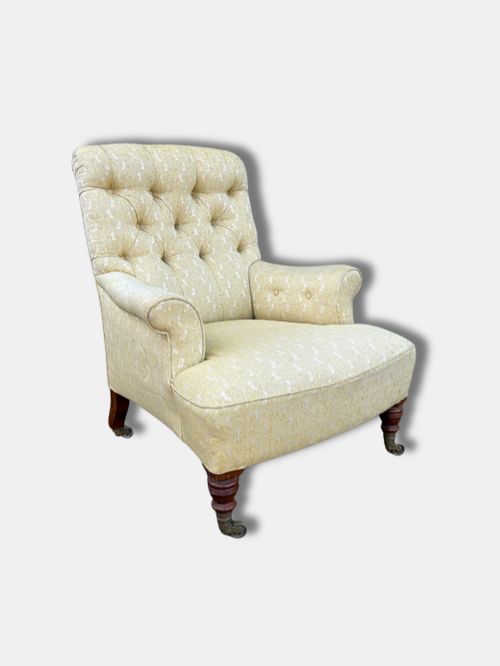
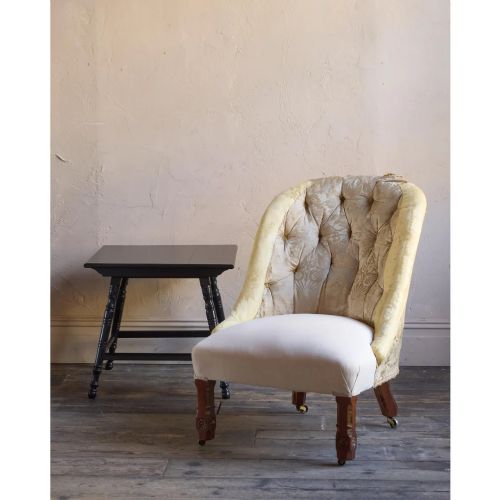
Yellow damask accent chairs encompass a variety of seating forms, including armchairs, nursing chairs, slipper chairs, and side chairs spanning multiple centuries. Buyers searching for yellow damask accent chairs will encounter historic seating upholstered in patterned textiles, such as silk fabric and damask fabric, alongside frames awaiting new upholstery.
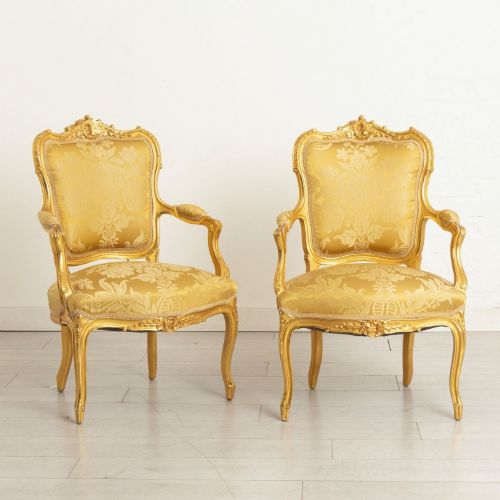
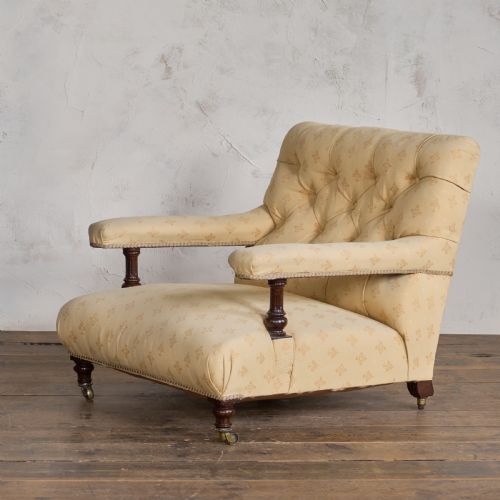
The selections on this page bridge several eras, drawing from 17th Century, 18th Century, Georgian, Victorian, and later periods like 1920. Frames range from French giltwood and rosewood fauteuils to English mahogany and walnut open armchairs.
Styles represented include French Rococo, Louis XV, Italian Baroque Revival, and Queen Anne style, offering distinct silhouettes for period and eclectic interiors. Many pieces highlight traditional maker craftsmanship, such as those attributed to Howard and Sons.
How they were made
Makers utilised dense timbers like mahogany, walnut, rosewood, and giltwood to construct durable structural frames for these armchairs and side chairs. Joinery techniques varied by period, from the bobbin turned elements seen in 19th Century seating to the carved mahogany details of Victorian and Georgian examples.
Upholstery practices involved texturing frames with silk fabric, velvet, and damask fabric, secured over traditional stuffing and webbing. Brass components sometimes appeared as castors or structural hardware on mid 19th Century and Victorian models.
Yellow Damask Accent Chairs Retail Price Guide 2026
Typical asking prices for yellow damask accent chairs among the pieces listed under this phrase on Sellingantiques today, from the lower quarter to the upper quarter. They describe what is for sale here now, not the wider market.
Listings feature wooden frames in mahogany, walnut, rosewood, and giltwood, paired with damask, silk, and velvet textiles across multiple centuries.
What varies in quality
The calibre of timber carving and the integrity of the underlying wooden frame define the upper tier of these seating options. Crispness in giltwood detailing, balanced proportions in spoon back designs, and the authenticity of period elements like bobbin turnings separate standard examples from finer works.
Condition of the upholstery fabric matters significantly, as pieces newly upholstered in silk or damask present differently than frames sold specifically for re-upholstery. The reputation of the maker, evident in documented pieces by firms like Howard and Sons, elevates historical value.
Howard and Sons
The Yellow Damask Accent Chairs Glossary
- Damask
- A reversible figured fabric traditionally woven on a jacquard loom, featuring patterns formed by contrasting warp and weft satin weaves. This textile provides the characteristic sheen seen on period accent chairs.
- Fauteuil
- An open-arm armchair with upholstered back and seat, originating in France during the 17th Century. The wooden frame around the arms and back remains exposed.
- Nursing Chair
- A low-seated Victorian chair designed to allow a person to sit comfortably while holding an infant. These chairs typically feature a spoon back and generous padding.
- Slipper Chair
- A low-to-the-ground upholstered chair without arms, historically used in dressing rooms for changing shoes. They often feature compact proportions and extensive fabric coverage.
- Giltwood
- Timber that has been coated with a thin layer of gold leaf or gesso and gold paint. This finish frequently adorns French and Italian revival chairs.
Yellow Damask Accent Chairs: Frequently Asked Questions
How do I clean damask fabric?
Damask upholstery requires gentle maintenance depending on whether the textile is silk or a durable synthetic blend. Vacuuming with a soft brush attachment removes surface dust without snagging the woven pattern.
Spot cleaning should be approached with caution to avoid water rings on historic fabrics. Professional textile cleaning is recommended for antique chairs.
Are these chairs comfortable for daily use?
Comfort varies significantly by period, as 17th Century and Georgian chairs often feature firmer, upright padding compared to plush Victorian nursing chairs. Seat heights and back angles reflect the ergonomic standards of their respective eras.
Pieces newly upholstered with modern webbing and interior padding offer supportive seating for contemporary living spaces.
Can I place an antique chair in a modern room?
Historic seating acts as a visual anchor in contemporary interiors by introducing contrasting period silhouettes and tactile textiles. Mixing an 18th Century mahogany armchair or a giltwood fauteuil with minimalist decor creates a layered aesthetic.
The scale and upholstery colour help integrate the antique piece into existing colour palettes.