
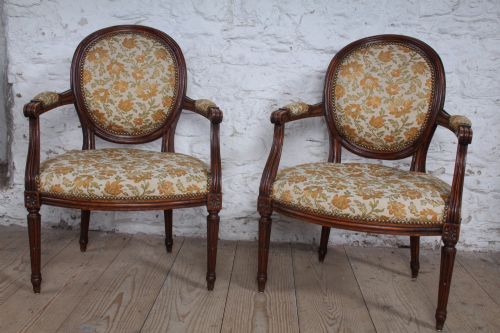
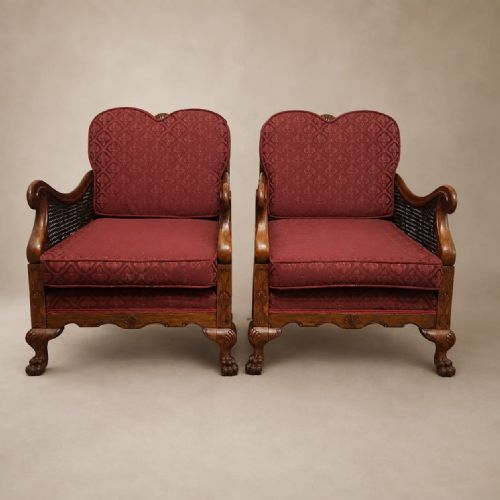
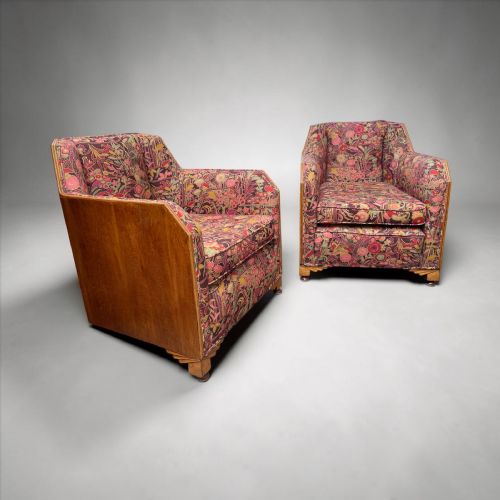
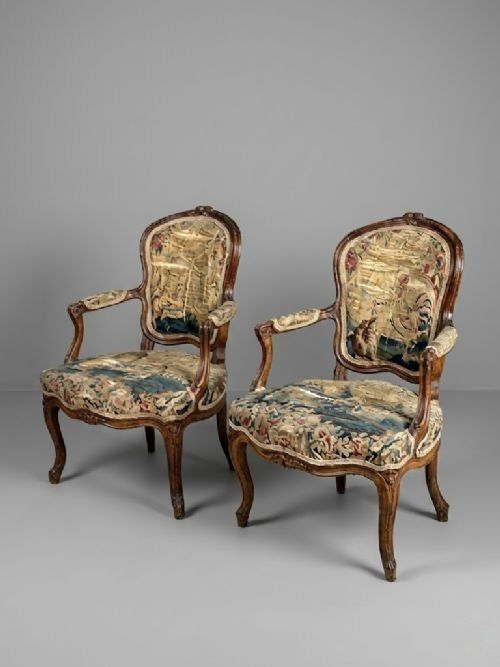
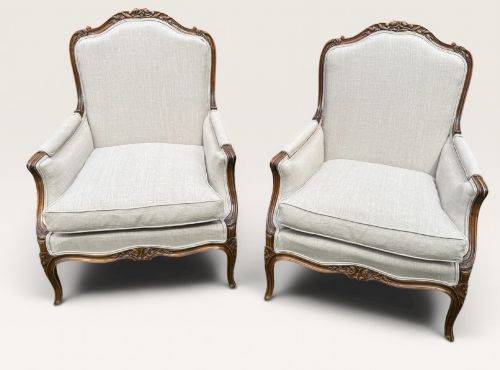
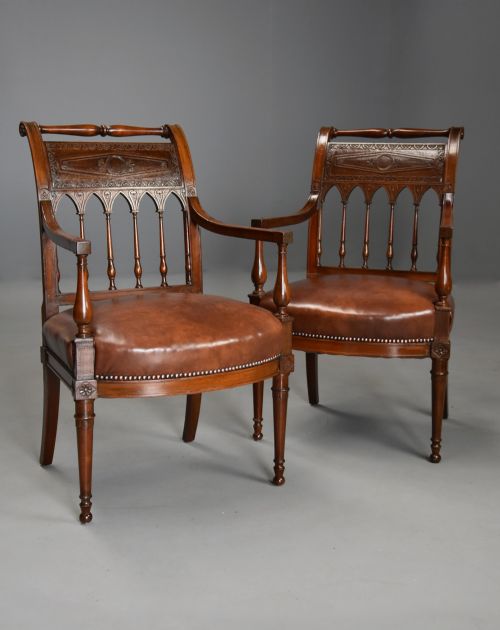
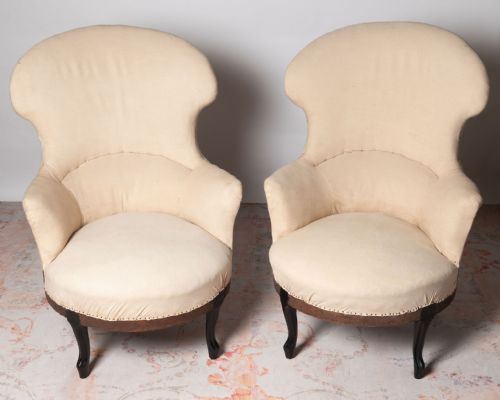
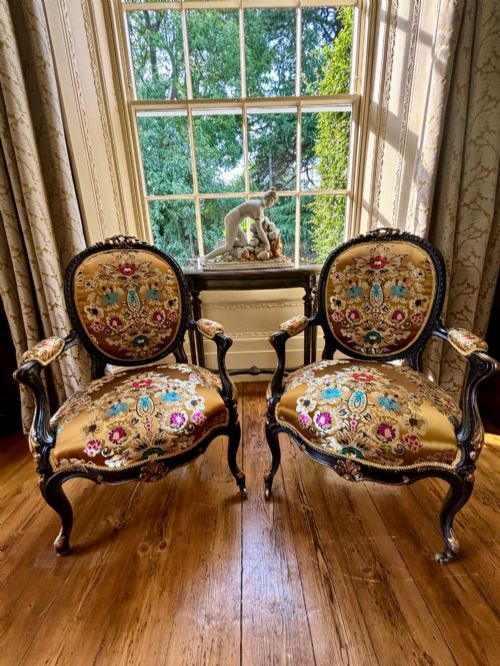
Pair French Walnut Chairs
Pair french walnut chairs deliver classical seating, combining timber frames with rich upholstery to anchor a room.
Pair French Walnut Chairs
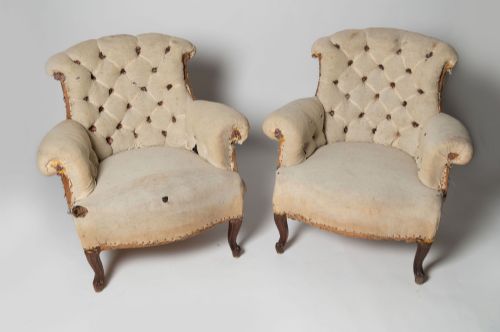
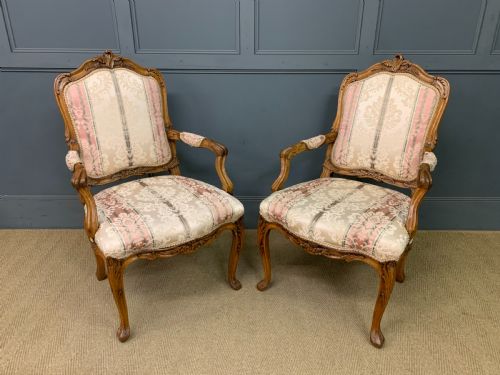
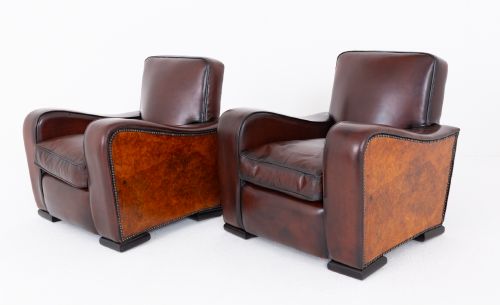
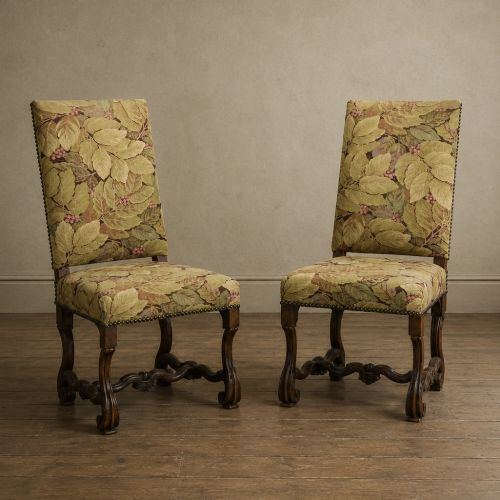
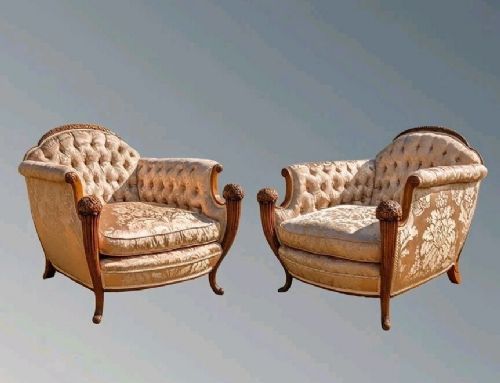
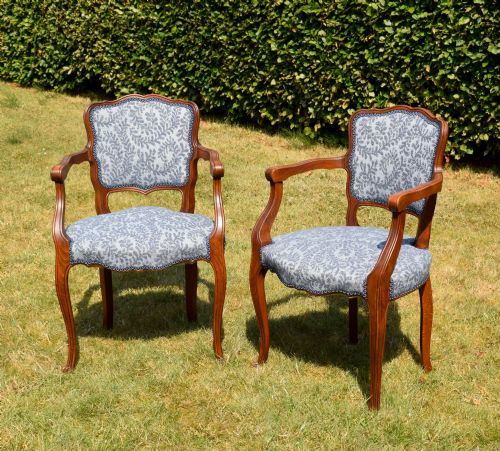
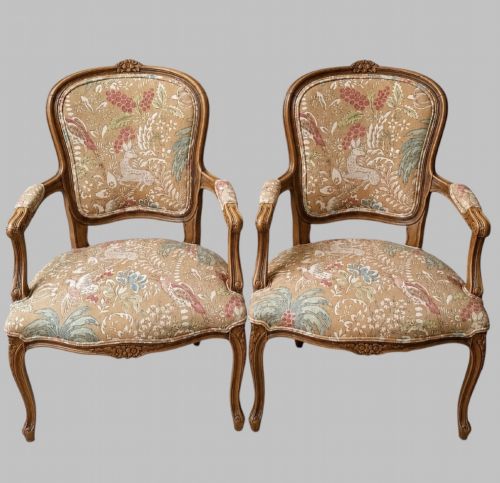
Pair french walnut chairs encompass seating forms designed across centuries, from eighteenth century creations to twentieth century interpretations. The selection leans heavily toward armchairs, fauteuils, and bergères, accompanied by occasional side and salon chairs.
Makers drew on historic idioms including Louis XV, Louis XVI, and Art Deco, shaping timber into curving profiles. These seating sets served formal reception rooms and private chambers alike, offering matched domestic comfort.
How they were made
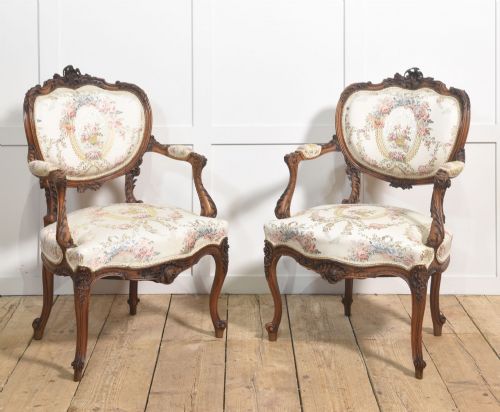
Carpenters shaped solid walnut into structural frames, often deploying hand-carved floral motifs, cabriole legs, and scroll armrests. Timber surfaces received wax or polish to highlight the grain of the wood.
Upholstery completed the framework using materials such as silk, velvet, leather, tapestry, and split cane. Traditional stuffing and webbing secured the seat pads within open or closed arm structures.
The archive records library armchairs, tub chairs, and salon seats spanning eighteenth to twentieth century dates.
What varies in quality
Depth and precision of wood carving distinguish standard production from exceptional examples, where floral details and scrollwork exhibit sharper relief. The choice of primary timber and the tightness of joinery dictate long-term structural stability.
Selection of covering materials, whether original needlepoint, Aubusson tapestry, or supple leather, marks the tier of the piece. Matching grain patterns and symmetrical proportions across both chairs separate superior pairs from assembled sets.
The Pair French Walnut Chairs Glossary
- Fauteuil
- An open-framed upholstered armchair with exposed wooden arms originating in seventeenth century France. These chairs combine rigid wooden structure with padded elbow rests.
- Bergère
- An enclosed upholstered armchair featuring padded sides and a built-in upholstered back. The solid sides often incorporate cane work or fabric panels.
- Cabriole leg
- A furniture leg that curves outward in a convex arc before tapering inward in a concave sweep. This profile mimics animal limbs and appears frequently on revival seating.
- Caning
- Woven rattan material stretched across chair backs or seats to form a light mesh pattern. Split cane panels provide flexible support within wooden frames.
- Aubusson
- Tapestry weaving associated with workshops in central France, utilised for upholstery panels. These textiles depict pastoral scenes or floral bouquets.
Pair French Walnut Chairs: Frequently Asked Questions
How do I spot Louis XV style?
Louis XV style chairs feature asymmetric floral carvings, curved cabriole legs, and sweeping serpentine lines. The overall design prioritises flowing curves over straight geometric edges.
Look for absence of sharp corners and presence of cartouche-shaped backs that define this mid eighteenth century aesthetic.
Are these chairs comfortable for daily use?
Many of these chairs offer deep seating and padded armrests designed for relaxation. Upholstered varieties provide soft support depending on internal webbing and padding condition.
Open armchairs suit reading and conversation, while bergères enclose the sitter for a more sheltered seating experience.
What is a bergere chair?
A bergere is a closed armchair with upholstered sides that connect the backrest to the seat. The frame often houses woven cane panels or padded fabric.
These pieces emerged to block draughts in large rooms while offering wider proportions than standard armchairs.
How do I date walnut furniture?
Dating relies on stylistic shifts from ornate nineteenth century revival carvings down to clean twentieth century Art Deco lines. Examining tool marks and timber joinery helps confirm period construction.
Earlier pieces display hand-cut joinery and aged patination on the walnut grain, whereas later twentieth century examples show mechanical precision.