
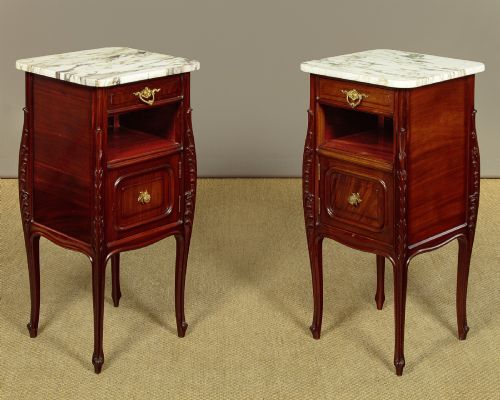
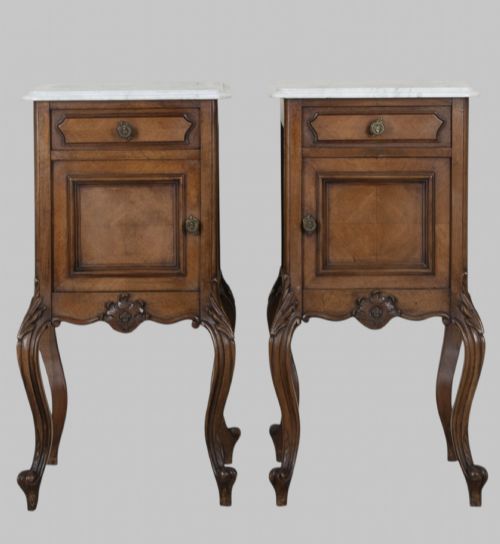
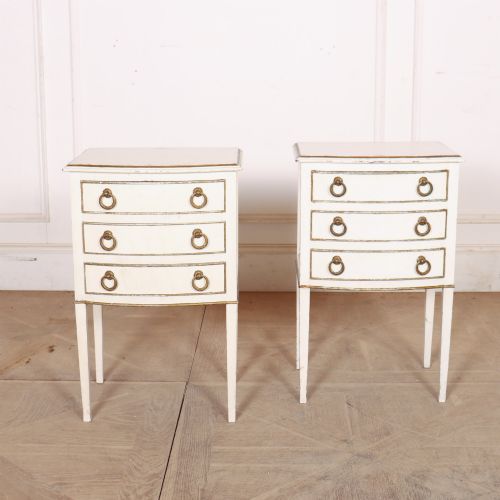
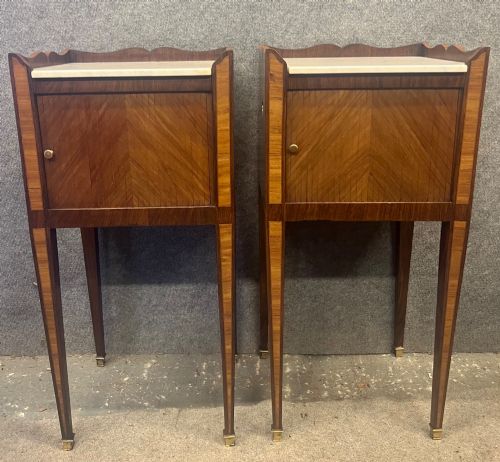

Pair French Bedside Cupboards
Pair french bedside cupboards bring practical elegance to a bedroom, offering matched storage with distinct continental character.
Pair French Bedside Cupboards
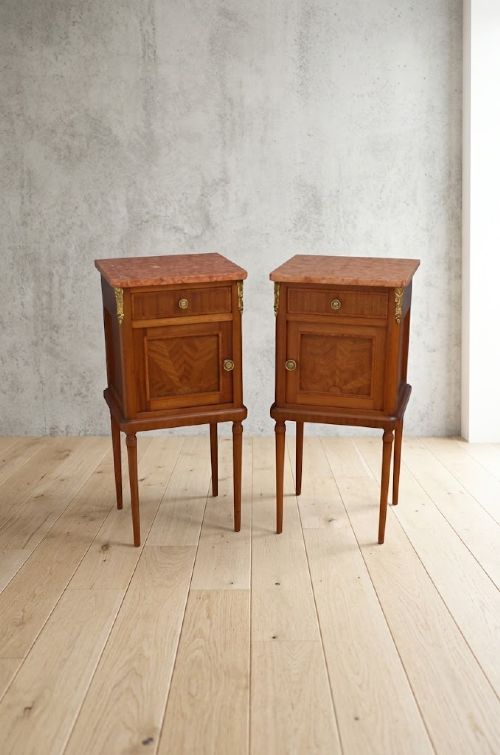
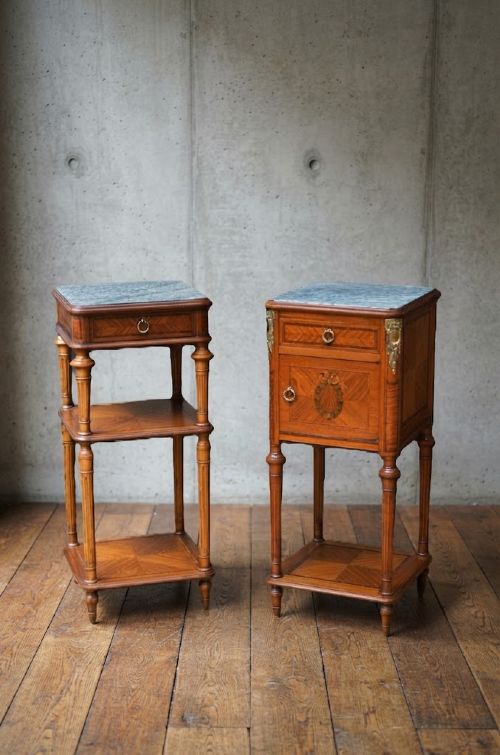
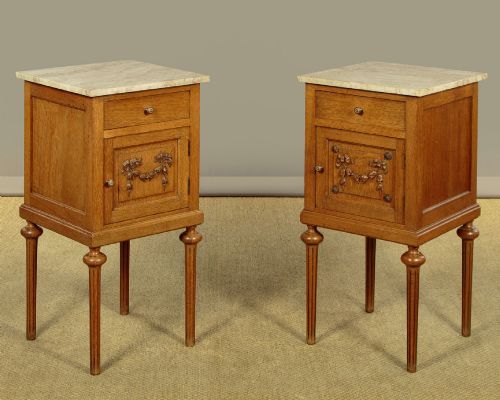
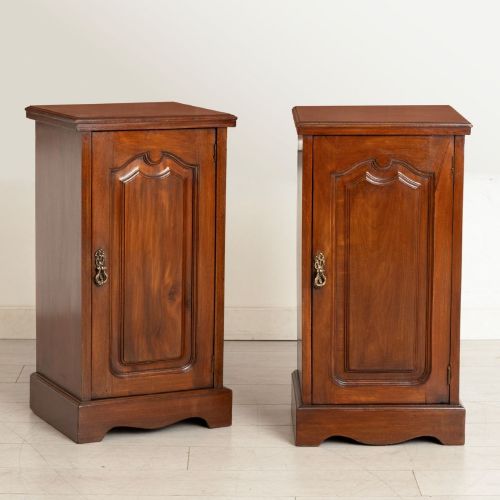
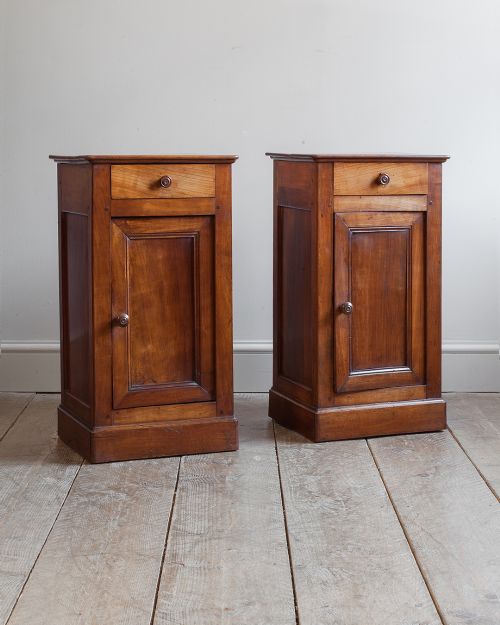
Pair french bedside cupboards span a rich variety of periods from the late nineteenth century through to the art deco era, encompassing both provincial charm and formal revival designs. Buyers exploring these options encounter robust oak and walnut pieces alongside refined satinwood, kingwood, and mahogany cabinets.
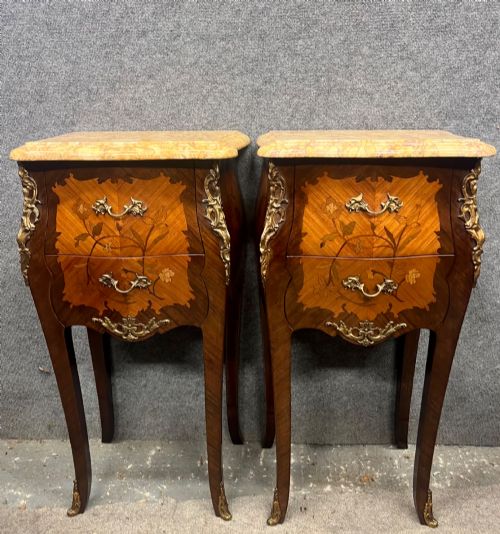
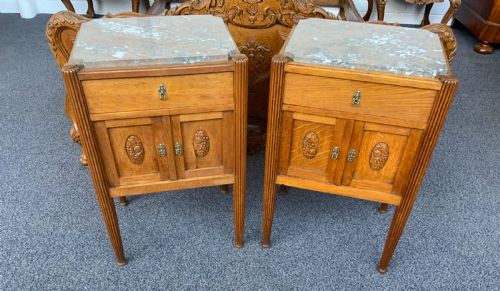
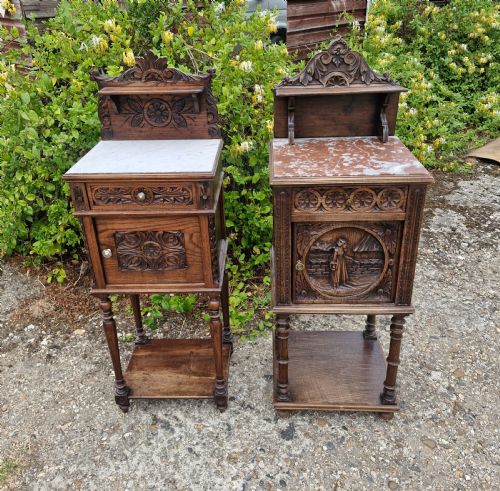
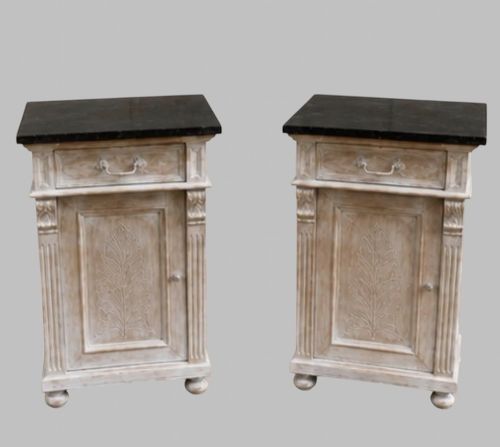
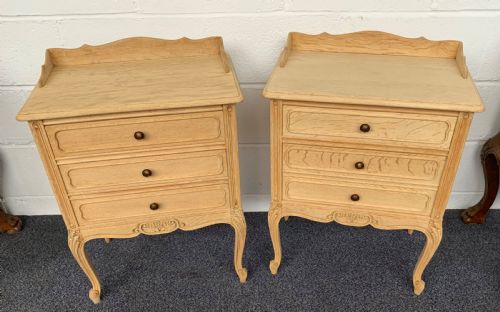
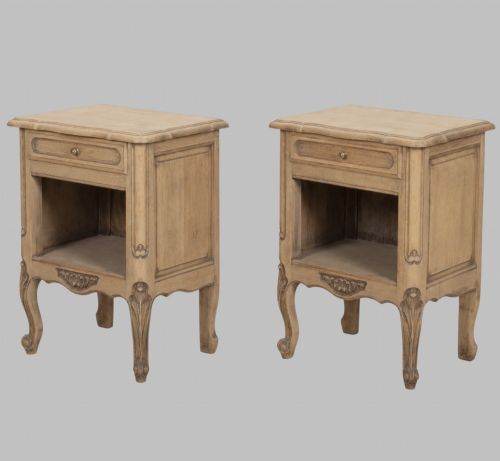
The selections on this page range from simple bedside chests and open lamp tables to enclosed marble-topped pot cupboards. Provincial oak and rustic walnut variants sit alongside sophisticated marquetry-inlaid commodes and serpentine shapes.
Most examples originate from the latter half of the nineteenth century and the early decades of the twentieth century. These small tables and cabinets served functional roles beside beds long before matching sets became standard bedroom furnishings.
Materials and construction methods
Cabinet makers utilised traditional timber framing, employing solid walnut, oak, cherrywood, and mahogany for structural integrity. Finer decorative pieces utilised kingwood, satinwood, and burr walnut veneers applied over solid carcases in geometric or floral marquetry patterns.
Marble tops, particularly in white and veined varieties, provided durable, washable surfaces for bedside use. Cast or gilt bronze mounts, brass handles, and ormolu details frequently accented the corners, legs, and door panels of Louis XV and Louis XVI revival models.
Art deco examples introduced bleached oak and geometric forms, while earlier nineteenth-century variants favoured deep hand-polished wood finishes and subtle carvings. Cabinet doors often concealed internal shelving or storage compartments designed for chamber pots.
Pair French Bedside Cupboards Retail Price Guide 2026
Typical asking prices for pair french bedside cupboards among the pieces listed under this phrase on Sellingantiques today, from the lower quarter to the upper quarter. They describe what is for sale here now, not the wider market.
Listings feature walnut and oak as the predominant timbers, alongside decorative uses of kingwood, satinwood, and marble.
Assessing craftsmanship and execution
Quality reveals itself in the precision of the veneer work and the symmetry of the marquetry patterns across both pieces. Superior cabinets maintain matching grain alignment and careful handling of complex curves such as bombe silhouettes.
The integration of heavy marble slabs and the execution of cast bronze mounts differentiate standard workshop output from finer cabinet making. Well-fitted doors, stable joints, and well-chosen secondary timbers indicate a higher grade of manufacture.
Provenance and maker attribution, such as work associated with established houses like E. Kahn, elevate individual pairs. The crispness of hand-carved details on oak and walnut structures further separates standard utility items from distinguished decorative pieces.
E. Kahn
The Pair French Bedside Cupboards Glossary
- Bombe
- A swelling or outward curving convex shape typical of rococo case furniture. This profile demands advanced woodworking skill to veneer accurately.
- Chevets
- The French term for small bedside tables or nightstands. These compact pieces often feature a combination of a small drawer and a cupboard.
- Marquetry
- The art of applying decorative veneer pieces to a structure to form intricate designs. Craftsmen utilised various coloured woods to create pictorial or geometric scenes.
- Ormolu
- Gilded bronze mounts applied to furniture for decorative accent. This technique was widely utilised during revival periods to emulate eighteenth-century luxury.
- Vernis Martin
- A type of simulated Japanese lacquer developed in France. It provides a glossy, painted finish often seen on elite eighteenth and nineteenth-century furniture.
Pair French Bedside Cupboards: Frequently Asked Questions
What is a pot cupboard?
A pot cupboard is a small bedside cabinet historically designed to enclose a chamber pot behind a single door. These practical pieces usually feature a marble top to protect the wood from spills.
Over time, their primary function shifted to general bedside storage for books, lamps, and personal items while retaining their compact enclosed form.
How do I match marble tops?
Natural marble exhibits wide variation in veining, colouration, and thickness, meaning no two slabs are entirely identical. When acquiring a pair, look for matching tones and geological patterns that complement each other visually.
Some period pairs were produced from the same block of stone, while others were matched during assembly by skilled cabinet makers to create a harmonious appearance.
Are these pieces handed?
Handed pairs of bedside cupboards feature doors that open in opposite directions, creating a symmetrical arrangement on either side of a bed. This thoughtful layout ensures symmetry when placed flanking a headboard.
Many antique pairs were constructed specifically as mirror images, though some simpler provincial models feature identical door swings.
How do I care for antique wood?
Antique timber surfaces benefit from gentle cleaning using a soft, dry cloth to remove dust. Avoid silicone-based polishes and excessive moisture, which can damage aged wax or shellac finishes.
Applying a traditional beeswax periodically helps nourish dry wood and maintains a natural, protective sheen without building up heavy residues.