



Carved Oak Bedside Cupboard
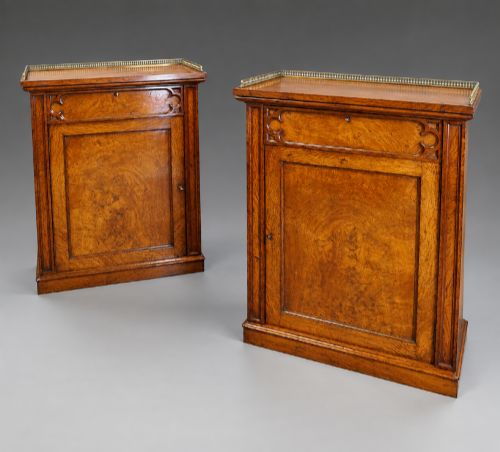
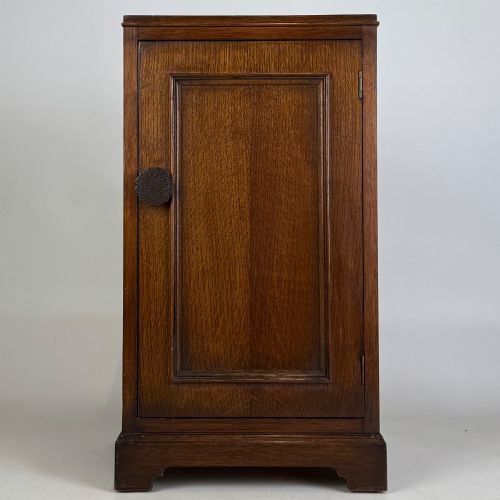
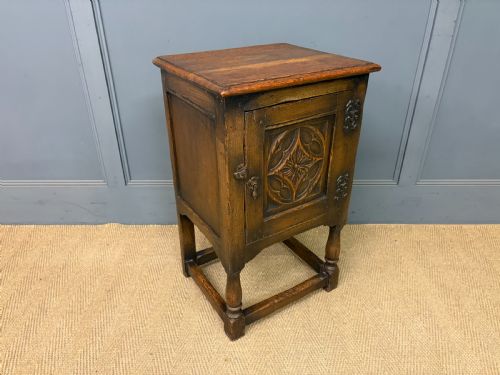
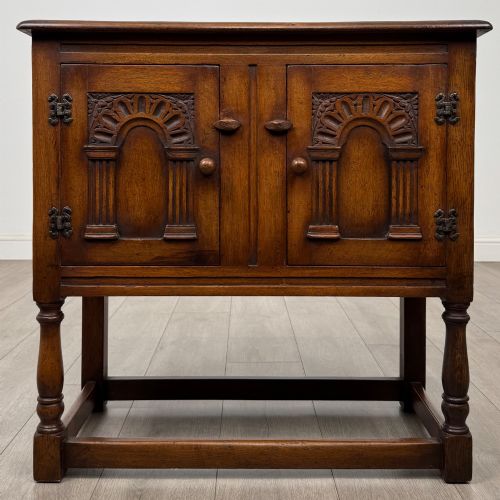
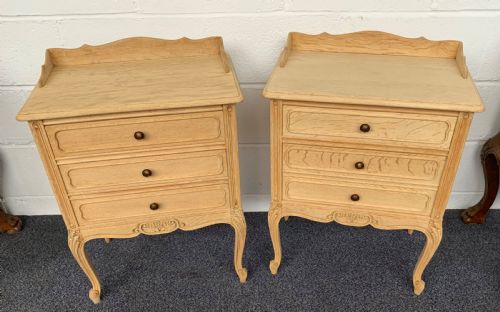
These carved oak bedside cupboards offer sturdy storage beside the bed, combining functional cabinet space with traditional woodwork.
Carved Oak Bedside Cupboard
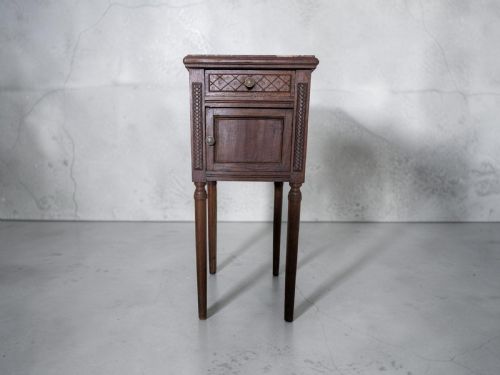
A carved oak bedside cupboard is a small cabinet designed to sit beside a bed, featuring a door enclosing storage space and frequently a single drawer above. When searching this phrase, a buyer encounters various forms ranging from compact side cabinets and nightstands to small cupboards on stands.
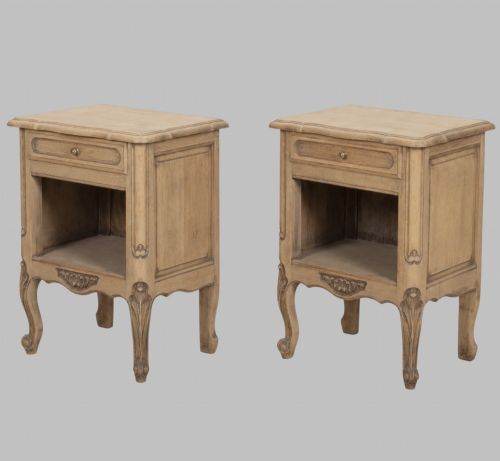
The pieces appearing on this page span the Victorian and Edwardian eras through to the 1920s and 1930s, alongside nineteenth-century examples. French regional variations, including French provincial and Art Deco interpretations, sit alongside robust revival styles.
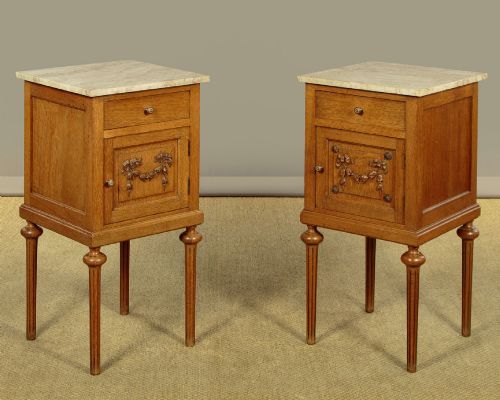
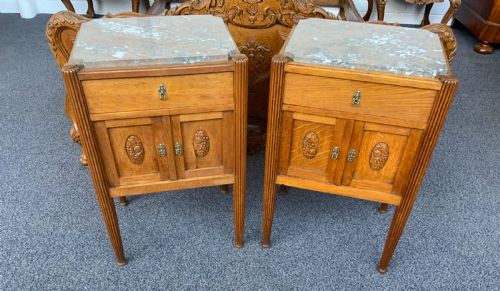
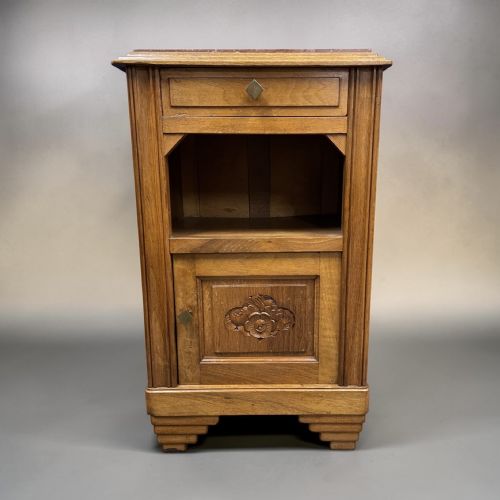
Most examples rely on solid oak construction, sometimes accented with contrasting materials like marble tops or brass handles. Buyers frequently discover pairs rather than single cabinets, particularly within French and Gothic revival designs.
Materials and construction
Makers built these bedside pieces primarily using solid oak, occasionally combining pine and walnut within specific regional or painted carcases. Iron and brass hardware provided hinges, handles and structural reinforcement for doors and drawers.
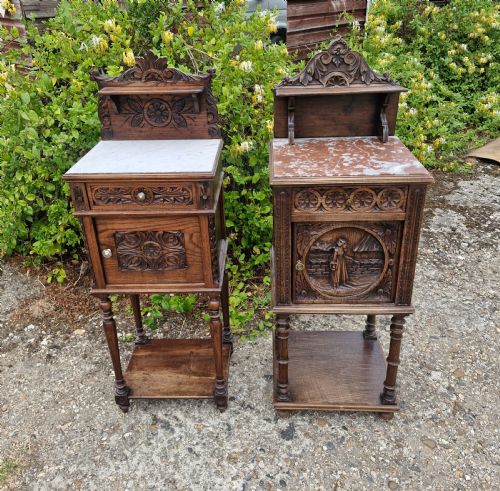
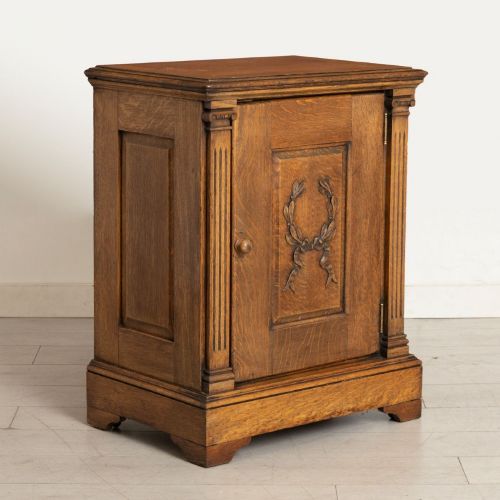
Carving formed the central decorative technique, appearing on friezes, panels and cabinet doors in styles spanning Jacobean and Gothic revivals. Selected French and Edwardian pieces integrated inset marble tops to create durable, water-resistant surfaces.
Carved Oak Bedside Cupboard Retail Price Guide 2026
Typical asking prices for carved oak bedside cupboard among the pieces listed under this phrase on Sellingantiques today, from the lower quarter to the upper quarter. They describe what is for sale here now, not the wider market.
One industrious nineteenth-century workshop stamped its oak cupboard directly with a Halifax address.
Distinctions in quality
Quality rests upon the crispness of the hand-carved detail and the selection of the timber, where dense grain and solid construction distinguish finer workshops from simpler production pieces. The integration of auxiliary materials like fitted marble slabs and heavy brass hardware elevates certain examples above standard utility cabinets.
Proportion and structural integrity define the upper tier, ensuring doors hang true and drawers operate smoothly within the solid oak carcase. Finer pieces demonstrate careful attention to period stylistic details, whether executing French Art Deco curves or precise Gothic tracery.
Simpson Halifax
The Carved Oak Bedside Cupboard Glossary
- Pot cupboard
- A small bedside cabinet originally constructed to enclose a chamber pot. These traditional items form the direct ancestor of the modern bedside table.
- Frieze
- The decorative horizontal band situated beneath the top surface of a cabinet. On these pieces, this section often carries carved linear or floral motifs.
- Gothic Revival
- An architectural and decorative style drawing inspiration from medieval design. Pieces in this tradition feature pointed arches, tracery and heavy carved oak panels.
- Art Deco
- A design movement prominent during the 1920s and 1930s emphasising geometric forms and streamlined silhouettes. French interpretations frequently utilise bleached oak finishes.
- Marble top
- A stone slab fitted to the upper surface of a cabinet. This addition provided a hygienic, heat-resistant shelf for water jugs and washing apparatus.
Carved Oak Bedside Cupboard: Frequently Asked Questions
What is a pot cupboard?
A pot cupboard is a traditional enclosed bedside cabinet designed to hold a chamber pot behind its single door.
Over time, these versatile pieces transitioned into general bedside storage for books and personal items.
Are these cabinets sold in pairs?
Many listings feature matching pairs of bedside cabinets, particularly those originating from French workshops.
Single cabinets also appear frequently for buyers seeking an individual nightstand.
How do I identify a Gothic revival piece?
Gothic revival items display characteristic medieval architectural motifs such as pointed arches, quatrefoils and heavy panel carving.
These pieces typically date from the nineteenth century and employ dark or golden solid oak.
What maintenance does a marble top need?
Marble surfaces require simple cleaning with a damp cloth and mild soap to protect the stone from staining.
Avoid acidic liquids that can etch the polished surface over time.