



Pair Floral Porcelain Candlesticks
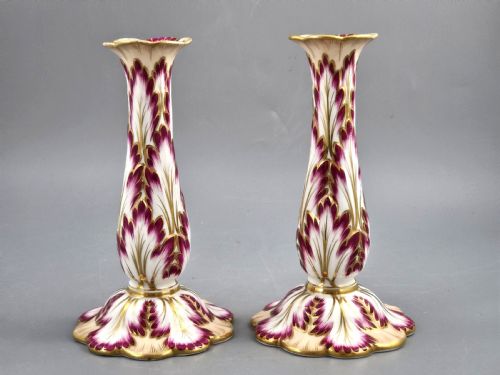
Pair floral porcelain candlesticks bring painted blooms and moulded clay together to light a room with eighteenth and nineteenth-century charm.

Pair Floral Porcelain Candlesticks
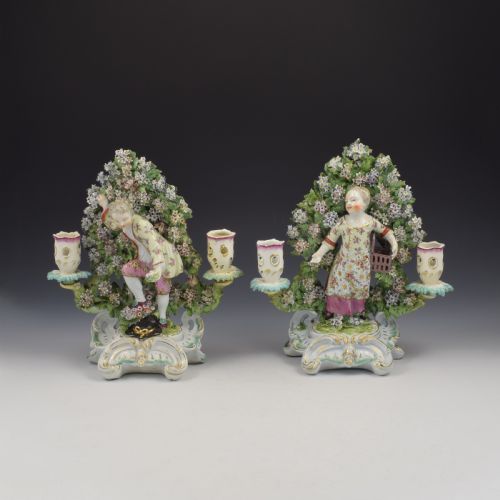
Pair floral porcelain candlesticks combine functional lighting with botanical ornament, frequently featuring painted petals and leaves modelled by hand. The examples available here span the eighteenth and nineteenth centuries, taking the form of figural groups, rococo scrolls, and simpler foliage designs.
Makers such as Derby, Meissen, and Sitzendorf dominate the selection, often incorporating naturalistic bocage backgrounds of porcelain leaves and flowers. Buyers encounter both single-socket candlesticks and larger multi-branched candelabra mounted in brass or paired with gilt bronze.
How They Were Made
Potters shaped hard-paste porcelain through moulds or direct hand-modelling, building up intricate floral elements petal by petal. Artisans then applied enamel colours and gold leaf highlights before firing the pieces in kilns to fix the glaze.
Metal components such as ormolu and brass occasionally join the ceramic structures, particularly in larger nineteenth-century candelabra. Gilding and enamel work require steady hands and precise kiln temperatures to achieve the bright metallic sheens and soft floral hues seen on these items.
Pair Floral Porcelain Candlesticks Retail Price Guide 2026
Typical asking prices for pair floral porcelain candlesticks among the pieces listed under this phrase on Sellingantiques today, from the lower quarter to the upper quarter. They describe what is for sale here now, not the wider market.
Listings feature hard-paste porcelain, enamel, and gold leaf applied across eighteenth and nineteenth-century pieces.
What Varies in Quality
The crispness of the modelled foliage and the delicacy of the painted flowers dictate the refinement of a pair. Finely detailed bocage work retains sharp leaf edges and vibrant enamel tones without heavy restoration.
The presence of named factory marks and complex figural modelling elevate certain pieces above standard productionware. Condition plays a major part, as fragile porcelain flowers and delicate branches are vulnerable to chipping over centuries of use.
Ridgway·Derby·Sitzendorf·Meissen·Minton·Dresden
The Pair Floral Porcelain Candlesticks Glossary
- Bocage
- A background of applied porcelain leaves and flowers that frames figural scenes. This decorative technique mimics leafy bowers and foliage found in nature.
- Hard-paste porcelain
- A durable ceramic composition fired at high temperatures using kaolin and petuntse. It yields a bright, vitrified body that resists scratching.
- Ormolu
- Gilt bronze mounts and decorative metal fittings applied to ceramic pieces. This finish adds structural support and golden ornamentation.
- Rococo
- An artistic style characterised by asymmetric scrolls, shell motifs, and natural curves. It heavily influences the nineteenth-century revival bases of these items.
Pair Floral Porcelain Candlesticks: Frequently Asked Questions
How do I clean antique porcelain candlesticks?
Dust the pieces gently with a soft brush to protect fragile painted details and delicate porcelain leaves.
Avoid soaking them in water or using harsh chemical cleaners that might damage the enamel surface or gold leaf.
Can I still use these for lighting?
These items were designed for taper candles, though modern safety considerations suggest caution with open flames near antique ceramic.
Many collectors prefer to display them unlit to preserve the hand-painted enamels and delicate bocage work from soot damage.
How do I spot a reproduction?
Examine the quality of the enamel painting and the crispness of the porcelain moulding under a magnifying glass.
Genuine pieces from factories like Meissen or Derby show the weight of age and proper kiln firing marks specific to their period.
What does bocage mean on these pieces?
Bocage refers to the thick clustering of porcelain foliage and blooms surrounding the figures on the candlestick.
It provides a wooded backdrop that gives eighteenth and nineteenth-century figural groups their distinctive garden setting.