


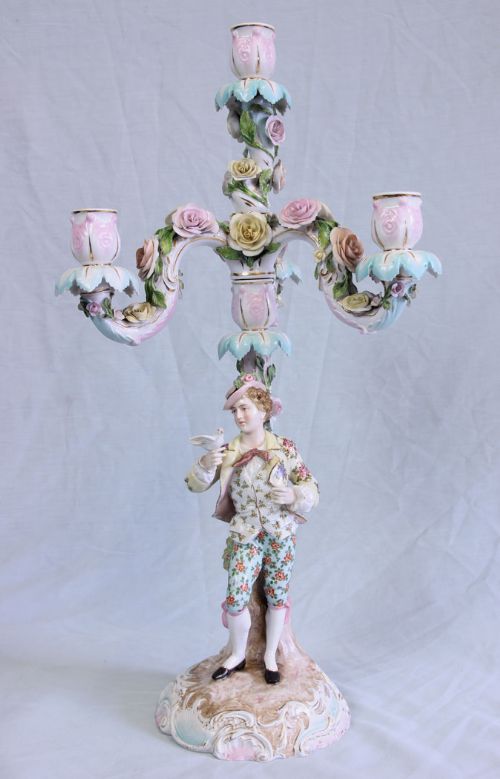


Antique German Porcelain Candelabrum
An antique german porcelain candelabrum brings exuberant Rococo Revival modelling and intricate figural detail to a dining table or mantelpiece.

Antique German Porcelain Candelabrum
When you search for an antique german porcelain candelabrum, you encounter elaborate table pieces dating from the late nineteenth century. These multi-arm lights often arrive as matched pairs or form part of a clock garniture set, combining functional candleholders with sculptural porcelain figures. The forms draw heavily on Rococo Revival aesthetics, featuring scrollwork, asymmetrical curves and applied floral elements.
The objects appearing on this page span the decades around eighteen eighty to nineteen hundred. You will find works originating from renowned factories such as Meissen, Sitzendorf and Dresden. These pieces dominate the selection, showcasing the high standard of German ceramic production during the period.
How they were made
Makers utilised hard-paste porcelain, fired at extremely high temperatures to achieve a durable and crisp white body. Artisans then applied enamel paint by hand, bringing colour to the figures, foliage and rocaille motifs. Many examples incorporate intricate hand-modelled floral encrustations that require immense patience from the ceramicist.
Gilding plays a crucial role in the finishing process, with gold leaf and gilt metal highlights accentuating the moulded contours. The combination of polychrome enamel paint and gilt details gives these candelabra their characteristic visual richness. Metal components sometimes provide structural support for the multi-arm branches.
Antique German Porcelain Candelabrum Retail Price Guide 2026
Typical asking prices for german porcelain candelabrum among the pieces listed under this phrase on Sellingantiques today, from the lower quarter to the upper quarter. They describe what is for sale here now, not the wider market.
Listings feature hard-paste porcelain and gilt metal, spanning the nineteenth century up to nineteen hundred.
What varies in quality
The standard of modelling determines the upper tier of these pieces, distinguishing master-carved figural work from simpler commercial output. Crispness in the moulded scrollwork and the delicacy of applied flowers indicate superior craftsmanship. Hand-painted facial expressions and garment details reveal the skill of the individual decorator.
Completeness and the integrity of the porcelain structure define the market standing of surviving examples. Heavily detailed pieces with intact arms and undamaged floral elements command greater appreciation. The quality of the gilding and the harmony of the enamel palette further separate ordinary items from exceptional ones.
Meissen·Sitzendorf·Dresden
The Antique German Porcelain Candelabrum Glossary
- Hard-paste porcelain
- A dense ceramic material composed of kaolin and petuntse, fired at high temperatures. It forms the durable body of nineteenth-century German lighting pieces.
- Rococo Revival
- A nineteenth-century design style emulating the curves, asymmetry, and shell motifs of the mid-eighteenth century. This aesthetic dictates the sweeping forms of the candelabra.
- Gilt metal
- A base metal treated with a thin layer of gold or gold-coloured finish. It frequently appears in the structural elements and armatures supporting the porcelain branches.
- Clock garniture
- A decorative set comprising a central clock flanked by matching ornaments such as candelabra. These matched groupings created a cohesive display on nineteenth-century mantelpieces.
- Enamel paint
- A glossy, vitrified paint fused to the porcelain surface during firing. It provides the permanent polychrome decoration on figures and floral details.
Antique German Porcelain Candelabrum: Frequently Asked Questions
What periods do these candelabra date from?
The available pieces date primarily from the late nineteenth century, specifically spanning the decades between eighteen eighty and nineteen hundred. This era saw a strong revival of earlier Rococo decorative styles.
Factory production during these decades focused heavily on ornate figural candelabra and matchinggarniture sets for affluent interior decoration.
How were multi-arm candelabra used?
These pieces functioned as domestic lighting devices and decorative centrepieces on dining tables and mantelpieces. Wax candles placed in the multi-arm branches provided ambient illumination for evening gatherings.
When arranged as part of a clock garniture, they created a symmetrical and grand display on the drawing room fireplace.
Are these items usually sold in pairs?
Many examples on this page survive and are offered as matched pairs for symmetrical placement on furniture. Single candelabra and pieces belonging to larger clock garniture sets also appear.
Pairs allow buyers to recreate the balanced interior arrangements favoured by nineteenth-century collectors.
What materials are used in these pieces?
The primary material is hard-paste porcelain, decorated with hand-applied enamel paint and gold leaf highlights. Gilt metal components sometimes assist in securing the branching candle arms.
Applied floral elements and sculptural figures are modelled directly into the ceramic body before firing.