

Pair Empire Urns
Pair empire urns bring classical symmetry to a room, combining cast metal and polished stone in sculptural forms shaped by nineteenth-century tastes.
Pair Empire Urns
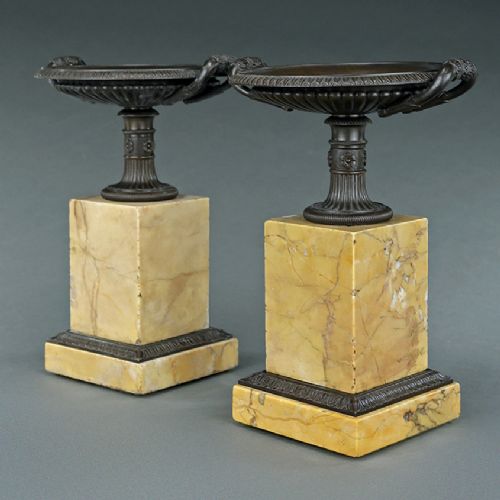
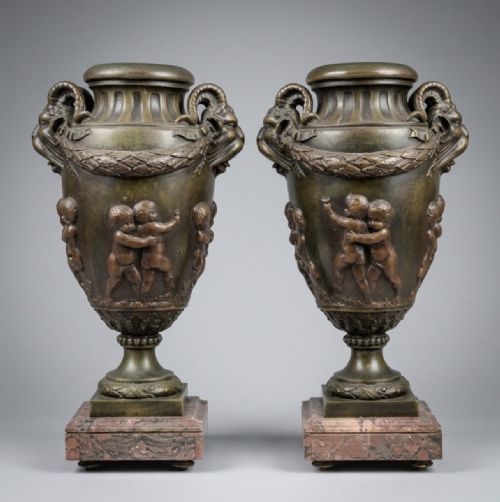
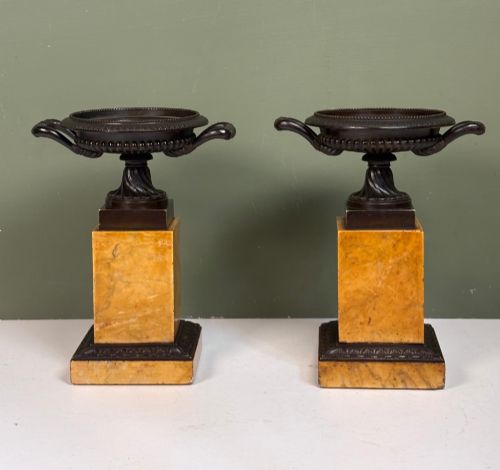
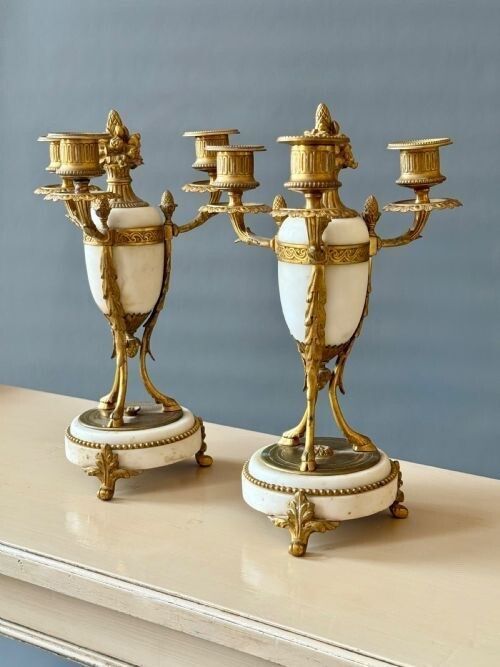
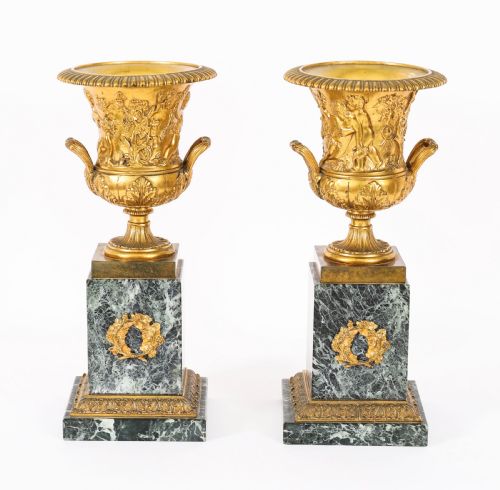
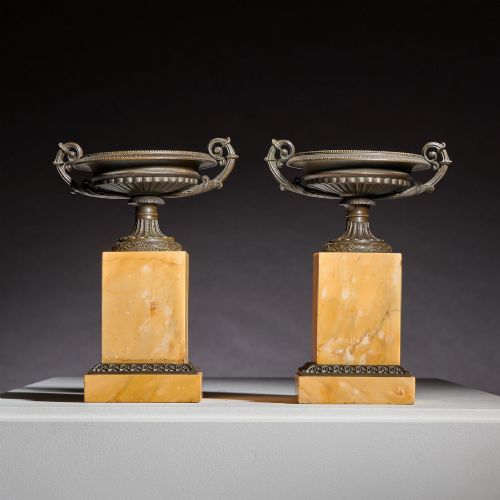
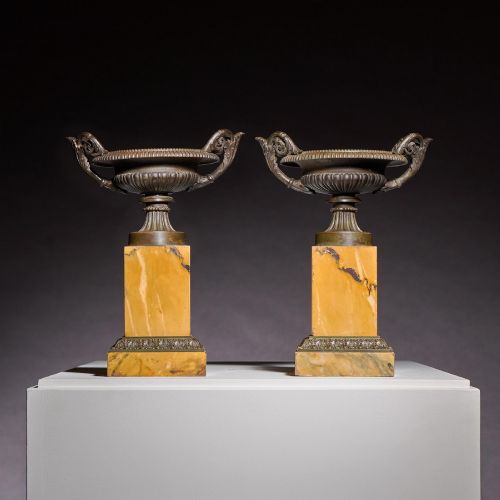
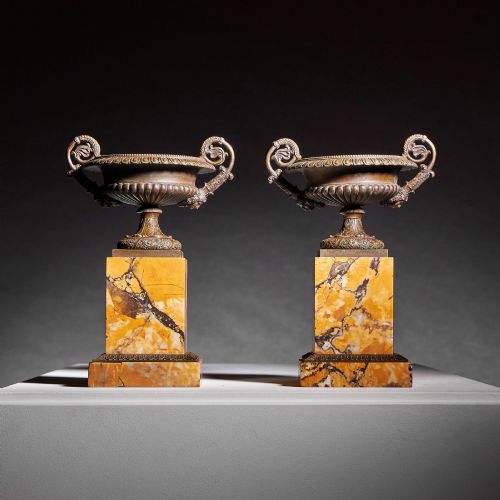
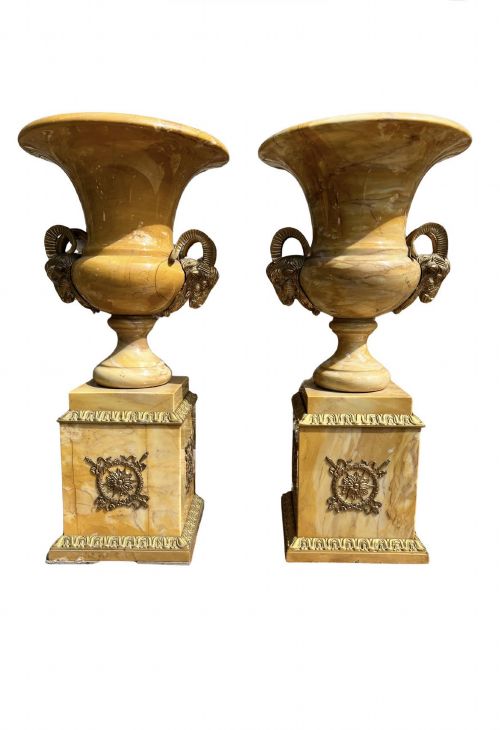
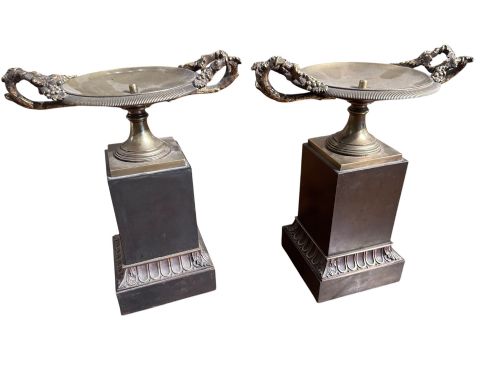
Pair empire urns are decorative vessels, tazzas and cassolettes created in styles such as French Empire, Regency, Neoclassical and Charles X. They draw heavily on classical antiquity, frequently taking the form of campana or amphora vases mounted upon square or plinth-style bases.
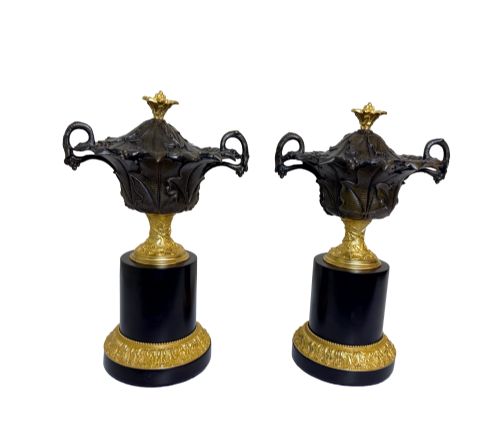
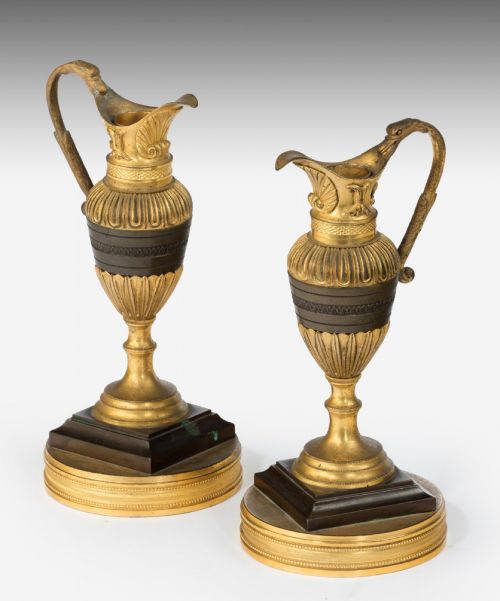
The version most commonly encountered on this page is the nineteenth-century French or Grand Tour bronze and marble example, often enhanced with gilt bronze or ormolu mounts. These objects frequently incorporate classical handles, such as rams' heads, reflecting classical architectural motifs.
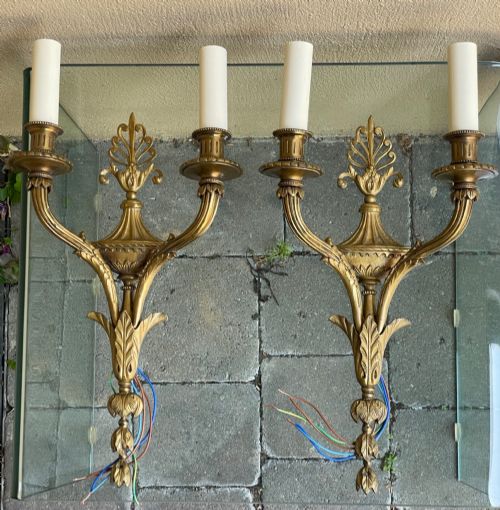
Beyond purely decorative urns, the category extends to related forms including table lamps, candleholders and compotes designed to serve both functional and ornamental roles in period interiors.
How they were made
The construction of these pieces relies on the combination of heavy cast metals and turned stone, joining patinated bronze, gilt bronze or ormolu with white marble, Siena marble, black marble or onyx bases.
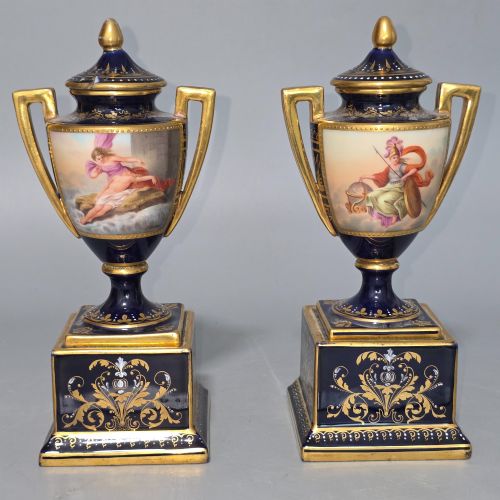
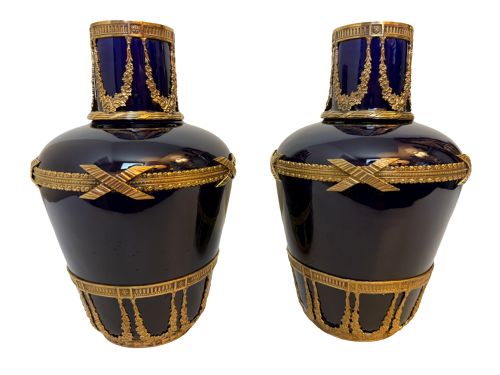
Foundries and workshops shaped the metal components through casting and chasing, applying fire gilding or patination, while ceramic examples utilised porcelain bodies from Paris, Vienna or Sèvres with hand-painted scenes and enamel details.
Listings feature items from the 19th Century, Regency, Charles X, and early 20th Century periods.
What varies in quality
Quality rests in the crispness of the bronze chasing and the depth of the gilding or patination, where finer examples display sharp relief in classical ornamentation and securely fitted mounts.
The choice of stone further distinguishes the range, with select pieces utilising dense Siena marble, white onyx or figured black marble paired with heavy, well-balanced metal fittings rather than lighter spelter alternatives.
F. Koller
The Pair Empire Urns Glossary
- Ormolu
- Gilded bronze produced by applying a mercury-gilding amalgam to cast bronze, creating a durable golden surface often found on Empire mounts.
- Campana urn
- A bell-shaped classical vessel with an everted rim and a pedestal foot, frequently rendered in bronze or marble.
- Cassolette
- A decorative vase or urn featuring a reversible lid that allows the piece to function either as a closed vessel or as a candleholder.
- Grand Tour
- The cultural journey undertaken by nineteenth-century travellers who acquired classical-style bronzes and marbles as souvenirs in Italy and France.
Pair Empire Urns: Frequently Asked Questions
What were pair empire urns originally used for?
These decorative objects served primarily as ornamental centrepieces on mantelpieces, sideboards and consoles within nineteenth-century drawing rooms. Certain variants like cassolettes doubled as functional holders for perfumes or candles.
Over time, many were adapted into lighting, converted into table lamps while retaining their classical silhouette and heavy metal mounts.
How do I distinguish bronze from spelter mounts?
Bronze provides a heavier weight and a cooler touch, holding sharper detail in the chased surface decoration. Spelter, a softer zinc alloy often seen on later or alternative nineteenth-century iterations, feels lighter and tends to show wear or rubbing along high points.
Examining the underside or the interior attachment points often reveals the darker, denser grain characteristic of cast bronze.
Where were most of these urns manufactured?
The majority originate from French workshops in Paris, following design vocabularies established during the Empire, Restauration and Charles X periods. Others were produced as Grand Tour souvenirs in Italy utilising local marbles such as Siena.
Porcelain variants frequently emerged from factories in Paris, Vienna and Sèvres, often featuring hand-painted classical motifs.
How should I clean marble and gilt bronze?
Dust surfaces gently with a soft, dry cloth to prevent accumulation in the crevices of the chased metal. Avoid commercial chemical cleaners or water on gilded surfaces and porous stones like marble, which absorb moisture easily.
Professional conservation advice is recommended if tarnish or grime requires more than light surface maintenance.