

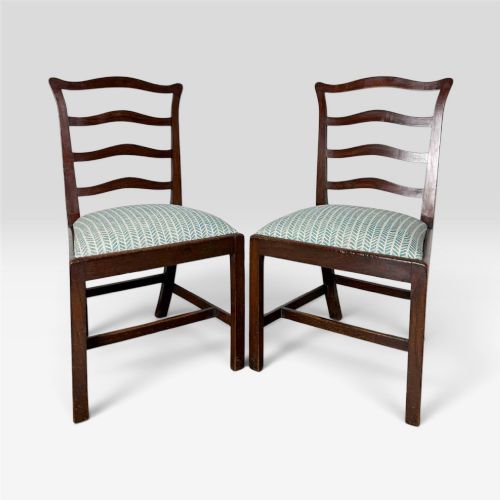
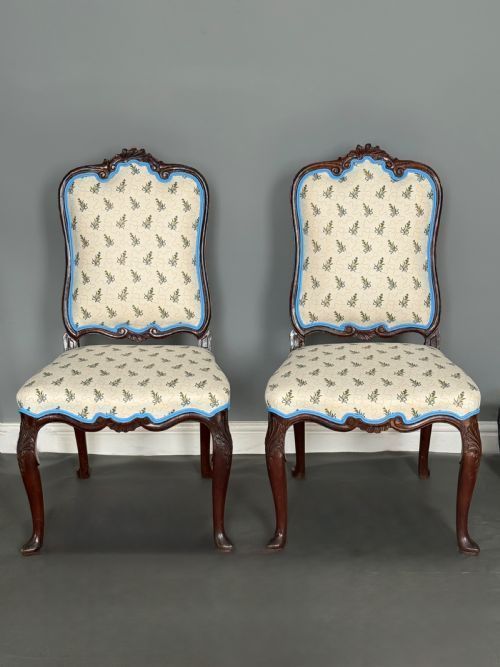
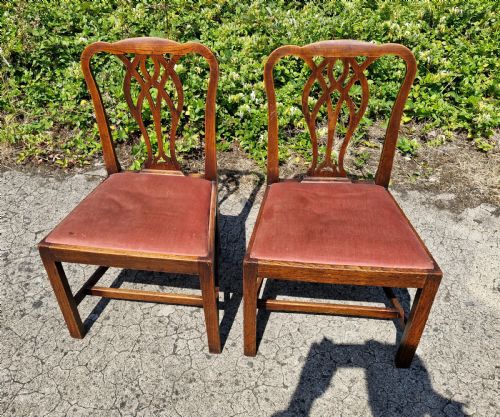
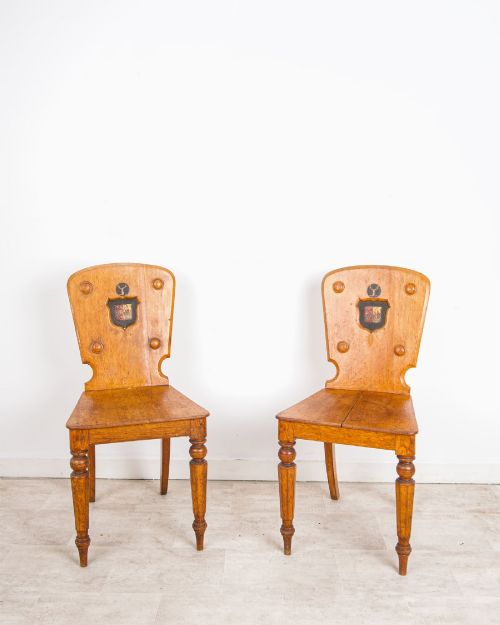


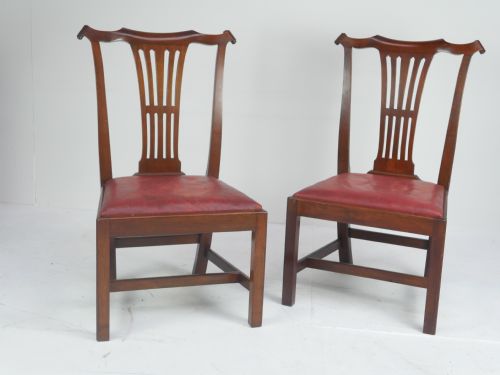

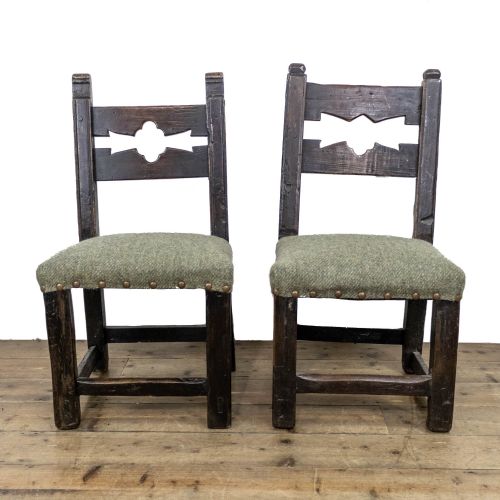


Pair Country Hall Chairs
These pair country hall chairs bring robust timber frames and regional character straight into modern hallways.
Pair Country Hall Chairs
A set of two robust seats intended for grand entranceways, passages or formal rooms, offering solid construction designed to withstand heavy daily use. The pair country hall chairs on this page span several centuries, featuring sturdy timber frames and regional craftsmanship from British and continental makers.
The selection ranges from early oak high back designs to elm Lancashire chairs, rush seated examples, and occasional armchairs in oak, ash and Cuban mahogany. Buyers frequently encounter nineteenth century pieces alongside eighteenth century variants and twentieth century revival styles.
Forms vary from simple side chairs to heraldic shield backs and panelled armchairs, reflecting both utilitarian function and decorative ambition. These seats provide practical seating while serving as strong decorative statements in traditional interiors.
How they were made
Constructed primarily from sturdy hardwoods such as oak, elm, ash and Cuban mahogany, these chairs rely on traditional joinery methods suited to heavy timbers. Craftsmen shaped solid wood components by hand, utilising pegged joints and turned elements to ensure lasting structural integrity.
Surfaces often feature hand carved details, particularly on heraldic shield backs and decorative panels found in later revival pieces. Upholstered variants incorporate traditional stuffing materials covered in cotton chintz, fabric or leather, secured with careful hand tacking.
Pair Country Hall Chairs Retail Price Guide 2026
Typical asking prices for pair country hall chairs among the pieces listed under this phrase on Sellingantiques today, from the lower quarter to the upper quarter. They describe what is for sale here now, not the wider market.
Listings feature oak, elm, ash and Cuban mahogany across periods spanning the eighteenth, nineteenth and twentieth centuries.
What varies in quality
The distinction between standard examples and finer pieces lies in the choice of timber and the depth of hand carving on the frame. Dense native hardwoods like oak and elm show superior grain figure, while Cuban mahogany versions demonstrate greater refinement in their proportions.
Originality of surface finish and the integrity of the structural joinery also determine the standing of each piece. Untouched patination on eighteenth century timber carries more weight than heavily restored surfaces or replaced elements.
The Pair Country Hall Chairs Glossary
- Elm
- A tough, interlocking native timber frequently used by country chair makers for seats and structural framing because it resists splitting under pressure. Its distinctive grain adds notable visual texture to regional pieces.
- Rush
- Dried marsh grass twisted into cords and hand woven to form durable, flexible seat pads. This traditional seating material appears frequently on provincial country chairs.
- Cuban Mahogany
- A dense, dark timber prized for fine cabinet making and decorative seating during the eighteenth century. It takes a high polish and shows rich grain patterns.
- Heraldic Shield Back
- A chair back carved in the shape of a coat of arms or shield, often seen on nineteenth century hall chairs intended to display family lineage. These backs serve as both structural support and decorative focal points.
- Side Chair
- An upright chair without arms, designed to stand against a wall or around a dining table when not in use. They form the majority of matching pairs found in domestic settings.
Pair Country Hall Chairs: Frequently Asked Questions
Where should I place these chairs?
These chairs suit entrance halls, landings, and large reception rooms where their upright profiles and decorative backs can be fully appreciated. They offer practical seating while functioning primarily as architectural accents in hallways or corridors.
Because pairs command visual symmetry, they look particularly striking placed on either side of a console table, doorway, or fireplace. Their durable timber construction ensures they withstand everyday passing use without difficulty.
How do I care for antique timber?
Maintain timber surfaces by applying natural beeswax periodically to nourish the wood and preserve the historic patination accumulated over centuries. Avoid placing chairs in direct sunlight or near active heat sources to prevent the wood from drying and cracking.
Dust regularly with a soft, dry cloth and ensure upholstered or rush elements remain dry. Gentle handling of joints prevents loosening over time.
How do I identify the wood types?
Oak and ash display prominent open grains and lighter natural tones, whereas elm exhibits a wild, interlocking grain pattern that resists splitting. Cuban mahogany appears darker and heavier, often showing a deep reddish brown hue with fine figure.
Close inspection of the grain under good light reveals the cellular structure typical of each species. Regional makers utilised whatever local hardwoods grew abundantly around their workshops.
What defines a hall chair?
Hall chairs were traditionally designed for entrance spaces, prioritizing upright posture and visual impact over long term lounging comfort. They frequently incorporate solid wood seats, carved wooden backs, and heraldic motifs rather than deep padding.
Their narrow profiles allowed them to sit flat against hallway walls without obstructing passage. Surviving pairs demonstrate how domestic architecture influenced seating design in large country houses.