


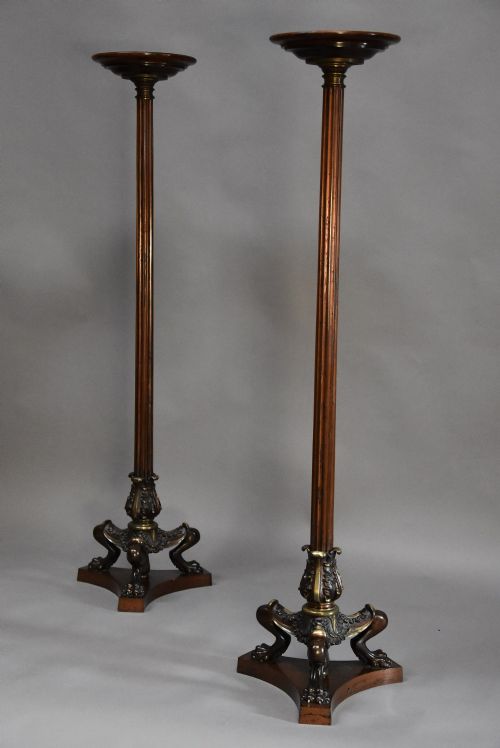


Pair Classical Plant Pedestals
Pair classical plant pedestals elevate urns and sculpture with architectural presence, grounding a room through balanced proportion and historic form.
Pair Classical Plant Pedestals
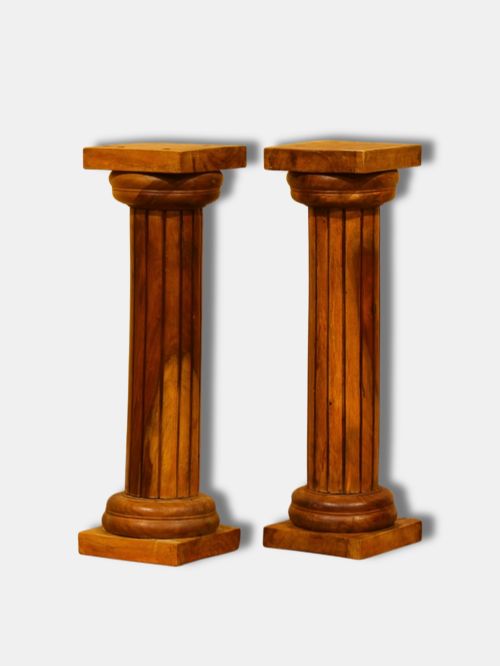
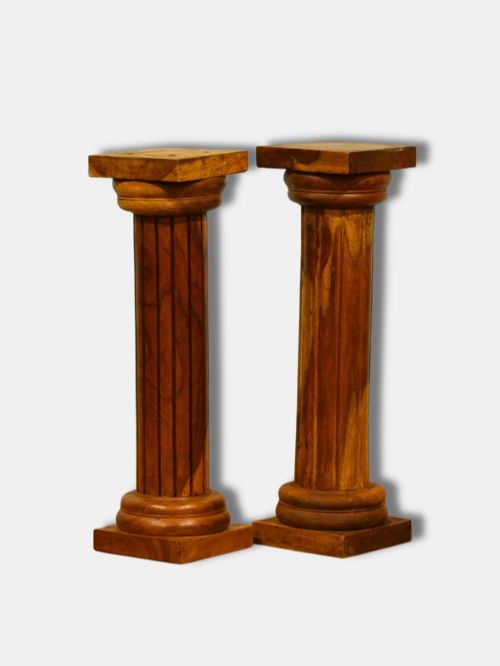
Pair classical plant pedestals serve as sturdy elevations for botanical displays and decorative objects, drawing on architectural forms from antiquity. When searching for pair classical plant pedestals, buyers encounter matching columns and stands designed to flank doorways, fireplaces or windows with symmetrical impact.
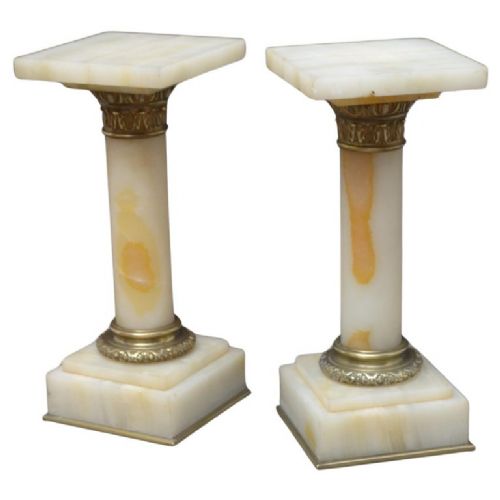
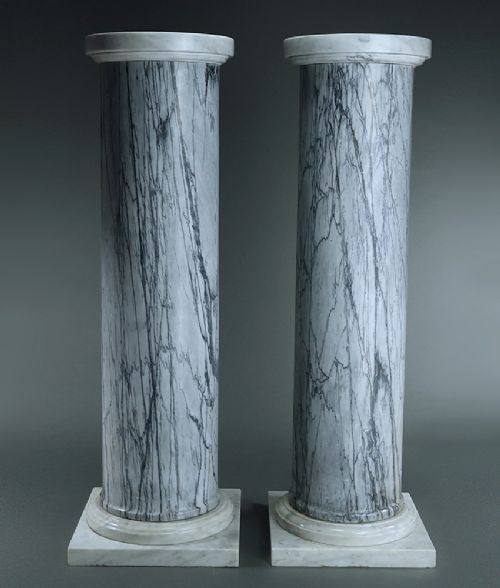
The materials span timber, stone and metal, reflecting periods from the early nineteenth century through the 1930s. Mahogany and hardwood examples sit alongside variegated marble, onyx, bronze and cast iron variations.
Forms include columnar pedestals, torcheres and architectural capitals. Many incorporate classical motifs such as Corinthian details, giltwood accents and ormolu collars.
What Varies in Quality
The refinement of the carving separates standard production from exceptional work, particularly in the crispness of acanthus leaves and fluting. Depth of relief and hand-finished detail indicate the skill invested by the maker.
Material selection dictates much of the standing power, where choice marbles with rich figure or finely figured mahogany timbers elevate a piece. Solid construction methods ensure stability for heavy urns or sculptures placed upon the top surface.
Cohesion between matched elements defines the success of a pair, ensuring height, turning profile and patina align across both columns.
Pair Classical Plant Pedestals Retail Price Guide 2026
Typical asking prices for pair classical plant pedestals among the pieces listed under this phrase on Sellingantiques today, from the lower quarter to the upper quarter. They describe what is for sale here now, not the wider market.
Materials span natural stone, hardwood, brass, cast iron and giltwood across Neoclassical and Victorian styles.
The Pair Classical Plant Pedestals Glossary
- Torchere
- A tall, slender stand designed to support a light or decorative object. These raised wooden or metal columns lift displays above floor level.
- Neoclassical
- A style reviving classical Roman and Greek architectural motifs. Pieces show clean lines, fluted columns and restrained ornamentation.
- Ormolu
- Gilded bronze mounts applied to furniture and stone columns. This decorative technique adds metallic contrast to timber and marble surfaces.
- Campana
- A bell-shaped garden urn or vessel form. These classical containers frequently sit atop pedestals.
- Corinthian
- An architectural order defined by ornate capitals decorated with acanthus leaves. Columns bearing this capital provide formal vertical support.
Pair Classical Plant Pedestals: Frequently Asked Questions
What materials should I expect to find?
The selection includes dense hardwoods like mahogany, walnut and satinwood, frequently paired with brass or ormolu mounts. Stone alternatives feature prominently, spanning marble, onyx, alabaster and terracotta.
Metal examples include cast iron and bronze columns designed for both indoor and garden placement.
How do I distinguish between periods?
Nineteenth-century examples often display heavy mahogany construction with architectural detailing reflecting Regency or Victorian tastes. Early twentieth-century pieces incorporate French influences, varied marbles and simpler columnar forms.
Stylistic cues like Corinthian capitals and giltwood decoration point toward specific revival periods.
Are these items stable enough for heavy planters?
Solid stone columns and heavy cast iron urns provide inherent stability due to their weight. Timber pedestals utilise wide bases and sturdy internal construction to bear substantial loads.
Checking the width of the top surface and base ensures proper weight distribution for large displays.