


Pair Ceramic Candlesticks
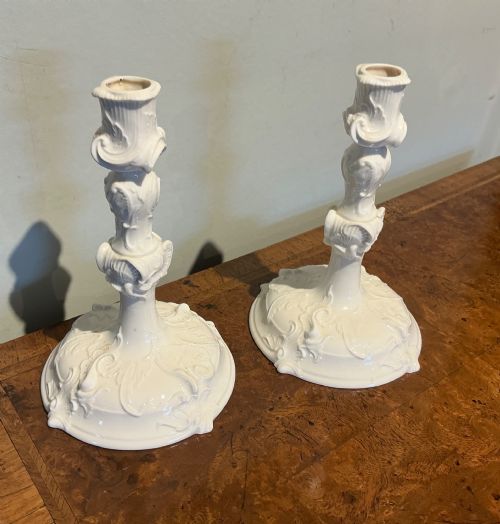
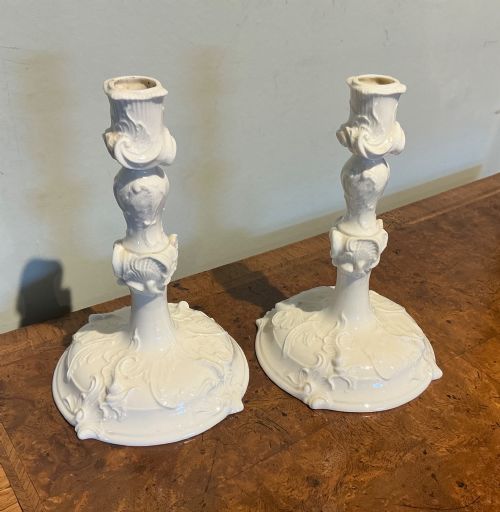
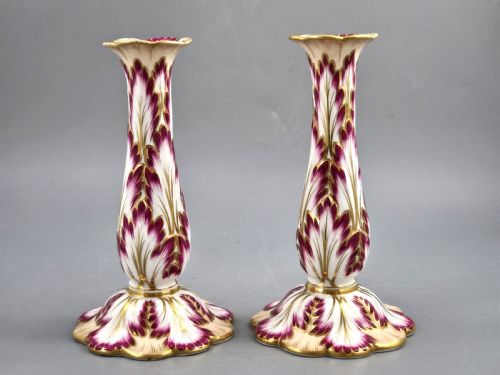
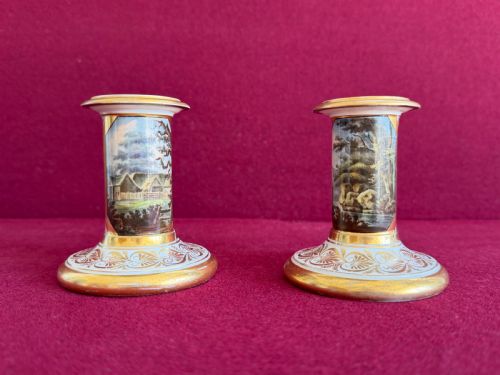
These pair ceramic candlesticks bring sculptural elegance and period charm to a table, offering matched symmetry forged by master European potteries.
Pair Ceramic Candlesticks
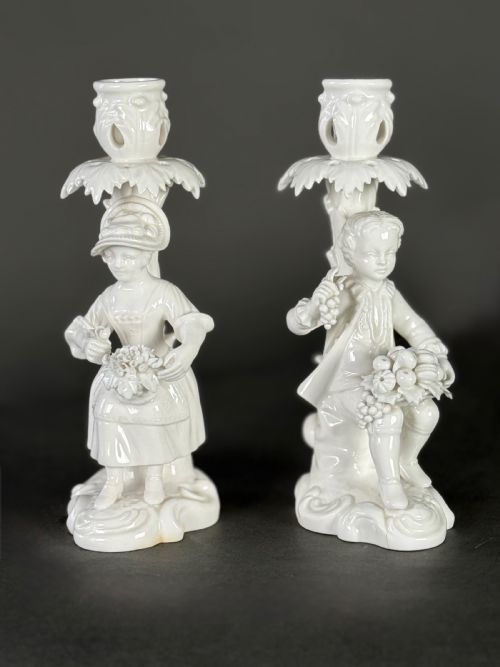
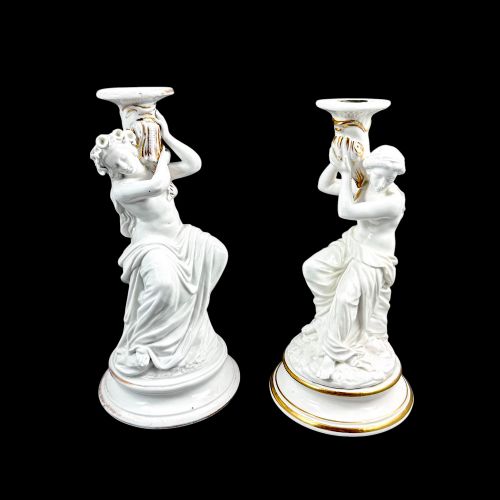
A buyer seeking pair ceramic candlesticks encounters creations from notable eighteenth, nineteenth, and early twentieth-century factories across Britain and continental Europe. These pieces take the form of utilitarian lighting holders, elaborate figural groups featuring putti or musicians, and botanical designs adorned with foliage.
The selection on this page leans heavily toward porcelain examples from English manufactories like Derby and Worcester alongside German works from Meissen and Sitzendorf. Styles range from restrained Georgian symmetry to ornate Rococo Revival curves and Victorian figural compositions.
Materials and Technique
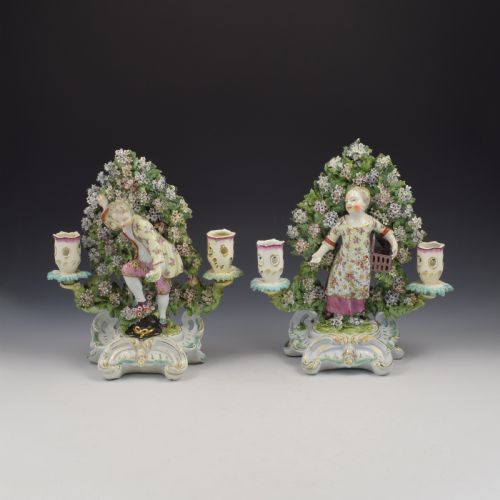
Manufacturers utilised hard and soft paste porcelain, ironstone, and jasperware, shaping them into elaborate figural or columnar bodies. Many pieces incorporate delicate applied porcelain foliage known as bocage, requiring immense skill to model before firing.
Surface decoration relies on hand-painted enamel colours, enriched with gilding, gold leaf, and glossy or matte glazes. Brass fittings occasionally integrate with the ceramic bodies, particularly in Victorian and Aesthetic Movement designs.
Listings feature porcelain, ironstone, and jasperware spanning the eighteenth, nineteenth, and early twentieth centuries.
Judging Quality
The distinction between ordinary production and superior execution rests on the crispness of the modelled detail, particularly in figural expressions and intricate bocage work. Hand-painted enamel precision and the controlled application of gilding separate workshop standards.
Preservation of fragile applied elements dictates overall standing, as does the clarity of factory marks stamped or painted on the underside. Early period examples retain historical importance through their specific glaze formulas and unblemished matching sconces.
Nymphenburg·Ridgway·Barr Flight And Barr·Derby·Royal Worcester·Wedgwood·Sitzendorf·Chelsea·Minton·Meissen·Doulton Lambeth·Decoro England·Royal Bayreuth
The Pair Ceramic Candlesticks Glossary
- Bocage
- An applied background of leaves and flowers modelled in porcelain, frequently framing figures on eighteenth-century candlesticks. This delicate technique required supreme dexterity from the potter.
- Hard paste porcelain
- A dense, durable ceramic composed of kaolin and petuntse, fired at very high temperatures. European factories adopted this formula to produce crisp forms.
- Jasperware
- A fine-grained, unglazed stoneware developed by Wedgwood, typically featuring white relief ornaments against a coloured background. Yellow and multi-colour varieties appear in later periods.
- Sconce
- The metal or ceramic cup at the top of a candlestick designed to catch dripping wax and hold the taper firm. Matching original sconces elevate the integrity of a pair.
- Putto
- A plump, winged infant figure, often sculpted as a musician or gardener on figural candlesticks. These decorative motifs derive from classical mythology.
Pair Ceramic Candlesticks: Frequently Asked Questions
How are pair ceramic candlesticks cleaned safely?
Dust surfaces gently using a soft, dry brush to protect delicate applied floral elements and subtle enamel paintwork.
Avoid submerging pieces in water, particularly where gilt highlights or old repairs might be compromised by moisture.
Were these candlesticks used for daily lighting?
Wealthy households utilised such decorative pairs for ambient illumination in drawing rooms and dining spaces during evening gatherings.
Finer porcelain examples frequently served as decorative mantel ornaments rather than utilitarian light sources.
How do I identify eighteenth-century Derby pieces?
Early Derby production often displays characteristic patch marks on the base left by manufacturing supports during kiln firing.
Stylistic markers include lively figural modelling and elaborate bocage backgrounds typical of the mid-Georgian period.
What does figural mean in pottery?
Figural ceramics incorporate human figures, animals, or allegorical characters directly into the functional design of the object.
On candlesticks, these figures often represent seasons, musicians, or children acting out pastoral scenes.