

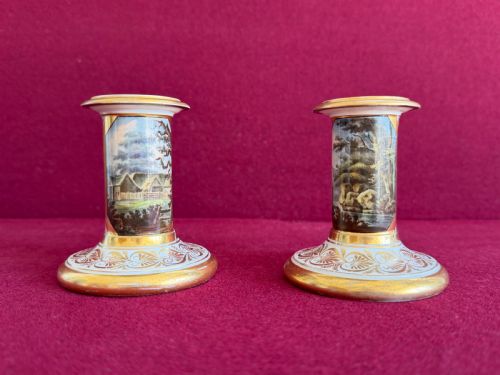


Ceramic Taper Candlesticks
These ceramic taper candlesticks are practical table lighting shaped from porcelain, ironstone, and stoneware across multiple centuries.
Ceramic Taper Candlesticks
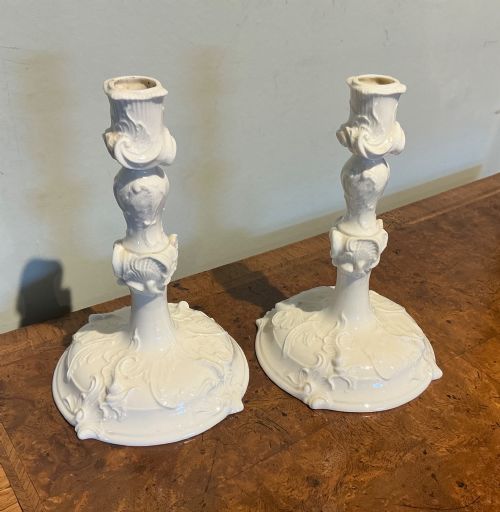
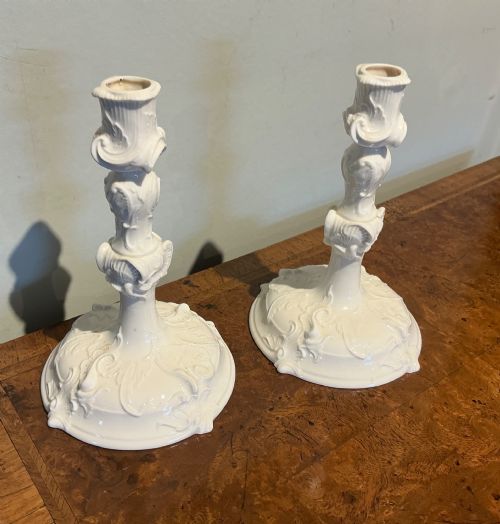
Ceramic taper candlesticks appear in forms ranging from Georgian porcelain pairs to Victorian art pottery and twentieth-century stoneware. Buyers seeking ceramic taper candlesticks encounter items shaped in styles such as Regency, Rococo Revival, Neoclassical, and Chinese Export.
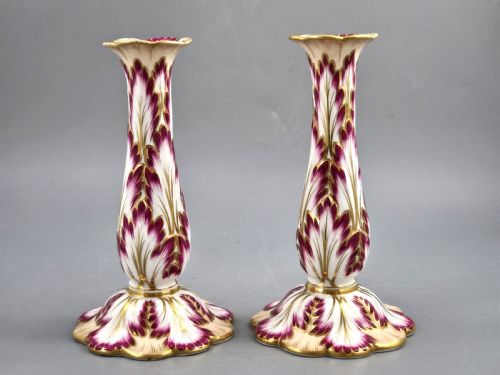
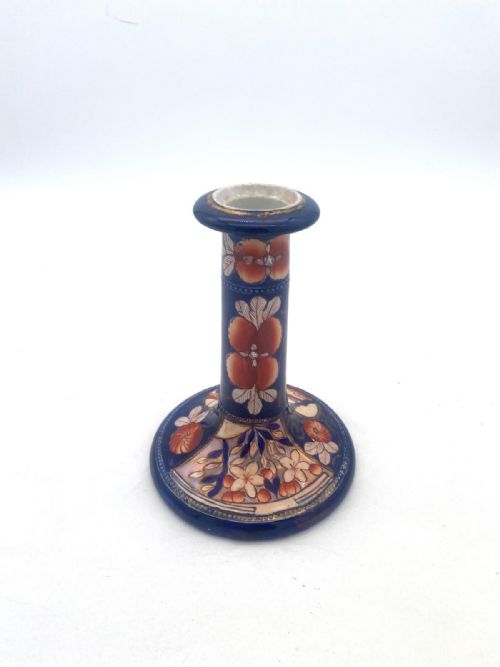
Forms vary from figural elephant designs to foliage patterns, Schoolhouse patterns, Japan fence patterns, and hunting fox motifs. These objects combine utilitarian lighting functions with the decorative styles of their respective periods.
Materials and construction
Makers utilised ceramic bodies such as porcelain, ironstone ceramic, and stoneware, frequently applying surface glazes and enamel details. Certain pieces incorporate applied gold leaf decoration to highlight moulded contours and patterns.
Firing techniques and mould production allowed workshops to shape intricate foliage, figural animals, and classical architectural details. The combination of durable ironstone or delicate porcelain with hand-applied enamel painting defined the manufacturing process.
Ceramic Taper Candlesticks Retail Price Guide 2026
Typical asking prices for ceramic taper candlesticks among the pieces listed under this phrase on Sellingantiques today, from the lower quarter to the upper quarter. They describe what is for sale here now, not the wider market.
Hunting foxes and porcelain elephants keep watch over the candle flames.
Quality and execution
The sophistication of the moulded form and the precision of the enamel painting determine the visual standard of each piece. Superior examples display crisp definition in Rococo scrollwork, botanical foliage, or figural modelling.
The consistency of the glaze application and the registration of transfer-printed or hand-painted patterns distinguish finer works from simpler production. Factory marks, pattern numbers, and established maker attributions also add distinct context to individual items.
Nymphenburg·Masons Ironstone·Ridgway·Barr, Flight & Barr Worcester·Doulton Lambeth·Wedgwood·Royal Bayreuth
The Ceramic Taper Candlesticks Glossary
- Porcelain
- A fine, white, vitrified ceramic material fired at high temperatures. It offers a smooth, translucent surface suitable for detailed enamel painting.
- Ironstone ceramic
- A dense, durable type of earthenware patented in the nineteenth century. It provides strength while allowing for heavy enamelling and transfer printing.
- Enamel
- Coloured vitreous glass fused to the ceramic surface through firing. It provides vibrant decoration across floral and figural patterns.
- Regency
- A stylistic period spanning the early nineteenth century. It draws heavily on classical Greek, Roman, and Chinese Export design elements.
Ceramic Taper Candlesticks: Frequently Asked Questions
What are ceramic taper candlesticks?
These are small lighting devices designed to hold slender taper candles, shaped from materials such as porcelain, ironstone, and stoneware.
Makers produced them in various stylistic periods, incorporating hand-painted enamels, moulded foliage, and figural subjects.
How were these candlesticks used?
They served to hold thin wax tapers for illumination on desks, dressing tables, and dining surfaces during the eighteenth and nineteenth centuries.
Their compact size made them portable light sources for moving between rooms before electric lighting became common.
How can I tell the period?
Dating relies on stylistic clues such as Neoclassical, Rococo Revival, or Regency forms, alongside specific maker marks and ceramic bodies.
Ironstone and porcelain compositions shifted across the eighteenth, nineteenth, and early twentieth centuries, reflecting changing manufacturing techniques.
Are these pieces sold as pairs?
Many listings comprise matched pairs, though individual single candlesticks also appear in the selection.
Matching pairs preserve the symmetrical arrangement intended for mantelpieces and side tables during the Georgian and Victorian eras.
What patterns are common on them?
Common decorative motifs include foliage, Schoolhouse patterns, Japan fence designs, and figural subjects like hunting foxes and elephants.
Factories applied these designs using underglaze printing, enamel painting, and moulded relief work.