

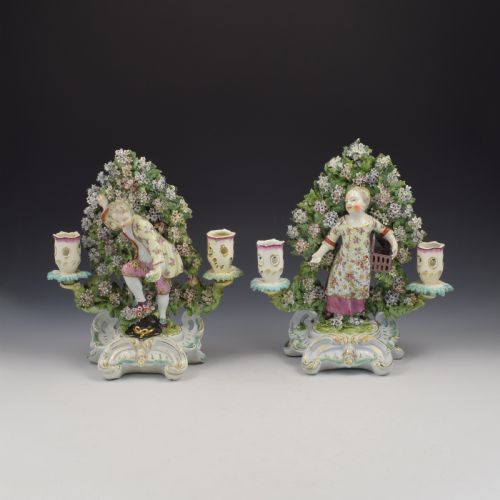


Floral Ceramic Candleholder
These floral ceramic candleholders bring sculpted porcelain blossom and hand-painted colour straight into a room, offering both practical light and figurative charm.
Floral Ceramic Candleholder
A floral ceramic candleholder combines functional lighting with intricate botanical modelling, frequently taking the form of figural candlesticks or multi-branched candelabra. The listings here present pieces spanning the eighteenth and nineteenth centuries, including items from the Georgian and Regency eras alongside later nineteenth-century manufacturing.
Makers often integrated naturalistic foliage and applied floral elements around central figures, such as children, gardeners, or allegorical subjects. These items range from single chambersticks designed for bedside use to large, imposing candelabra meant for formal dining tables.
How they were made
Potters shaped hard-paste porcelain and bone china into elaborate forms, often embellishing the body with delicate hand-modelled bocage and applied petals. Artisans then applied enamel colours and gold leaf accents by hand before firing the ceramics to fix the glaze.
Gilt and gilding details highlight the moulded contours of the rococo revival and regency styles, adding rich contrast to the glazed porcelain surfaces and hand-painted floral motifs.
Floral Ceramic Candleholder Retail Price Guide 2026
Typical asking prices for floral ceramic candleholder among the pieces listed under this phrase on Sellingantiques today, from the lower quarter to the upper quarter. They describe what is for sale here now, not the wider market.
What varies in quality
Proportion and balance across paired items also dictate merit, as matched sets require even symmetry in both the ceramic body and the surrounding floral decoration.
Derby Porcelain·Spode Porcelain·Minton·Meissen·Sitzendorf·Mason's Ironstone China
The Floral Ceramic Candleholder Glossary
- Bocage
- A background of applied porcelain leaves and flowers that frames figural groups on eighteenth and nineteenth-century candlesticks. This leafy screen mimics natural foliage and adds tactile depth to the piece.
- Candelabra
- A branched candlestick holding multiple candles on a single base. These large pieces often stand as centrepieces on dining tables.
- Chamberstick
- A low candlestick fitted with a handle and a shallow pan to catch drips of wax. People used them to light their way through bedrooms and corridors at night.
- Gilt
- A thin layer of gold applied to the surface of porcelain or metal mounts. It provides a bright metallic contrast to the painted enamel colours.
- Hard-paste porcelain
- A durable ceramic composition fired at very high temperatures using kaolin and petuntse. It creates a bright white, vitrified body that accepts fine enamel painting.
Floral Ceramic Candleholder: Frequently Asked Questions
How do I clean floral ceramic candleholders?
Use a soft, dry brush to remove dust from delicate applied petals and intricate bocage work.
Avoid immersing antique glazed porcelain in water, especially pieces with exposed enamel painting or gold leaf.
Were these candleholders used daily?
Many chambersticks served practical nightly duties in bedrooms, while grander figural candelabra graced formal reception rooms.
Examples featuring elaborate floral bocage often spent more time on display than in active lighting service.
How do I date an antique porcelain candleholder?
Examine the style indicators, such as rococo revival curves or regency forms, alongside the manufacturing material like bone china or hard-paste porcelain.
Maker marks and baseline factory periods provide further chronological context for nineteenth-century items.
Can I still burn candles in them?
Standard taper candles fit into the sockets, but care must be taken with heat near fragile porcelain flowers and painted enamel.
Many collectors prefer to use modern dripless candles to protect the antique glaze and delicate surfaces.