

Pair Bronze Table Lights
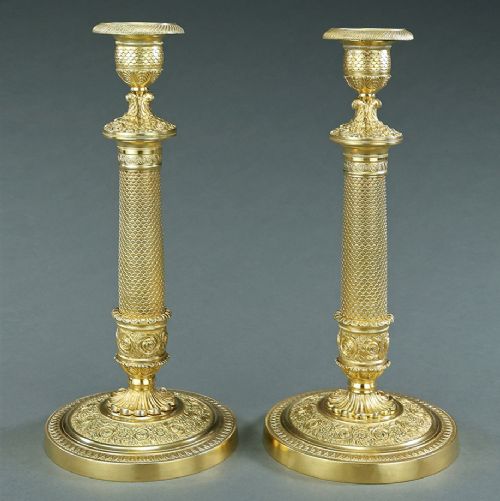
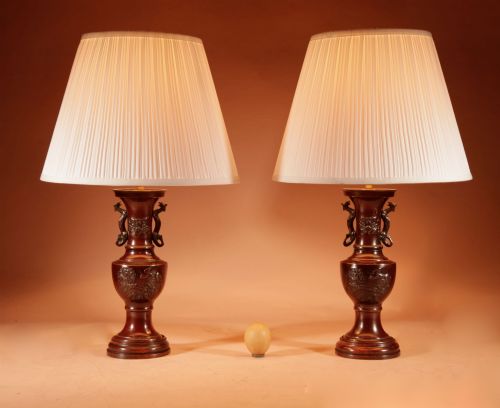
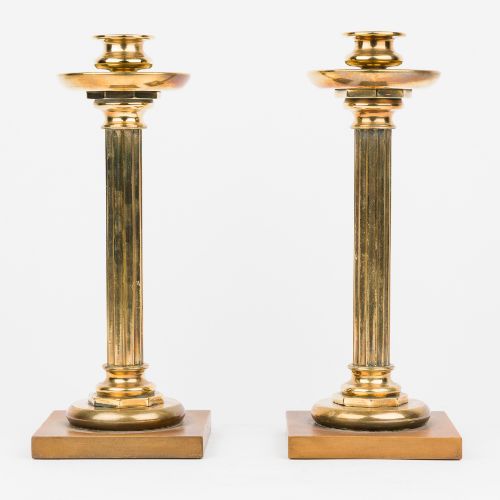
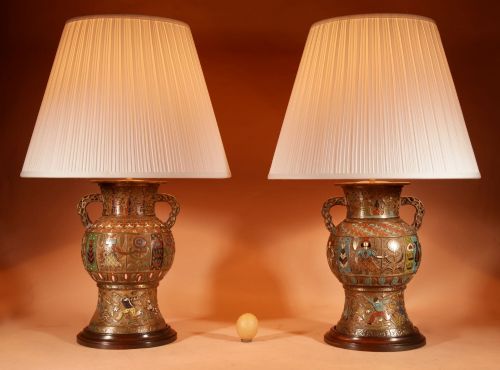
These pair bronze table lights bring balanced illumination and period presence to a room, spanning French Empire, Regency, and Art Deco designs.
Pair Bronze Table Lights
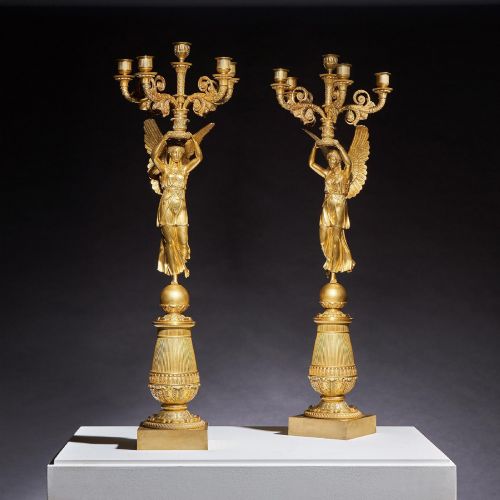
When you search for pair bronze table lights, you encounter matching sets of lighting fixtures and converted candleholders built from copper alloys. These items originate predominantly from nineteenth-century French workshops, alongside Victorian British pieces and twentieth-century Japanese imports.
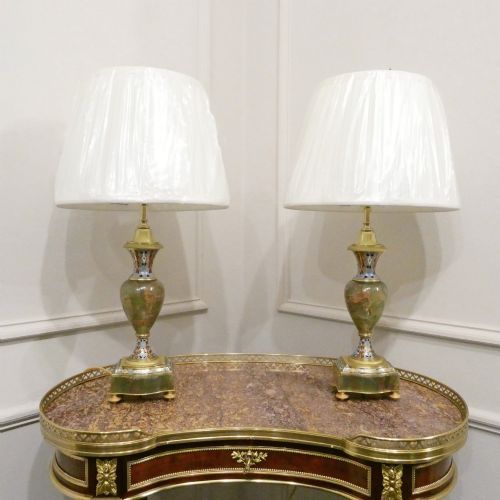
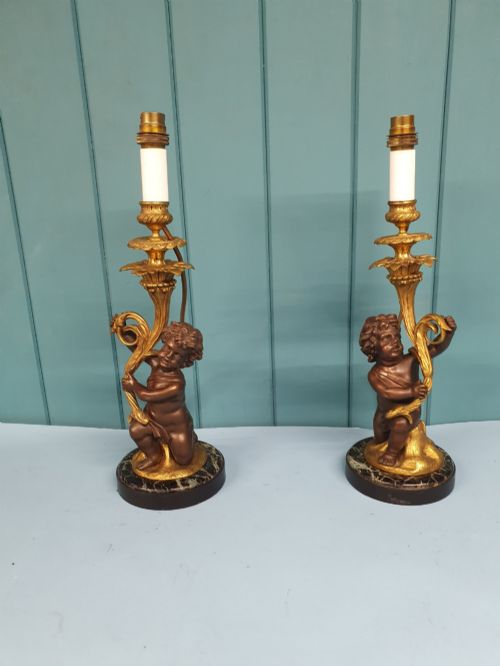
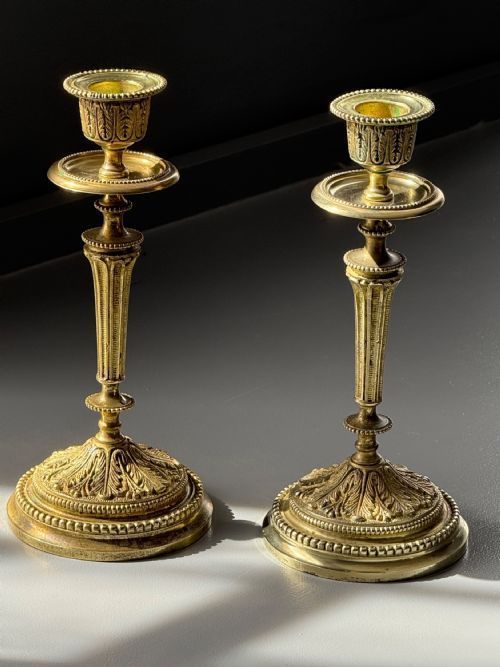
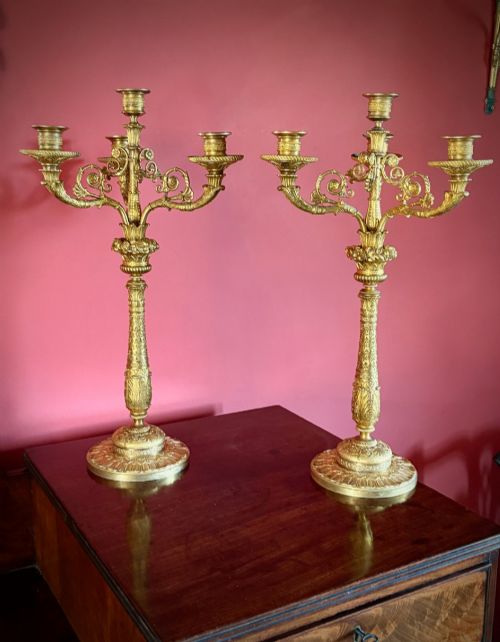
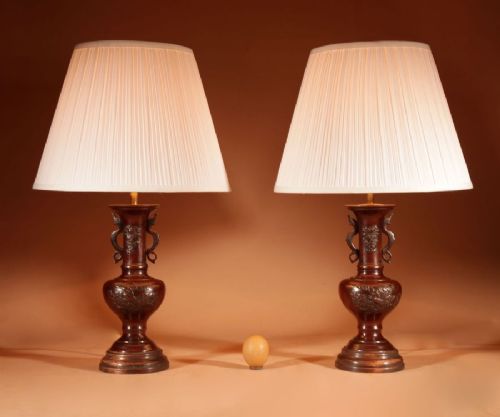
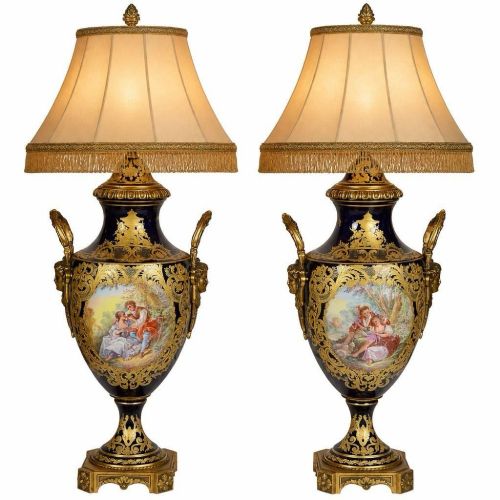
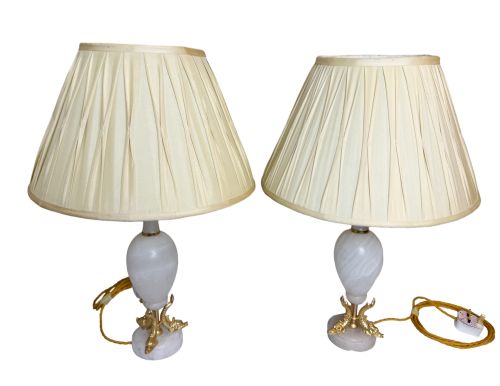
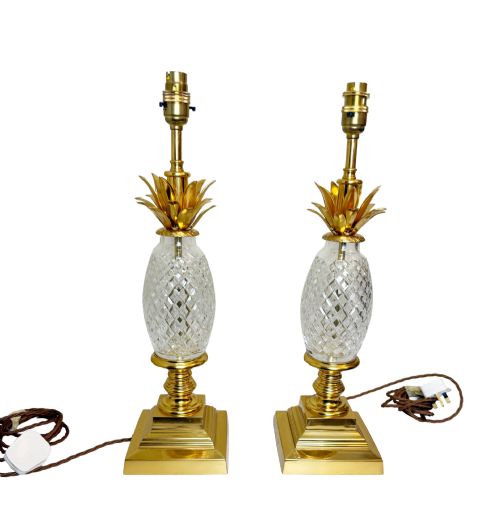
The selection on this page consists largely of candelabra, candlesticks adapted for electricity, and column lamps. Many retain their original function as candleholders before later conversion, while others incorporate porcelain, marble, or crystal bases.
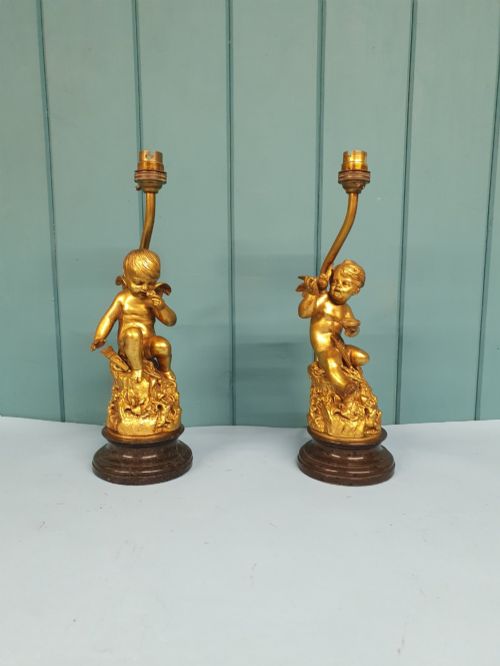
French Neoclassical, Louis XVI style, and Empire revival designs dominate the selection, bringing classical ornamentation and figural motifs to domestic interiors. Art Deco and Meiji period examples offer alternative silhouettes ranging from geometric simplicity to detailed oriental casting.
What varies in quality
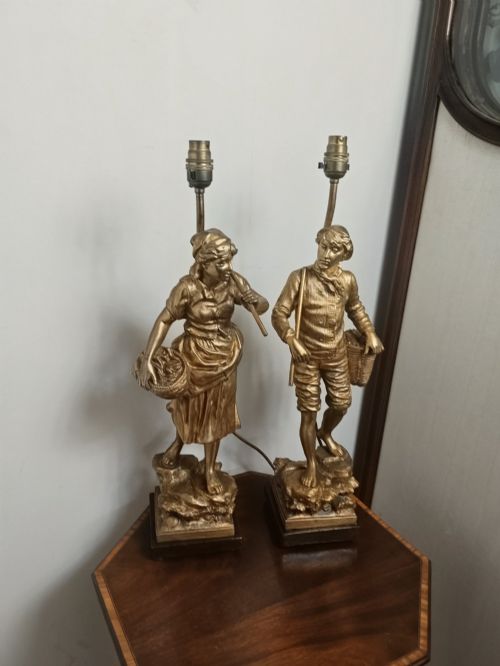
Material combination and weight dictate the tier of the piece, with heavy fire-gilded ormolu mounted on solid marble bases sitting at the upper end of the scale. Lesser items utilise lighter brass alloys, cold-painted spelter, or simpler patinated finishes without secondary gilding.
Pierre Philippe Thomire·E Rousseau·Rabiat
The Pair Bronze Table Lights Glossary
- Ormolu
- Gilded bronze produced by applying a mixture of mercury and gold to the metal surface and heating it until the mercury vaporised. This technique creates a durable golden finish characteristic of French decorative arts.
- Champleve
- An enamelling technique where troughs or cells are hollowed out of a metal surface and filled with vitreous enamel before firing. It appears frequently on nineteenth-century clock sets and matching lighting pairs.
- Cassolette
- A decorative vessel shaped like a vase or urn, often featuring a reversible lid that functions as a candleholder. In nineteenth-century French interiors, these dual-purpose objects sat on mantelpieces and tables.
- Spelter
- An alloy of zinc and lead used as a cheaper alternative to bronze for figural castings. It takes paint and patination well but lacks the structural strength and weight of genuine copper alloys.
- Retour d'Egypte
- A French design style inspired by Napoleon's campaign in Egypt, incorporating sphinxes, pharaohs, and lotus motifs. This aesthetic heavily influenced furniture and decorative metalwork during the early nineteenth century.
Pair Bronze Table Lights: Frequently Asked Questions
How do I wire antique candleholders safely?
Conversion usually involves running a cord through the central channel of the candlestick or utilising a custom brass adapter that sits in the socket without drilling the metal. Professional electricians ensure the internal wiring matches modern standards while preserving the external structure.
Using low-heat LED bulbs prevents thermal damage to nineteenth-century materials like lacquered bronze, painted porcelain, or delicate marble components.
Were these always electric lamps?
Almost all listings started life as oil lamps, rush holders, or candleholders before receiving electrification in the twentieth century. The conversion process often utilised the existing central aperture where the candle pricket or burner once sat.
Checking the base or stem reveals whether a channel was created originally for a wick or added later during a twentieth-century workshop adaptation.
How do I clean patinated bronze safely?
Dusting with a dry, soft bristle brush removes everyday particles from the recessed details of cast ornamentation. Avoid abrasive metal polishes that strip away historical patination or damage the underlying gilt layer.
Applying a microcrystalline wax periodically protects the metal surface from atmospheric moisture and handling marks without altering the colour.
What is the difference between ormolu and brass?
Ormolu is a mercurial gold finish applied to a bronze substrate, whereas brass is an alloy composed primarily of copper and zinc. Brass displays its own yellow metal colour throughout, while ormolu exhibits a deep, rich gold layer over a darker base metal.
Testing the weight and observing wear points reveals the underlying composition, as brass is generally lighter and lacks the warm lustre of historic fire gilding.