




Japanese Bronze Dragon Vases
These japanese bronze dragon vases bring the formidable energy of Meiji period metalwork directly to your interior.
Japanese Bronze Dragon Vases
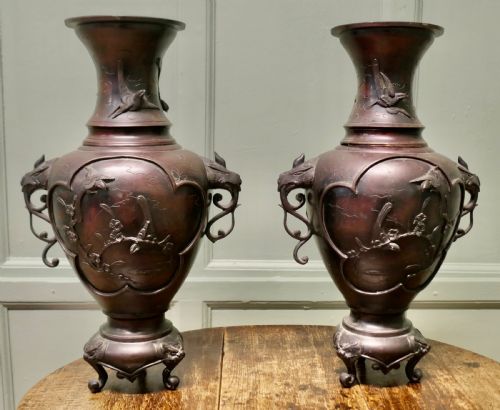
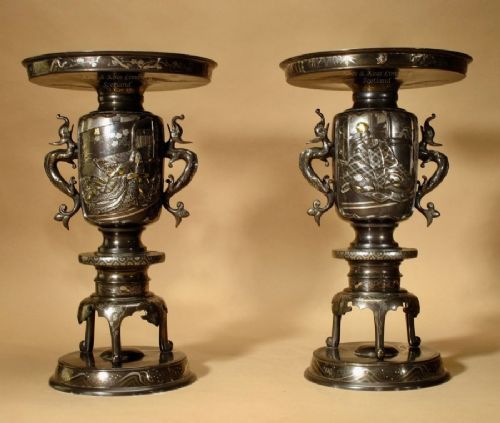
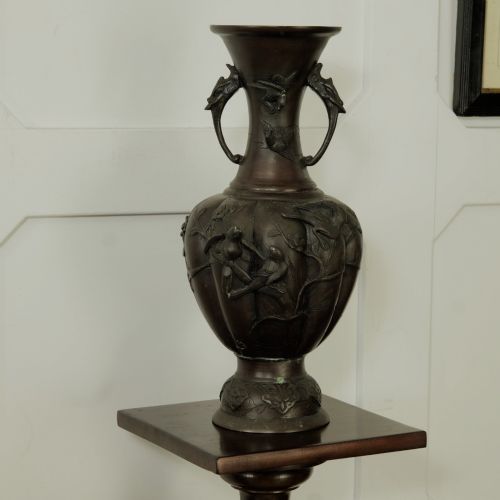
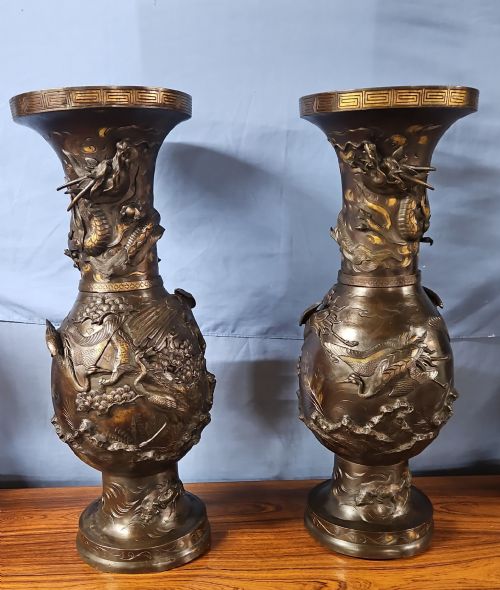
When you search for japanese bronze dragon vases, you encounter heavy metal vessels originating largely from the late nineteenth century and the Meiji period. These pieces frequently manifest as grand decorative vases, impressive pairs, or substantial urns designed to command attention in a room.
The specimens most commonly met on this page date from the Victorian era up through the early twentieth century. Many carry the dynamic forms of coiled dragons wrapped around the body, sometimes accompanied by matching table lamps or garden vessels.
How they were made
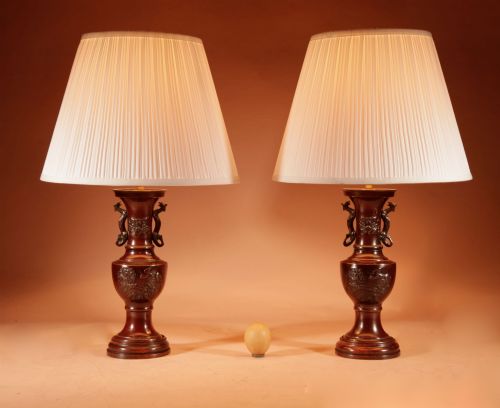
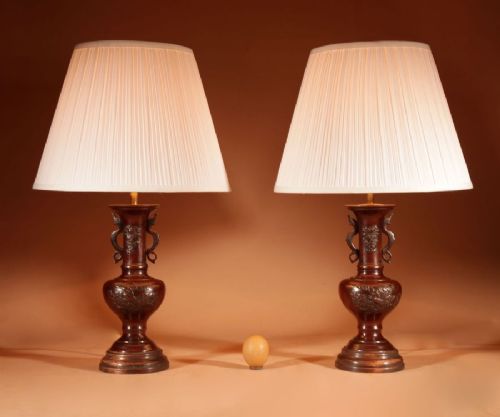
Makers integrated various patination methods to achieve deep, dark tones on the bronze surfaces, contrasting with bright metallic highlights. Some examples incorporate supplementary wooden stands or fabric elements suited to later adaptations as table lamps.
What varies in quality
The distinction between standard vessels and exceptional items rests heavily on the crispness of the casting and the depth of the dragon relief. Pieces featuring sharp, undercut details and precise chasing demand greater skill than softer, simpler castings.
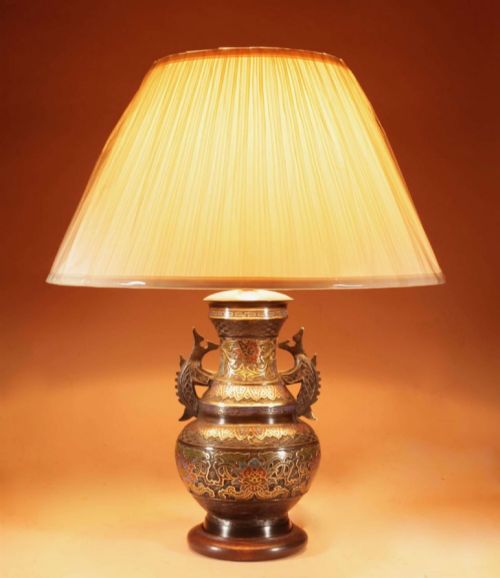
Surface finish further separates the tiers of production, particularly the precision of the gold inlay and the clean application of champlevé enamel. Monumental scale and matched pairs also elevate a piece above standard single vases.
The Japanese Bronze Dragon Vases Glossary
- Meiji Period
- The era in Japanese history spanning from 1868 to 1912, noted for a surge in artistic metalwork exported to the West. This period produced the vast majority of bronze dragon vases found on the market today.
- Champlevé
- An enamel technique where artists hollowed out troughs in the bronze metal surface to receive vitreous enamel pastes before firing. This method added vibrant colour accents to the metallic body.
- Patinated Bronze
- Bronze treated with chemical solutions to produce a specific surface colour and aged appearance. Makers used this process to enhance the visual depth of dragon motifs.
- Usubata
- A specific type of Japanese bronze vase traditionally utilised for flower arrangement, featuring a broad flat rim. These forms occasionally appear among large garden urns and decorative vessels.
- Archaistic
- A stylistic choice where makers deliberately referenced ancient Chinese or Japanese ritual bronzes in their new designs. These pieces borrow archaic vessel shapes while retaining Meiji period manufacturing techniques.
Japanese Bronze Dragon Vases: Frequently Asked Questions
How were japanese bronze dragon vases used?
These heavy metal vessels functioned primarily as ornamental display pieces in traditional Japanese interiors and later in Western drawing rooms.
Over time, many of the larger vases were converted into table lamps or utilised as monumental garden temple urns.
How do I date a bronze vase?
Examining the style of the casting, the nature of the patination, and any associated historical periods provides the primary clues for dating.
Most examples bearing detailed dragon motifs connect directly to the Meiji period spanning the late nineteenth and early twentieth centuries.
Are these vases always Japanese?
The pieces listed under this specific description originate from Japan, often created during the height of the Meiji period export market.
Their distinct aesthetic draws on traditional Japanese mythology and classical metalworking techniques.
Can I use them as lamps?
Numerous large bronze vases from this era have been adapted safely into table lamps with fitted wiring.
These conversions often preserve the original bronze body and dragon mounts while providing functional household lighting.