





Japanese Bronze Table Lamps
These japanese bronze table lamps bring nineteenth-century Meiji craftsmanship directly into modern interiors as striking functional lighting.
Japanese Bronze Table Lamps
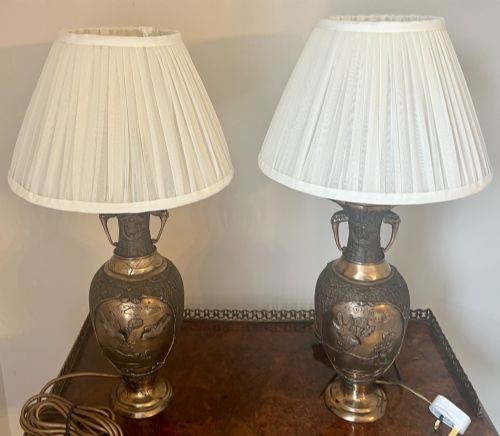
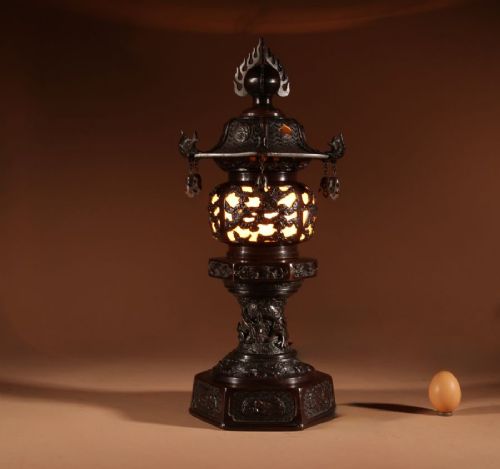
When you search for japanese bronze table lamps, you encounter substantial metal vessels, lanterns and vases converted to electrical illumination. The selection spans the nineteenth century, Victorian and Edwardian eras, alongside pieces dated up to nineteen twenty.
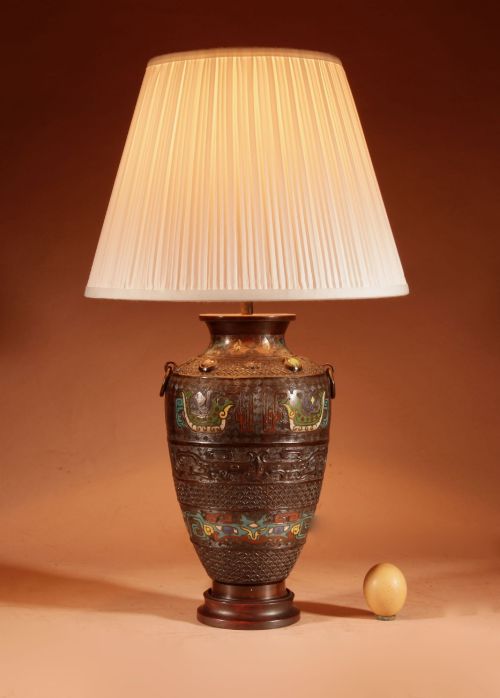
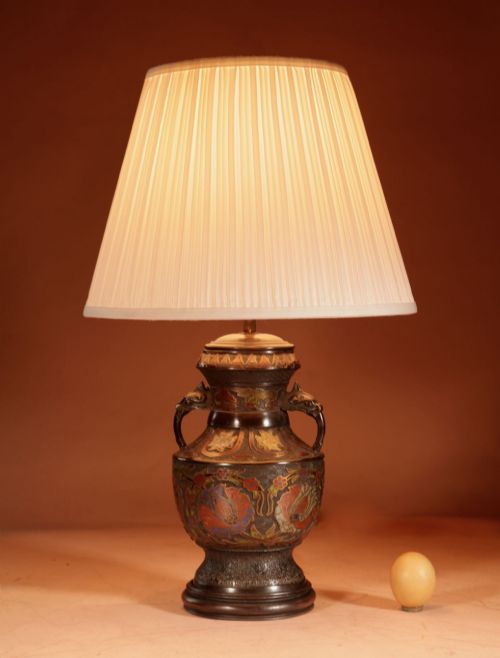
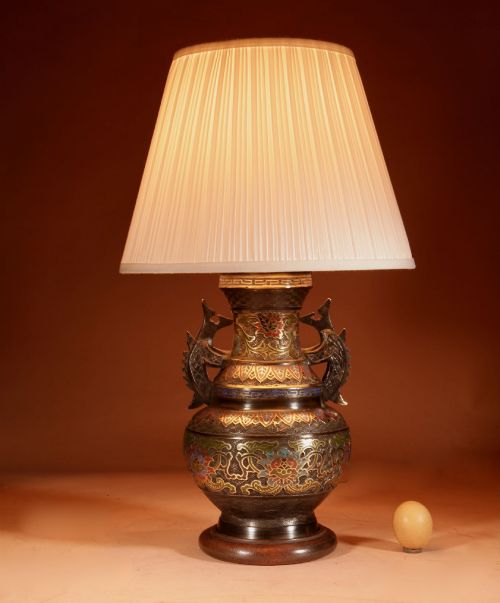
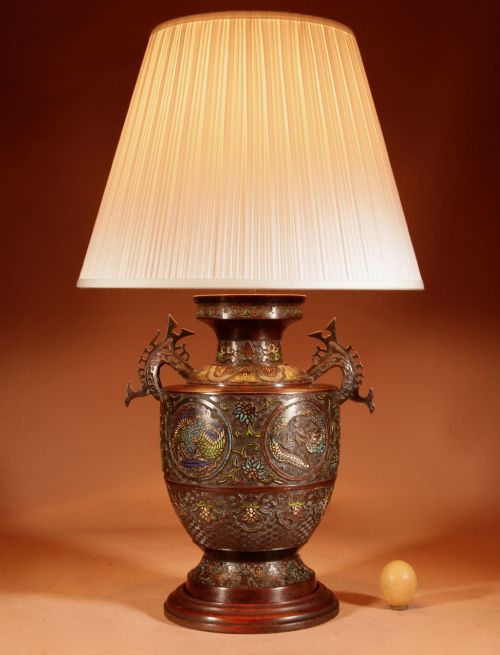
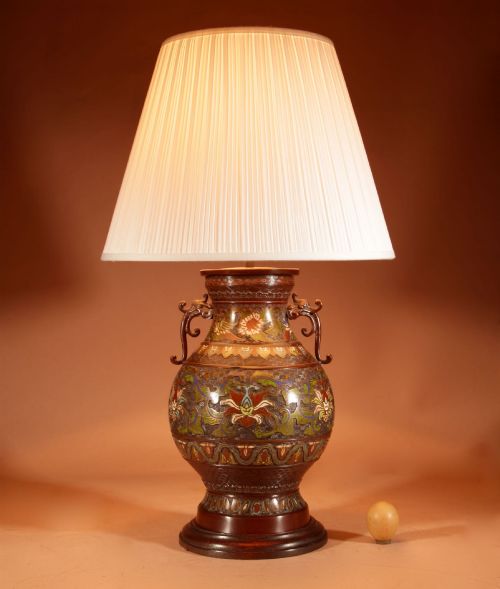
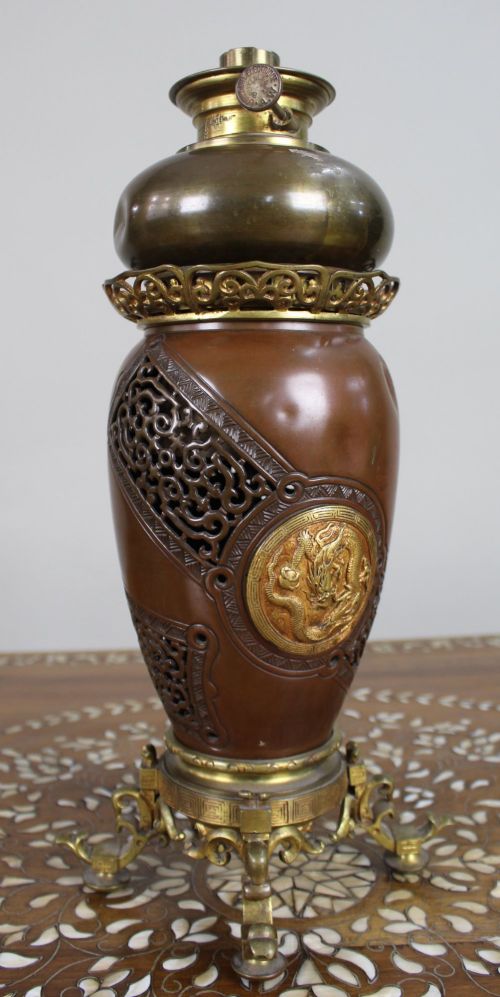
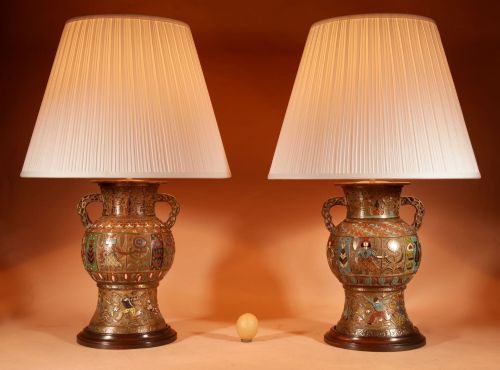
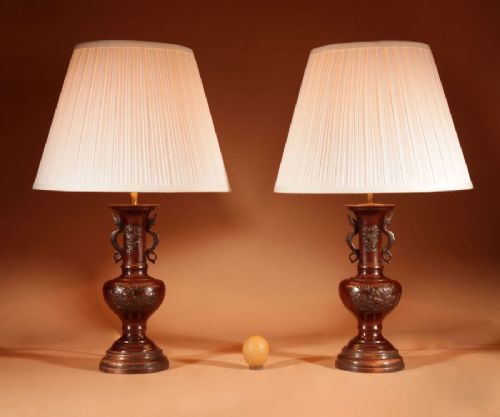
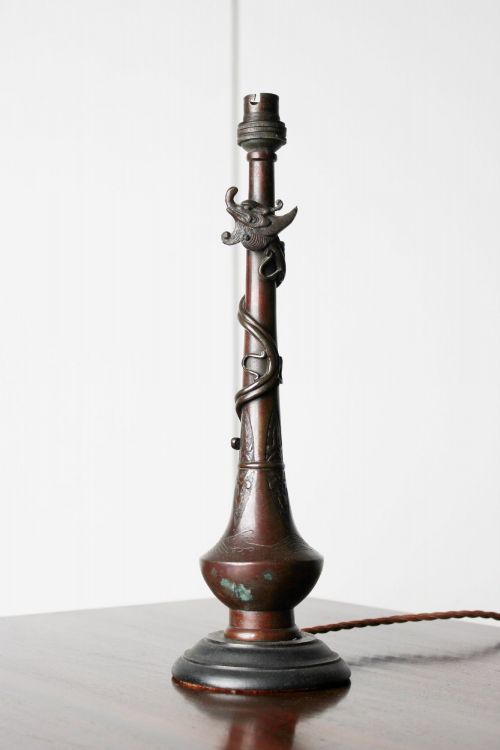
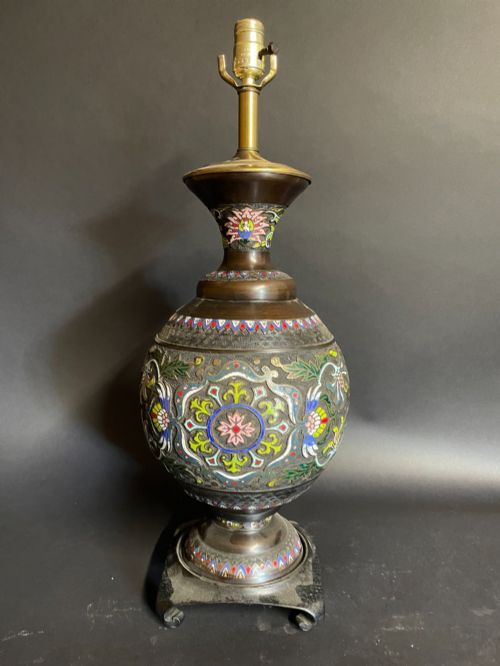
Meiji period examples dominate the inventory, frequently appearing alongside champlevé enamel work and dragon or elephant motifs. Forms range from simple patinated metal bodies to grand pairs mounted with porcelain or gilt bronze.
Materials and construction
The primary structure relies on cast bronze, occasionally accented with brass, gilt bronze or ormolu mounts. Makers applied rich champlevé and cloisonné enamel surface decoration directly onto the metal bodies.
Many items incorporate mixed media elements such as wood bases, glass components and fabric shades. Original oil lamp reservoirs or antique vases were adapted over time to house electrical fittings.
Japanese Bronze Table Lamps Retail Price Guide 2026
Typical asking prices for japanese bronze table lamps among the pieces listed under this phrase on Sellingantiques today, from the lower quarter to the upper quarter. They describe what is for sale here now, not the wider market.
Materials appearing across the inventory include bronze, brass, fabric, enamel, gilt bronze, wood, glass and porcelain.
Quality and execution
The distinction between tiers rests upon the crispness of the bronze casting and the precision of the enamel work. Superior examples display deeply detailed figural elements like dragons or elephants with distinct anatomical definition.
Scale and matching pairs elevate the desirability of individual lots. Consistency in patination and the integration of decorative mounts dictate the overall visual coherence.
The Japanese Bronze Table Lamps Glossary
- Meiji Period
- The era in Japanese history spanning from eighteen sixty-eight to nineteen twelve, noted for intricate metalwork and decorative arts destined for export. This period yields the majority of the bronze forms seen here.
- Champlevé
- An enamelling technique where recessed areas are gouged into the bronze body and filled with coloured vitrified paste before firing. This creates vibrant patterns across the lamp surface.
- Cloisonné
- A method of decorating metal objects by soldering flat wire to the bronze base to create compartments for enamel. These distinct cellular patterns add texture and colour to the design.
- Ormolu
- Finely ground high-carat gold applied to a bronze object using a mercury amalgamation process. It provides a durable, bright gilt finish on decorative mounts.
- Arita Imari
- A traditional style of Japanese porcelain featuring blue, iron red, gold and black underglaze decoration. Pieces in this style sometimes appear combined with bronze mounts as converted lamps.
Japanese Bronze Table Lamps: Frequently Asked Questions
Are these lamps converted from vases?
Many examples began life as decorative vases, temple lanterns or oil lamps before receiving electrical wiring. The adaptation process utilised existing vessel forms without necessarily altering the historic bronze body.
This heritage means you frequently encounter substantial antique metalwork repurposed for modern domestic lighting. The mountings added for electrical components often date from the Edwardian era or later.
How do I clean the bronze?
Dusting gently with a soft, dry cloth preserves the historic patina and protects delicate enamel or gilt surfaces. Avoid harsh chemical polishes that can strip the aged finish from the metal.
If deeper cleaning is necessary, consult a professional restorer to avoid damaging intricate champlevé or cloisonné details. Maintaining the natural oxidation safeguards the character of the piece.
What styles of decoration appear?
Designs often incorporate traditional Japanese iconography, including dragons, elephants and floral motifs executed in relief. Chinoiserie influences and Satsuma or Arita porcelain elements also appear across the selection.
The surface enrichment frequently combines patinated bronze with colourful enamel compartments. These varied aesthetics reflect the export arts of the late nineteenth and early twentieth centuries.